
Researches
& updates
& updates
Ongoing
1936 Delahaye 135 S
Chassis no.
47188
Engine no.
47188
Coachbuilder
Delahaye
Beacon
ON/OFF
ON/OFF
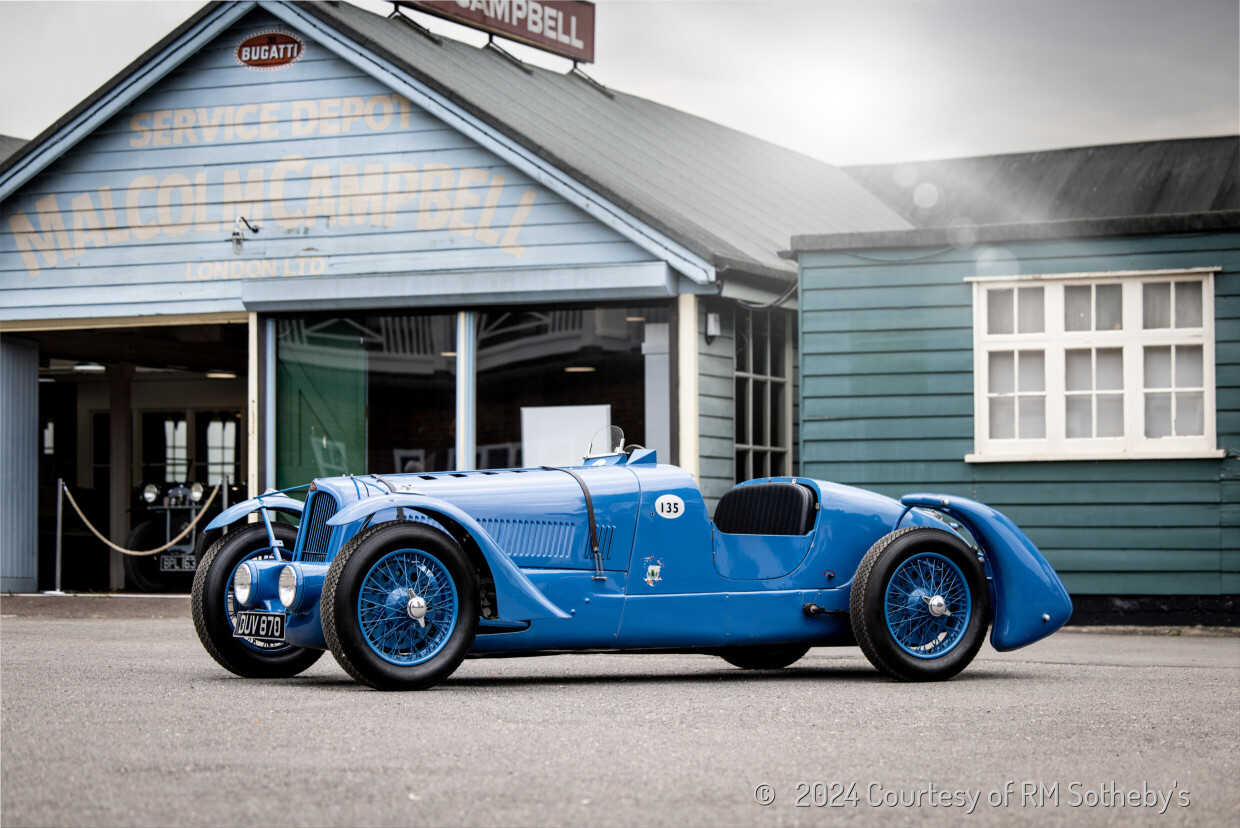
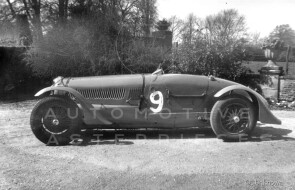
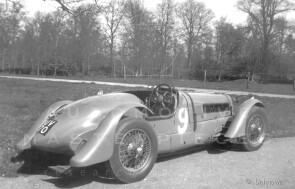
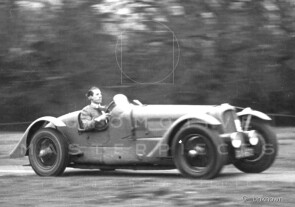
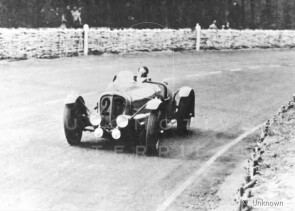
One of likely two works cars, built by factory racing dept, on sixteen 135 S built. Over 40 international entries from 1936 to 1953 with elite teams and drivers.
Why am I an Automotive Masterpiece?
A. Concept and show cars
B. Prototypes
C. One-off models
D. Remaining cars from extremely limited production runs
E. Historic event cars
F. Cars owned by famous people
G. Team cars
H. Works cars
I. Press cars
J. Movie cars
K. Famous chassis’ cars
L. Limited edition cars
J. Movie cars
The Gentleman's Wager 2: Short movie and cinematic advertisement produced by Johnnie Walker Blue Label, featuring Jude Law and Giancarlo Giannini.
The Delahaye Type 135, unveiled at the 1935 Paris Motor Show, was one of the most important and representative French automobiles of the interwar and immediate postwar periods. Introduced at a crucial moment for the Tours-based manufacturer, after years of difficulty and an outdated range, it marked a technical, commercial, and sporting turning point, standing as a synthesis of haute couture elegance and racing-level performance. Designed under the supervision of Jean François, the 135 was based on a new semi-unitary frame with longitudinal members and crossmembers, lighter than that of the 138 saloon, featuring a sophisticated independent front suspension and an overhead-valve inline-six engine, initially with 3,227 cc displacement. From the outset, the model was offered in several distinct versions, conceived for different clients and uses ranging from luxury touring to pure competition. In the same year, Delahaye acquired the Delage brand, then in serious financial distress, gaining its facilities, engineers, and racing experience, thereby strengthening its sporting image and supporting the development of the new model's racing vocation. The first version to be introduced was the “standard” 135, produced from 1935 to 1952, equipped with the 3.2-liter engine in single or triple carburettor configuration, with outputs ranging from 95 to 110 hp. Featuring a long-wheelbase chassis (2,950 mm) and optionally the refined Cotal electromagnetic gearbox, it was widely bodied by the most prestigious French coachbuilders such as Figoni & Falaschi, Chapron, Letourneur & Marchand, Guilloré, Autobineau, and Pourtout in the form of coupés, cabriolets, and sporting saloons. It became one of the most coveted cars among the cultured and elegant public of the time. Alongside it, also in 1935, a lowered competition-oriented version for private sport customers was developed: the 135 Compétition 20 CV Long, produced until 1938. It used a 3,557 cc engine producing 120 to 130 hp and shared the long chassis of the standard 135, appropriately stiffened and lightened. It was designed for rallies and endurance races, and competed in international events such as the 24 Hours of Le Mans, the Rallye des Alpes, the Liège-Rome-Liège, and the endurance races at Monthléry. It was regarded as an excellent compromise between performance and stability. Also in 1935, a short-wheelbase variant was produced: the 135 Compétition Court, aimed at more demanding racing use. With a shortened 2,700 mm chassis, the same 3.5-liter inline-six engine, and lowered suspension, it offered greater agility and acceleration. About 30 units were built in this configuration between 1935 and 1937, many of them for gentleman drivers or semi-official teams, often bodied as lightweight sporting roadsters. Encouraged by successes at the Rallye des Alpes and Monte Carlo, Delahaye introduced a sporty road version called the 135 “Coupé des Alpes”, built from 1935 to 1939 as a lightened and uprated derivative of the standard 135. Its name celebrated the victories obtained in those competitions; it featured the 3.2-liter engine with three carburettors, a lightened chassis, and simplified trim, and was aimed at sporting customers seeking high performance for road use. In 1936, the most extreme variant was launched: the 135 S, with “S” standing for Surbaissée or Spéciale. Produced in only 16 examples between 1935 and 1937, it was a pure racing machine, with a 3,557 cc engine developing around 160 hp, dry sump lubrication, shortened and lowered chassis, stiffened suspension, and upgraded brakes. It took part in international competitions such as Le Mans, Spa, Donington, and the Tourist Trophy, achieving significant results and enhancing Delahaye’s reputation in endurance racing. In 1938, drawing on the experience gained, Delahaye introduced the 135 M, where “M” stood for Modifiée. This version, produced until 1952 even after the war, was an evolution of the standard 135, with the 3,557 cc engine in single or twin carburettor configurations and outputs ranging from 90 to 115 hp. It offered superior performance while retaining reliability and comfort and was ideal for spirited road use. It became one of the most common postwar variants. Finally, also in 1938, the 135 MS—Modifiée Spéciale—was introduced, an even higher-performance version featuring a triple-carburettor engine with outputs between 130 and 160 hp and a reinforced setup. It was the most powerful roadgoing version of the range, appreciated by sporting customers and prestigious coachbuilders for its versatility and high performance. Produced in several thousand units across all its variants, the Type 135 is today regarded as one of the most significant French automobiles of the pre-war and early post-war periods. Its success was due not only to its mechanical qualities and performance, but also to the exceptional elegance of its coachwork, its sporting victories, and its ability to embody—more than any other—the spirit of the high-end, technically advanced French automobile from the 1930s to the 1950s.
Among all the variants, the Delahaye 135 S undoubtedly represents the most extreme and sporting interpretation of the 135 series, conceived from the outset to compete at the highest levels in endurance races and Grand Prix events of the time. An evolution of the standard 135, lowered and lightened, the 135 S—where the “S” stands for Surbaissée and also Spéciale—was produced in a handful of examples, fewer than twenty, of which only seven or eight are known to survive. The chassis was extensively modified to lower the center of gravity, with wider tracks, a reduced wheelbase, and reinforcements dedicated to racing use. The engine was a 3,557 cc inline-six, fitted with three carburettors and a high-performance cylinder head, capable of developing close to 160 hp, with lively power delivery and a top speed exceeding 180 km/h—exceptional for its time. The valvetrain featured overhead valves operated by a side camshaft with pushrods and rockers, while lubrication was by dry sump, ensuring reliability during long-distance racing. The gearbox was a 4-speed unit, often the electromagnetic Cotal type, and the mechanically operated drum brakes were servo-assisted. The bodywork, built by specialists such as Figoni & Falaschi or in single-seater barchetta configuration, was essential: with removable fenders and a cockpit set far to the rear, it was designed to reduce aerodynamic drag. The 135 S achieved remarkable results in many of the most important races of the era: it successfully competed in the 24 Hours of Le Mans, the Tourist Trophy, the French Grand Prix, the 12 Hours of Paris, the 12 Hours of Donington, and the 24 Hours of Spa. In particular, in 1937 a 135 S driven by Paul and René Carrière finished second overall at Le Mans, while in 1938 another example took fourth place. Its robustness and consistency made the 135 S one of the most reliable cars used in endurance races, where it often outlasted more powerful but mechanically fragile competitors. The Delahaye 135 S is considered one of the most prestigious and rare French racing cars of the pre-war era, capable of rivaling the finest models of the period.
Among the sixteen Delahaye 135 S cars built, chassis no. 47188 stands out as one of the most historically significant and best-documented survivors. Completed in 1936, it was one of the supposed two works-built 135 S cars prepared by the factory racing department, incorporating all the technical refinements that Delahaye had developed through its competition programme. Equipped with the advanced 3,557 cc inline-six engine, 47188 featured three Solex carburetors, a high-lift camshaft, 8.4:1 compression ratio, reinforced cooling system, lightened crankshaft and a dry-sump lubrication system. Power output was estimated at approximately 160 bhp, enabling a top speed over 180 km/h — exceptional for the era. The chassis itself was extensively modified with a lowered frame, wider track, shortened wheelbase and uprated suspension and brakes, making it ideally suited for endurance racing. Thanks to its lightweight structure, chassis no. 47188 was a proper factory tool for top-level international racing. The car’s competition debut occurred on 24 May 1936, narrowly missing the podium at the 3 Hours of Marseille, where it finished 4th overall driven by Albert Divo. That same season, it entered the 24 Hours of Le Mans, but no classification is known. It was subsequently entered in the French Grand Prix and Grand Prix de la Marne that same year, finishing 12th and 6th respectively. It was then entered in the English Donington Grand Prix; although it completed 114 laps, it was not classified due to race format. In 1937, the car was imported into the UK by Count Heyden and registered “DUV 870”, acquired by Prince Chula of Siam for the White Mouse Stable and raced by his cousin, Prince Birabongse “Bira” Bhanudej. That year, chassis no. 47188 achieved one of its most prestigious results: 1st overall at the 12 Hours of Donington, with Bira and Hector Dobbs, averaging over 92 km/h and had a full season with important results, such as: 7th overall / 2nd in class at the BRDC 500 Miles (fastest lap at 126.09 mph), 3rd OA at Crystal Palace, 5th OA in Antwerp GP, winner of Catalogue Sports Car Race in Brooklands. Between 1938 and 1939, still highly active, chassis no. 47188 raced under a string of drivers: Arthur Dobson, Marcel Mongin, Jay Willing, E.M. Thomas, Charlie Dodson, R.R.C. Walker, and Guy Jason-Henry. On 29 May 1939, chassis 47188 took part in a unique high-profile event at Brooklands aimed at identifying the fastest road car in Britain. Entered by Rob Walker, the Delahaye was entrusted to accomplished ERA driver Arthur Dobson for the challenge. The main rival was Hugh Hunter’s Alfa Romeo 8C 2900, fresh from its triumph at the 1936 Mille Miglia. The event consisted of two heats: in the first, the Alfa narrowly beat the Delahaye; in the second, Dobson started from the back but managed to overtake the field and capitalise on a gearbox issue that forced the Alfa’s retirement. The Delahaye crossed the finish line first, earning Walker a £50 prize and a commemorative painting by Gordon Crosby. This symbolic victory granted the 135 S the unofficial title of “Britain’s Fastest Road Car” and remains a legendary episode in its racing history. During this period, chassis 47188 claimed wins at Brooklands and the Catalogue Sports Car Race, and a strong 3rd overall at Crystal Palace in the Ladies’ Cup, running under various race numbers, and even appeared in the Inter-Varsity Speed Trials and Brighton Speed Trials, confirming its versatility. After Prince Bira retired the car, it passed to future Formula 1 entrant Rob Walker, heir to the Johnnie Walker whisky empire. In the lead-up to the 1939 24 Hours of Le Mans, Rob Walker suffered a bizarre accident while attempting to drive one of his Delahaye road cars in reverse as fast as in forward gear, crashing into a ditch and injuring his hand. As a result, the factory swiftly replaced chassis 47188’s original manual gearbox with a Cotal electromagnetic unit to ease the strain. During the race, co-driver Ian Connell was sidelined by exhaust burns after just eight hours, forcing Walker to drive solo for the remaining sixteen. Despite the adversity, and famously changing into a pin-stripe suit mid-race, he brought the car home in 8th place overall. The episode became part of the car’s legend, highlighting both Walker’s resolve and the 135 S’s endurance. In the post-war period, chassis no. 47188 continued to race, remaining competitive. In 1949, it made a return to the 24 Hours of Le Mans, now in post-war configuration, with Guy Jason-Henry and Tony Rolt performing strongly, reaching 5th position by lap 126 when the engine failed due to bearing damage. Subsequent inspection revealed that the engine had not been rebuilt since 1939, highlighting the car’s impressive resilience. The car also placed at Goodwood (multiple podiums), British Empire Trophy on the Isle of Man, and Speed Trials through 1952. A rather curious episode marked the 1950 season: after scoring two podiums at Goodwood, the car was entered in the 12 Hours of Montlhéry but mysteriously withdrawn at the last moment, citing mechanical issues. The truth, however, was stranger: driver Guy Jason-Henry had become entangled with questionable individuals and allowed the Delahaye to be used for smuggling — one of its fuel tanks had been replaced with a decoy filled with thousands of Swiss wristwatches. Caught during re-entry into England at Newhaven, Jason-Henry was detained and the car impounded. Though later acquitted after turning Queen’s Evidence, Rob Walker was obliged to pay £300 to recover the car. Outraged, he wrote to The Times, asking whether Cunard had to repurchase the Queen Mary every time someone was caught smuggling stockings on board. In total, chassis 47188 recorded over 40 international race entries between 1936 and 1953, many at the hands of elite drivers and teams, earning a reputation as one of the most effective Delahaye racing cars of its time. At the close of the 1952 season, chassis 47188 —then modified with aerodynamic improvements— was sold to driver Dan Margulies, who entered it in several events. The car was acquired in 1954 by Major Edward Thomson, shipping magnate and key supporter of Ecurie Ecosse. When the Thomson collection was auctioned by Sotheby’s in 1970 to benefit the RNLI, Walker successfully bid £5,000 to reacquire the car, unseen. Finding it in poor condition, he commissioned John Chisman to recreate a new body based on a scale model crafted by Henri Baigent. In 1973, it returned to the Circuit de la Sarthe for the 50th Anniversary historic support race to the 24 heures du Mans. Though Tony Rolt and Stirling Moss were both slated to drive, Rolt’s difficulties fitting into the car led Moss to compete alone. The car has remained in the Walker family’s possession ever since. The car’s post-race life includes documented appearances in the 1974 French Grand Prix as a vintage exhibition entry, again under Rob Walker. Beyond being exhibited in various museums, it gained new visibility in 2015 when Jude Law drove it in the Johnnie Walker feature film A Gentleman’s Wager II, introducing this historic racer to a new generation of enthusiasts. Following decades of use, the car retains its original chassis, engine block and most of its mechanical core, making it one of the most complete, unrestored-yet-documented 135 S survivors. Restoration work appears to have been carefully focused on mechanical functionality and event eligibility, without aesthetic over-restoration. It has since participated in key historic events, including the Mille Miglia Storica, Le Mans Classic and Goodwood Revival. Chassis no. 47188 is considered the most actively raced and best-recorded of all surviving Delahaye 135 S examples. In November 2024, left the Walker collection and was offered at auction by RM Sotheby’s in London, where it sold for £1,096,250 and is now part of another important collection.