
Researches
& updates
& updates
Ongoing
1963 Ferrari 330 LM
Chassis no.
330 LM *4381*
Engine no.
02
Coachbuilder
Pininfarina/Carrozzeria Scaglietti
Beacon
ON/OFF
ON/OFF
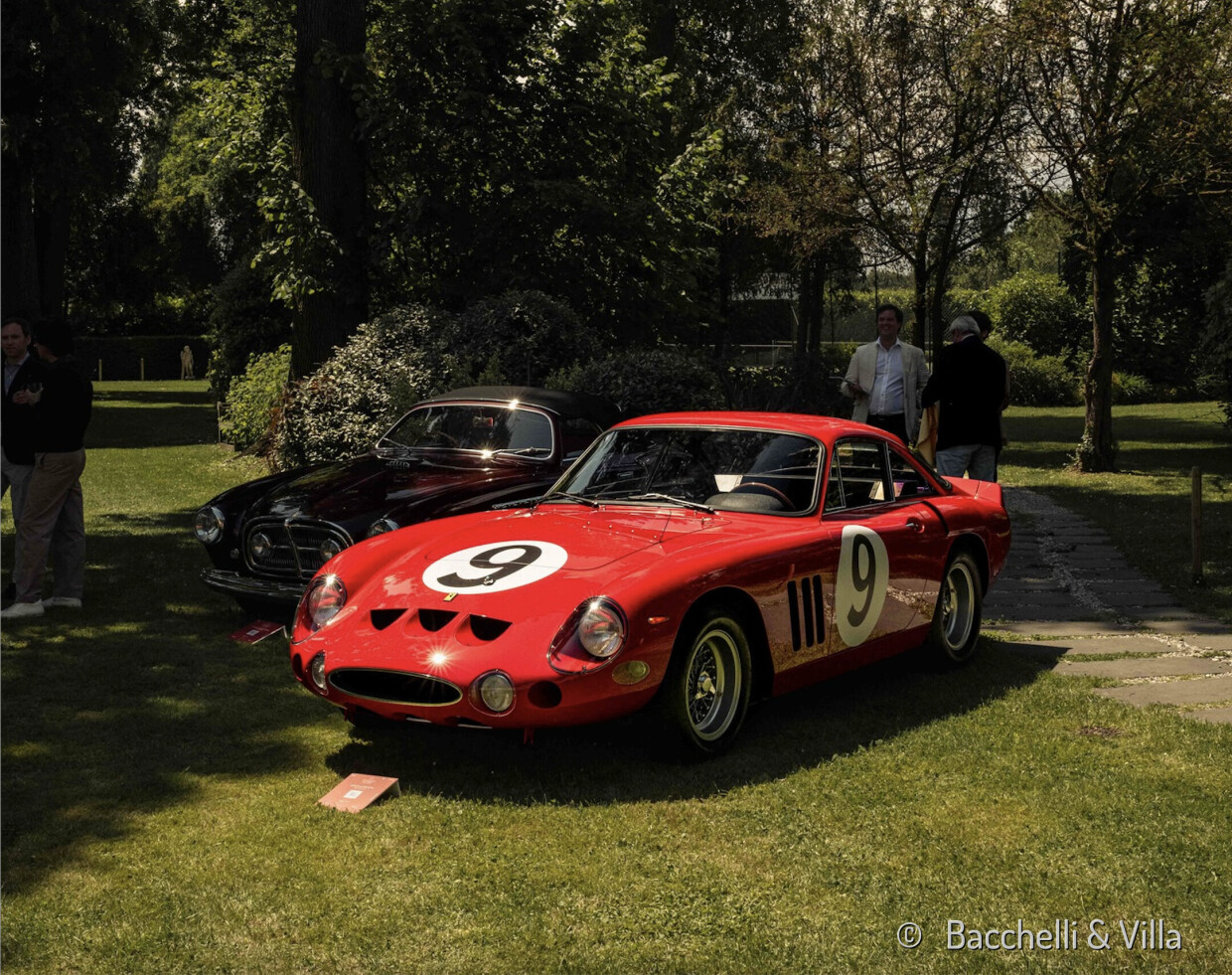
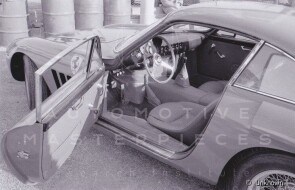
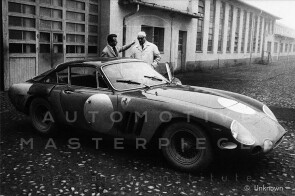
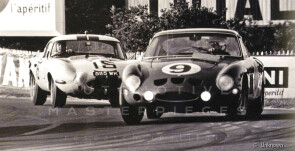
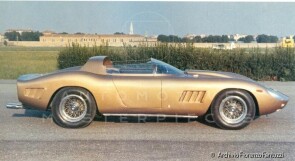
One of four. Press presentation car. Scuderia Ferrari car at Sebring and Le Mans 1963. Fantuzzi-rebodied, was a Dolce Vita icon and screen car, including Fellini.
Why am I an Automotive Masterpiece?
A. Concept and show cars
B. Prototypes
C. One-off models
D. Remaining cars from extremely limited production runs
E. Historic event cars
F. Cars owned by famous people
G. Team cars
H. Works cars
I. Press cars
J. Movie cars
K. Famous chassis’ cars
L. Limited edition cars
L. Limited edition cars
no. 4 manufactured, 2nd built
Often regarded as the final evolution of the GTO chapter, the Ferrari 330 LM, commonly referred to as the 330 LMB or 330 LM Berlinetta — a widely used, if not strictly official, designation that helps distinguish it from other Ferrari models associated with the 330 LM name — was born in 1963 as the ultimate evolution of the front-engined competition berlinetta, at a time when Ferrari was already shifting its sporting commitment towards mid-engined prototypes. The 330 LM was preceded in 1962 by the experiment of the 330 LM / 250 GTO chassis no. 3765, a GTO equipped with the 4-litre tipo 163 LM V12 and officially entered by Ferrari in the prototype class. In the same context, the 330 TRI/LM also came into being: an open sports prototype derived from the Testa Rossa and overall winner at Le Mans in 1962, as well as an important technical precedent for the use of the 4-litre engine in the category. That unique car represented the first attempt to transfer the GTO philosophy to the larger displacement, while the 1963 330 LM represented its most complete development, with a dedicated chassis and bodywork specifically designed for use at Le Mans. Presented at the Monza press conference in March 1963, alongside the 250 P, the 330 LM was conceived for the new regulatory context and was developed for endurance racing, especially the 24 Heures du Mans. It represented a sort of intermediate solution, combining the experience gained with the 250 GTO and the earlier 330 LM with aerodynamic and mechanical solutions specifically suited to the larger displacement. Only four examples were built: 4619, used as a development car and not raced; 4381 for Scuderia Ferrari; 4453 for Luigi Chinetti’s NART; and 4725 for Ronnie Hoare’s Maranello Concessionaires. The 330 LM was powered by a 4-litre V12, derived from the Colombo family as evolved for the larger-displacement units, with dry-sump lubrication, fed by Weber carburettors, and capable of delivering 390 hp at 7500 rpm. Its structure and technical layout retained a tubular frame, independent front suspension, a rigid rear axle and disc brakes. The bodywork, built by Scaglietti to a Pininfarina design, echoed elements of the 250 GTO at the front — oval air intake, faired-in headlights, vents and aerodynamic approach — but incorporated a passenger compartment and tail more closely related to the 250 GT Berlinetta Lusso, with a Kamm-type truncated tail and specific solutions for the enlarged rear wheels and cooling. The sporting career of the 330 LM was brief but significant. The model made its debut at the 1963 12 Hours of Sebring with Mike Parkes and Lorenzo Bandini in car 4381, but the race ended in retirement after an off-road excursion. At the 24 Hours of Le Mans that same year, three cars were entered: 4381 entrusted to Pierre Noblet/Jean Guichet, in effect a works entry but registered in the race under Noblet’s name, 4453 for NART with Dan Gurney/Jim Hall and 4725 for Maranello Concessionaires with Jack Sears/Mike Salmon. The best result came from 4725, which finished fifth overall and first in class. Also in 1963, 4725 took an eighth place with a class win at the Guards Trophy at Brands Hatch with Lorenzo Bandini, while NART’s 4453 claimed third overall at the Bridgehampton 500 km with Dan Gurney.
The Ferrari 330 LM chassis no. 330 LM *4381* is one of the four examples built of the model, as well as the car most directly linked to Ferrari’s official racing activity. Its debut came on March 4, 1963, for the press presentation and testing of the Ferrari 330 LM and 250 P models at the Monza Autodrome. For the occasion, Ferrari fielded its finest drivers: Lorenzo Bandini, Mike Parkes, Ludovico Scarfiotti, John Surtees, Nino Vaccarella and Willy Mairesse. The press vernissage for the 1963 prototypes was attended by Enzo Ferrari. In the shots of the cars on the track before the test, Lorenzo Bandini can be seen behind the wheel. The livery was, of course, red. The photographs also show the three supplementary crescent-shaped front air intakes above the main oval opening, first introduced on the GTO, closed by flaps. In racing, these could be opened, either fully or partially, or left closed, depending on the requirements of the race and the temperature on the circuit. A further detail, on which opinions have differed — whether it is present or not — is also clearly visible: the small flap, set slightly further back and sharing the same crescent shape, which covers the radiator cap and allowed quick top-ups without opening the bonnet, is undoubtedly present on chassis no. 4381. More importantly, its distinctive features are clearly visible: the three side air outlet louvres on the front wings, with the first vertical louvre slightly set apart from the two following ones, which are closer together; and the rear side vent, with its trapezoidal profile tapering downward, unlike the vents on 4453 and 4725, which are a little longer and more rounded in the back end. That same year, chassis no. 4381 was used by Scuderia Ferrari as an official works car. It appeared in Scaglietti-Pininfarina berlinetta configuration and was entered in the 12 Hours of Sebring in March 1963, entrusted to Mike Parkes and Lorenzo Bandini with race number 19. The yellow Scuderia Ferrari shield is prominently displayed on the left front wing, while the race number on the right-hand door is illuminated by two small race-number lights. The photographs also show the car with its headlights heavily taped over, a precaution against stone chips in what proved to be a fiercely contested race that ultimately ended in retirement. This was the result of a leaking, damaged fuel tank in cold and cloudy conditions, which forced the car to quit after four and a half hours while running in sixth position, following a spin that caused the fuel tank to rupture. The car was repaired and prepared for Le Mans. It was photographed next to a pensive Enzo Ferrari, still being readied, with the damaged section still to be painted. The car was entered in the 24 Hours of Le Mans in June with Jean Guichet and Pierre Noblet, carrying number 9. Three 330 LMs were entered, but this was the only example run by the semi-works Scuderia Ferrari entrant Noblet: the “semi-works” circumstance is indicated by the fact that the entry was made in the driver’s name, and not in that of the Scuderia, not even displaying the usual yellow “SF” shield on the body. However, the driver was regularly part of the team, and the car arrived on one of the famous red Scuderia Ferrari transporters: the Bartoletti race-car transporter based on the Fiat 642 RN 2. The race photographs show the car fitted with several details that differ from its Sebring configuration: the kamm-tail is fitted with a pronounced ducktail spoiler; a transparent Plexiglas deflector appears halfway along the bonnet, intended to divert insects away from the windscreen, while the bonnet itself is now secured at the rear by leather safety straps. The car is also pictured while racing with a single black anti-glare windscreen wiper, instead of the two chromed ones previously seen. Chassis no. 4381 qualified eighth with a time of 4'06"8 before retiring during the race after another misfortune: an oil line failed. After the 1963 racing season, chassis no. 4381 began its second, unpredictable life — one in which the documentary record and later memories seem to preserve different parts of the same story. Formally, the car appears in the documents as having been sold directly by Ferrari to Cronograph S.r.l. of Rome, a film production company. Yet another strand of the story is preserved in the recollections of Fiorenzo Fantuzzi, son of Medardo Fantuzzi, founder of the Modena coachbuilder that transformed the car. Fiorenzo, who recently passed away, recalled that the car was purchased by the Roman Pasqualino Alecce — although the name may have been Antonio Alecce — a millionaire and heir to the pharmaceutical magnate Pasquale Alecce, founder of IFI. According to Fiorenzo, the car had been acquired from Scaglietti and delivered to Fantuzzi in Modena, with the request for a bespoke body. The Fantuzzis accepted the commission only after checking his credentials with the factory, which confirmed him as an important client. They therefore took advantage of the winter season between 1963 and 1964, when they usually had fewer sporting commissions, to create this one-off example. Alecce’s request to the coachbuilder was apparently simple: he wanted a design inspired by the Scuderia’s sports prototypes, such as the 250 P. As for the unusual “antique gold” colour, there is no certainty regarding its origin, although it was most likely requested by the owner himself. In this form, the car became part of the Dolce Vita world, being driven by its owner along Via Veneto as a conspicuous display of style or seen parked in the most visible locations in the Principality of Monaco, in front of the Casino or the Hôtel de Paris. What is certain, although the precise connections remain unclear, is that the car also began its parallel life as a screen presence: formally, according to the documents, it was sold directly by Ferrari to the film production company that used it in some of its productions. The car first appeared in a minor scene in the 1965 comedy film James Tont operazione U.N.O., a parody of Agente 007 - Missione Goldfinger (Goldfinger). The film was directed by Bruno Corbucci and Giovanni Grimaldi. The example would instead play a leading role in the 1968 film Tre passi nel delirio (Histoires extraordinaires), divided into three episodes loosely inspired by stories by Edgar Allan Poe, directed by Roger Vadim, Louis Malle and Federico Fellini, and also known in its English version as Spirits of the Dead. The car appears in Toby Dammit, the episode directed by Federico Fellini and starring Terence Stamp, in which a troubled actor accepts a difficult role because he is offered a Ferrari — 4381 — with which he undertakes a wild drive. That same year, the car would also appear prominently in Capriccio all’italiana, an episodic film in the style of the commedia all’italiana, in the third episode, “Perché?”, directed by Mauro Bolognini and starring Enzo Marignano and Silvana Mangano. Once its big-screen career was over — dreams, too, change shape — the golden spyder bodywork from chassis no. 4381 was bought from Massimo Chiappini and, in 1980, was painted red and fitted to the 1966 Ferrari 330 GT 2+2, chassis no. 8733. The fate of chassis no. 4381 was different: in 1978 the car entered the orbit of Fabrizio Violati, gentleman driver and major collector, and later of Bellancauto, the Italian racing team he had created. In this phase, 4381 was restored, returning to its original berlinetta configuration. The photographs took in this period show the car as consistent with all the historic images, except for the lateral outlet grilles on the front and rear wings. The car began taking part in historic events and was also displayed at Maranello Rosso in San Marino. In the early 1990s, the car left Italy for UK, passing between collectors, being used extensively in major historic races, driven by notable drivers, with significant results culminating in overall victory at the 2008 Goodwood Revival. In 2010, a Ferrari certification was drawn up and, the following year, the car was acquired by German collector Friedhelm Loh. It passed to Richard Wolf in the United States in 2017, and that same year became part of a private collection. It took part in the 2017 Cavallino Classic and was displayed at the Petersen Museum in 2018. Finally, chassis no. 4381 passed under the careful eyes and hands of the specialists Bacchelli & Villa, who, among other things, corrected the incorrect details of the lateral outlet louvres to match the original configuration, and took part in the 2025 Cavallino Classic Modena.