
Researches
& updates
& updates
Ongoing
1955 Lancia Aurelia B24 Spider
Chassis no.
B24S-1016
Engine no.
B24*1015*
Coachbuilder
Pinin Farina
Beacon
ON/OFF
ON/OFF
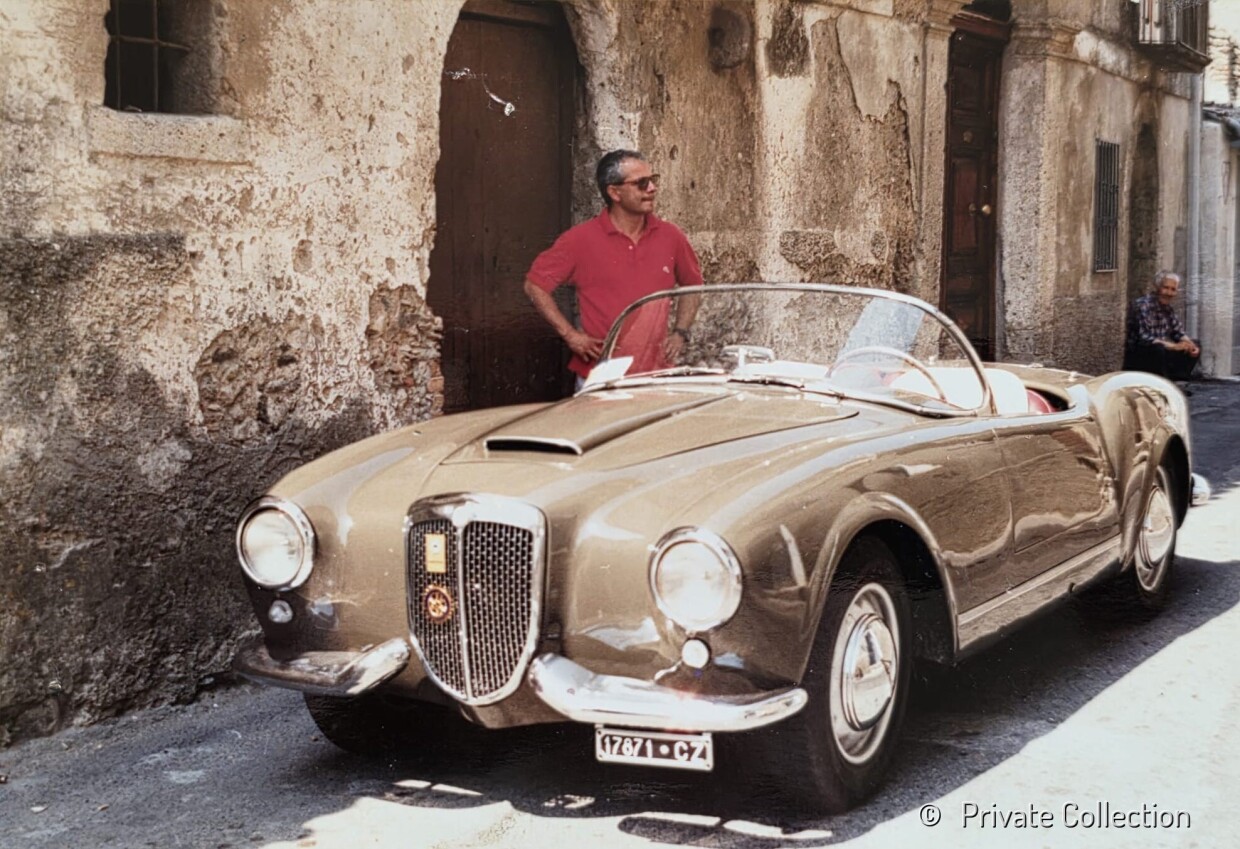
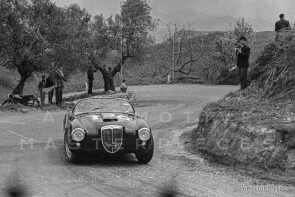
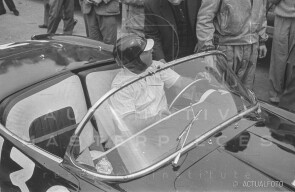
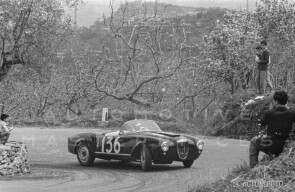
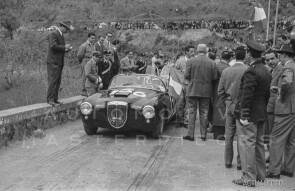
16th of all B24 Spiders. Important owners, such as Carlo Traglio, Gianni Plodari, Dino Fabbri, Davide Roda. Racing history in southern Italy with Donato Jannone.
Why am I an Automotive Masterpiece?
A. Concept and show cars
B. Prototypes
C. One-off models
D. Remaining cars from extremely limited production runs
E. Historic event cars
F. Cars owned by famous people
G. Team cars
H. Works cars
I. Press cars
J. Movie cars
K. Famous chassis’ cars
L. Limited edition cars
G. Team cars
AC Catanzaro - It appears as a team or entrant designation in period results. This confirms its role, at least in certain cases, as the institutional banner under which local drivers competed, rather than as a professional racing team in the modern sense.
L. Limited edition cars
no. 181 manufactured, 16th built. 181 LHD examples out of a total of 240 Aurelia B24 Spider produced.
The post-war period brought a desire, almost a hunger, for renewal. Everything that evoked the years before the war had to be overcome. Cars quickly became one of the clearest symbols of this rebirth. From its very first appearance, the Lancia Aurelia caused quite a stir, not only because, together with the contemporary Fiat 1400, it represented one of the first genuinely new Italian automotive products of the post-war period, but also for the remarkable technical innovations it introduced. Presented in 1950 and designed by Vittorio Jano, the Aurelia was the first Lancia of the new era. It featured a series of advanced engineering solutions, among them the first production V6 engine, a compact 60° unit developed by Francesco de Virgilio, initially displacing 1.8 litres. The car also adopted a monocoque structure, a transaxle layout combining clutch, gearbox and differential, inboard rear brakes, and a De Dion rear suspension, all contributing to exceptional balance and road holding. Soon the Aurelia platform gave birth to some of the most refined Italian gran turismo cars of the decade. In 1951 the B20 coupé appeared, combining higher performance with elegant Pinin Farina styling and quickly achieving remarkable sporting success in events such as the Mille Miglia and the Targa Florio. The development of the Aurelia continued with larger engines and further mechanical refinements, eventually leading to the creation of one of the most celebrated open sports cars of the 1950s: the B24 Spider.
The Lancia Aurelia B24 Spider represented the open, sporting evolution of the Aurelia Gran Turismo concept. Mechanically derived from the later B20 coupés, it adopted the 2.5-litre V6 and a shortened chassis, giving the car a more compact and dynamic character. The project reflected Gianni Lancia’s intention to create an elite and highly sporting open car, clearly aimed at international markets and stylistically influenced by contemporary American trends. For its design he turned once again to Pinin Farina, who already had experience in the field of sporty spiders, having developed a similar concept in 1952 for the American manufacturer Nash. Designed and built by Pinin Farina, the Spider was first presented at the Brussels Motor Show in January 1955. Its styling immediately attracted attention for the exceptional purity of its lines and for several distinctive details, including the dramatic wraparound panoramic windscreen, the cut-down doors without external handles, and the elegant split bumperettes. The cockpit was positioned almost centrally between the long bonnet and the extended rear deck, creating proportions that have since become iconic. Production lasted only one year, ending in October 1955 after just 240 examples had been completed. Of these, 181 were built in left-hand drive configuration (identified by the chassis prefix B24S, with “S” standing for sinistra) and 59 in right-hand drive. The Spider was soon followed, in 1956, by a more conventional open version known as the B24 Convertibile, which adopted a flatter windscreen, winding windows and a more practical hood. While more comfortable and better suited to everyday use, the later model lost some of the original Spider’s distinctive and radical character.
The Lancia Aurelia B24 Spider, chassis no. B24S-1016, is the 16th of the 181 left hand drive Spiders built and was delivered new to Torino (Italy) in May 1955. The car is documented in Lancia registers as built between March 21 and May 21, 1955, having been originally finished in beige with leather red interiors, as also evidenced by extremely rare photographs taken on the Lancia assembly line. In its earliest years, the car passed through several hands, a typical fate for a fashionable high-end model of the time, moving within the circles of the industrial and entrepreneurial elite of north-western Italy. It was first owned by Carlo Traglio, most likely belonging to the well-known Traglio industrial family, active in Northern Italy and associated with the Coca-Cola bottling business. While the identification is highly probable based on name, period and context, it is currently subject to further archival confirmation. Shortly thereafter, the car passed to Gianni Plodari of Magenta, heir to the industrial company “Francesco Plodari & Figlio,” among the early Italian manufacturers of locks and hardware, and a family of notable local prominence. In 1956, the Aurelia was acquired by Dino Fabbri, co-founder of the publishing house Fratelli Fabbri Editori, one of the most influential cultural enterprises of post-war Italy. Later that same year, the car changed hands several times before, in 1958, it moved to Southern Italy, entering a new phase of its life under the ownership of a gentleman driver, marking the beginning of a more distinctly sporting use. It was owned, already seemingly repainted in black, by Donato Giuseppe Jannone from 1958 to 1987, who was active in Italian hillclimbs and road events during the late 1950s and early 1960s. For competition use, Jannone carried out a number of modifications, including weight reduction starting with the removal of the bumpers, the adoption of closer gear ratios, a straight-through exhaust system, and a modified pedal arrangement to facilitate heel-and-toe driving. Chassis no. B24S-1016 was used in a number of the most important competitions in Southern Italy, including events such as the Giro delle Calabrie, Sorrento–Sant’Agata and Palermo–Monte Pellegrino, achieving several class placings and concluding its known competition career with an excellent 1st in class at the 1964 Coppa Città di Catanzaro. The car retains physical evidence consistent with period competition use, including inspection seals and mechanical modifications. Following Jannone’s death, ownership passed to his widow Eugenia Biasi by inheritance, who resold the car within the same transaction. At that time, the car was found in a derelict condition, having been abandoned for years in a henhouse at Marcellinara, with badly deteriorated bodywork, a seized engine, missing bumpers, no electrical system and no soft-top frame, although the removable side windows had survived in good condition in their original case and a Farina hardtop was fitted. It was then acquired by Francesco Cervadoro, Director of the Catanzaro Automobile Club, who decided to undertake a complete yet philological restoration. After consulting what was then considered the leading specialist in Italy, Cappa, Cervadoro opted instead for a more closely supervised approach under his own direction, entrusting the work to selected local craftsmen. A comprehensive five-year restoration was completed in 1992; during this time, the body was stripped and repainted in what was believed to be its original beige, although the result was executed in a darker shade. The electrical system, transmission, upholstery, hood, instruments and brightwork were all restored by specialised craftsmen in Calabria and Rome. Cavallitto of Turin is mentioned in connection with the engine rebuild, although he may in fact have supplied only the parts. The car was subsequently awarded ASI Targa Oro certification in 1992 and took part in some re-enactments for historic cars. In more recent years, the car was part of the long-term holding of Greyhound Motorsport, before being acquired by Davide Roda, Italian racing driver active in touring car and endurance competitions, including the FIA World Touring Car Championship. Today, chassis B24S-1016 is part of a private collection.