
Researches
& updates
& updates
Ongoing
1955 Ferrari 750 monza
Chassis no.
0522/M
Engine no.
0522 M
Coachbuilder
Carrozzeria Scaglietti
Beacon
ON/OFF
ON/OFF
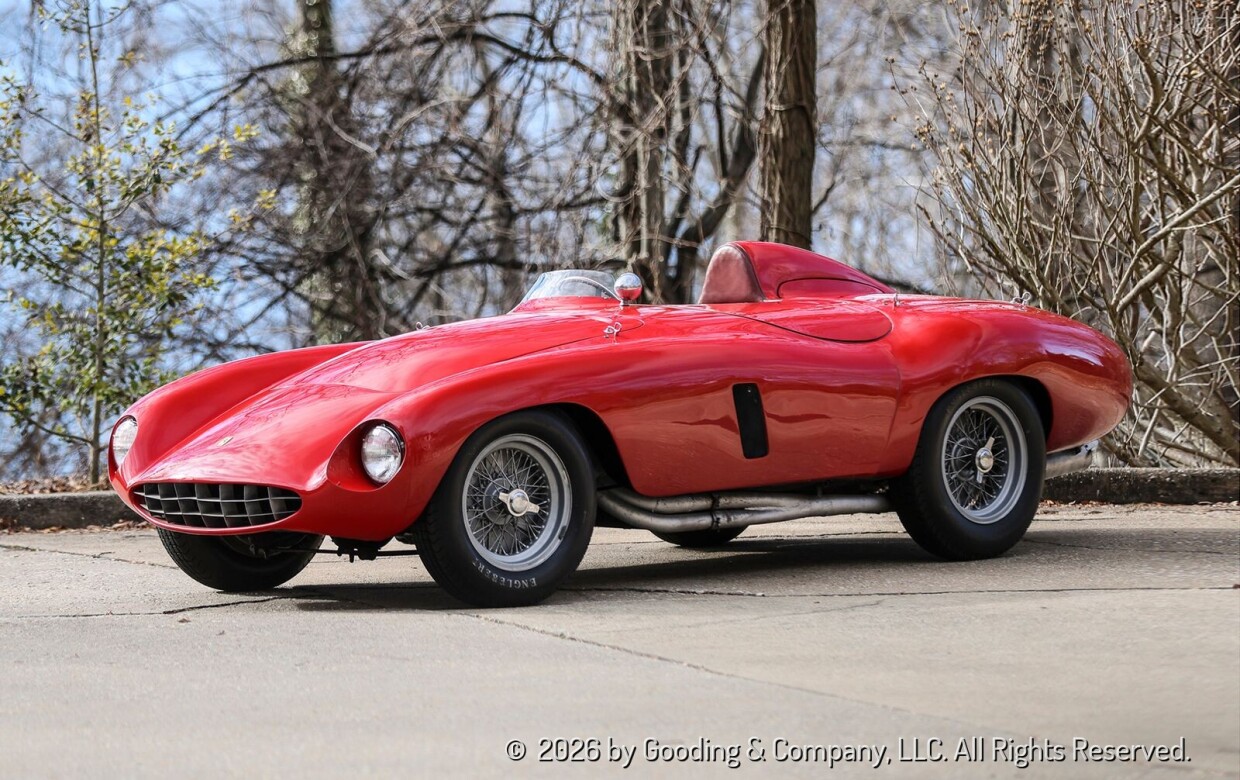
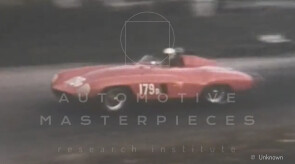
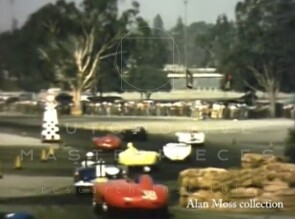
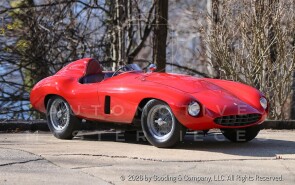
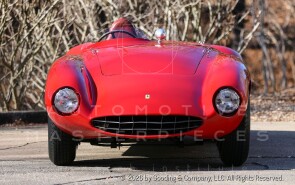
Almost unique. Raced in Italy and Venezuela by Scuderia Guastalla with Cornacchia and Chico Landi. US Racing career in late-1950s with famous drivers and owners.
Why am I an Automotive Masterpiece?
A. Concept and show cars
B. Prototypes
C. One-off models
D. Remaining cars from extremely limited production runs
E. Historic event cars
F. Cars owned by famous people
G. Team cars
H. Works cars
I. Press cars
J. Movie cars
K. Famous chassis’ cars
L. Limited edition cars
L. Limited edition cars
no. 31 manufactured, 21st built
During the 1950 Formula Two races, Enzo Ferrari observed that four-cylinder race cars from manufacturers like HWM and Cooper exhibited superior fuel efficiency compared to his 12-cylinder cars. The Ferrari V-12 engine, designed by Gioacchino Colombo, had dominated the Formula 2 class in 1949. In 1947, Aurelio Lampredi joined Ferrari and became Colombo's assistant. By the late 1940s, Ferrari tasked Lampredi with developing a four-cylinder engine that was more fuel-efficient and lighter than the larger 12-cylinder unit. When the sport’s governing body decided that the World Championship would be run under Formula 2 regulations, the development of the four-cylinder engine became a high priority. Completely constructed of light alloy, the new engine featured a double overhead camshaft head. Two versions were created: a 2-liter and a 2.5-liter. By 1952, the engine was ready and made its debut in the 500 F2, where Alberto Ascari won the World Championship with six victories out of seven races. He won the title again the following year. In early 1954, Ferrari offered the four-cylinder sports/racer to customers as a two-liter model, with each cylinder displacing almost 500 cubic centimeters. It was named "500 mondial" in honor of Ascari's dominance in the Formula 2 World Championship. The 2-liter four-cylinder engine, equipped with two Weber carburetors, was mounted at the front and drove the rear wheels. Producing 170 horsepower, it propelled the 1,500-pound vehicle to a second-place finish in the 1954 Mille Miglia. A class victory was achieved in 1956 at the 12 Hours of Sebring endurance race.
The Ferrari 750 monza was produced between 1954 and 1955, with approximately 31 examples built. The majority were bodied by Carrozzeria Scaglietti, following a design by Dino Ferrari, Enzo Ferrari's son, while a few early units featured bodies by Pinin Farina. Developed as a successor to the 500 mondial, the 750 monza featured a larger and more powerful engine. It was powered by a 3.0-liter inline-four engine designed by Aurelio Lampredi, delivering approximately 260 horsepower at 6,000 rpm. This engine was an evolution of the earlier 2.0-liter unit used in the 500 mondial, offering increased performance and torque. The car featured a five-speed manual transmission and a lightweight tubular steel chassis, contributing to its competitiveness on the track. The 750 monza made its debut on June 27, 1954, at the Gran Premio Supercortemaggiore held at the Monza Autodrome. In this race, two examples of the model secured the top two positions. Victory went to the pair Umberto Maglioli and Mike Hawthorn, followed closely by José Froilán González and Maurice Trintignant, also in a 750 monza. This remarkable one-two finish at its debut led to the car being named after the Monza circuit. Throughout its racing career, the 750 monza achieved notable results, including a win at the 1954 Tourist Trophy. It was driven by some of the era’s top talents, such as Phil Hill, Eugenio Castellotti, and Alfonso de Portago. However, by 1955, the 750 monza began to face stiff competition from more advanced rivals, including the Mercedes-Benz 300 SLR, prompting Ferrari to develop successors like the 857 S and 860 monza. The Ferrari 750 monza played a significant role in the marque’s motorsport legacy, demonstrating the potential of Lampredi’s four-cylinder engine architecture in larger displacements and further strengthening the partnership between Ferrari and Scaglietti.
Chassis no. 0522/M is a 1955 Ferrari 750 monza Spider with coachwork by Carrozzeria Scaglietti, fitted with engine no. 0522 M. The car was the 21st of the 31 examples believed to have been built. One distinctive original feature is that 0522/M was born with four chromed hooks securing the engine cover, apparently the only monza with this configuration, later changed to the more usual two-hook arrangement. For this reason, we can consider it as a one-off. Completed in early 1955, the car was delivered new in March of that year to Franco Cornacchia’s Scuderia Guastalla, based in Milan. Cornacchia was one of Ferrari’s earliest and most important supporters: Enzo Ferrari granted him the marque’s first official dealership and, through Scuderia Guastalla, he contributed to the early spread of the Prancing Horse legend on both road and circuit. Some authoritative sources attribute the car’s first recorded competition appearance to the March 1955 Corsa in Salita sulle Torricelle with Cornacchia; however, this entry requires further verification, as the images found appear to show the car with only two engine-cover hooks, rather than the four originally recorded for 0522/M. In May 1955, the car was entered in the Gran Premio di Bari, driven by “Chico” Landi, and its first major recorded result came at the Gran Premio Supercortemaggiore at Monza, driven by Franco Cornacchia together with Chico Landi, finishing once again in 4th place overall. In June, Cornacchia drove 0522/M in the Parma–Poggio di Berceto hillclimb, where it placed 7th overall and 3rd in class. After other Italian events, in November it crossed the ocean and was raced by Chico Landi in the first Gran Premio Internacional de Venezuela at Caracas, retiring after 42 laps with clutch trouble. Later in 1955, 0522/M was sold in USA to the famous racing driver, team owner and car constructor Briggs Cunningham, reportedly for US $53,000. It subsequently passed through Otto Zipper Motors and was recorded at Ernie McAfee’s showroom in Los Angeles before being sold to Alan LeMay, the well-known novelist and screenwriter best remembered for his Western novels. In 1956 and 1957, the Ferrari was raced by Bob Path while owned by LeMay, who was himself a gentleman driver and reportedly admired the 750 monza’s power but never felt he had mastered it. Path achieved good results in Pomona and Palm Springs but the car then passed, in July, to Jack Bates, president of Monise Motors in Pasadena. Bates raced 0522/M at Pomona, Santa Barbara and Riverside with very good results. During this stage the car was painted metallic blue-silver grey, it was repainted dark blue in early 1958 and it is supposed to have continued to race in the United States. Then, the car returned to Briggs Cunningham, who displayed it in his automobile museum in Costa Mesa, by then repainted red. In 1973, chassis no. 0522/M was still registered on black California plates “NSV 919.” In May 1985, the car was sold to Augie Pabst, racing driver and heir of the beer empire of the same name, who showed it that July during Joe Marchetti’s Chicago International Historic Races at Road America. It then passed to collector Bill Schley and to dealer Mark J. Smith in 1986 and, from 1987 to 2024 was owned by Anthony W. Wang. Chassis no. 0522/M was auctioned at the Gooding Christie’s Amelia Island auction in March 2026 and sold for over $ 3.000.000. Largely unseen for nearly four decades, chassis no. 0522/M appears today as a largely unrestored survivor retaining its original chassis, coachwork, engine and transaxle, together with decades-old paint and patinated red vinyl upholstery, possibly original.