Researches
& updates
& updates
Ongoing
1950 Ferrari 166 Inter
Chassis no.
0049/S 0070/S
Engine no.
0049S
Coachbuilder
Carrozzeria Ghia
Beacon
ON/OFF
ON/OFF
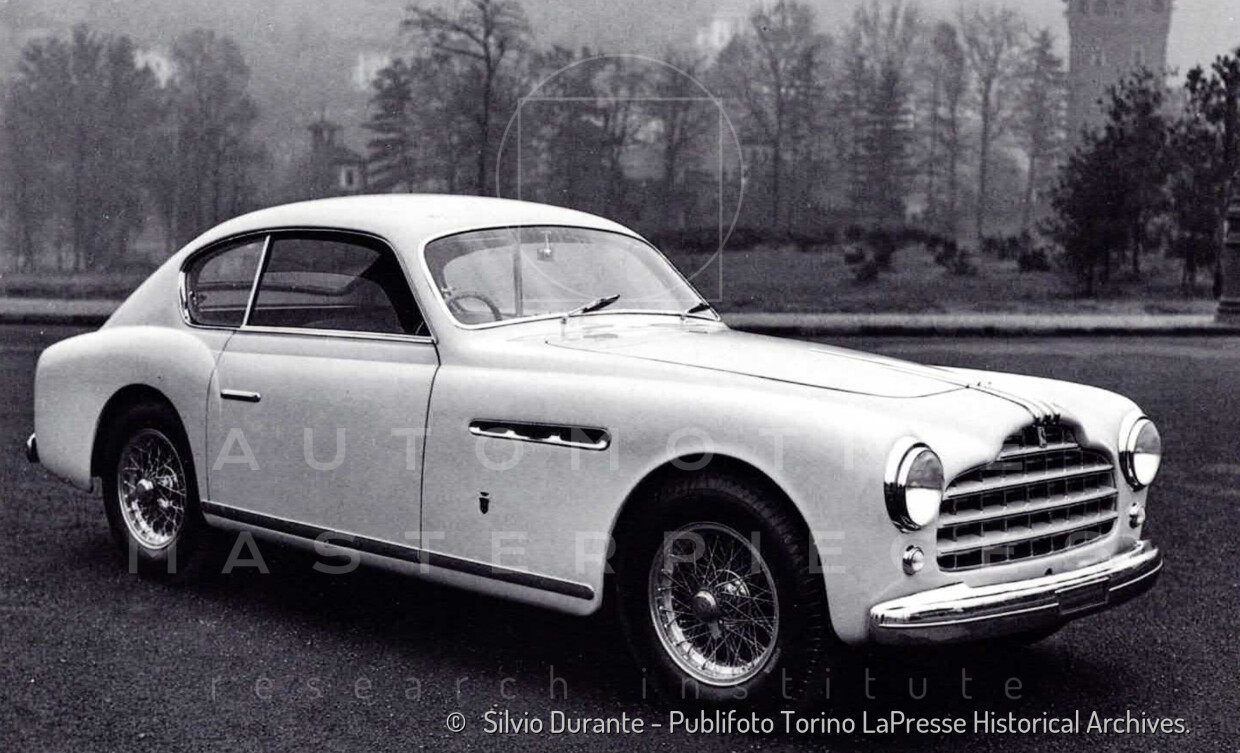
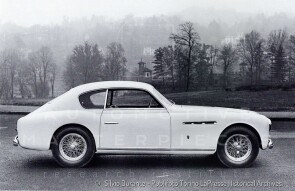
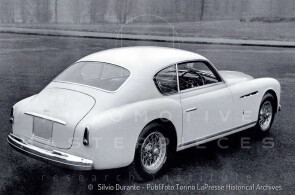
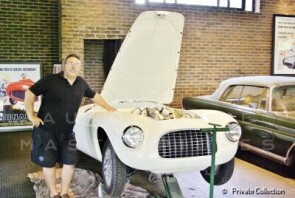
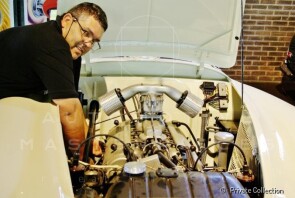
One-off. First Ferrari with a Ghia-Michelotti body. Prototype of 195 Inter-Ghia. 1951 Giro di Sicilia. Rebuilt as a Touring barchetta, then back to its origins.
Why am I an Automotive Masterpiece?
A. Concept and show cars
B. Prototypes
C. One-off models
D. Remaining cars from extremely limited production runs
E. Historic event cars
F. Cars owned by famous people
G. Team cars
H. Works cars
I. Press cars
J. Movie cars
K. Famous chassis’ cars
L. Limited edition cars
K. Famous chassis’ cars
Chassis no. 0049/S was the first of a series of nine Ferrari chassis bodied by Ghia to the same basic pattern, later followed by 0087/S, 0089/S, 0093/S, 0101/S, 0105/S, 0109/S, 0113/S and 0129/S.
L. Limited edition cars
no. 8 manufactured. Considered the prototype, therefore the number "0", of the 8 Ferrari 195 Inter coupé built by Ghia
1948 is generally regarded as Ferrari’s first full racing season, marked by the debut of the 2-litre version of its V12 engine, created for a new family of models destined for both sports-car competition and Formula Two. This was the beginning of the successful and long-lasting “Tipo 166” series, which played a major role in establishing Ferrari’s early international prestige. Designed to compete in the 2-litre class, the 166 was an evolution of the 159 S, itself directly derived from the first 125. It quickly proved competitive and achieved important successes in period. The 166 family included the 166 S, the 166 MM, the road-going 166 Inter, and the 166 F2 single-seater, all sharing the same basic 2-litre Colombo V12 architecture. The chassis and suspension layout were only slightly revised from the earlier models; the tubular steel frame was a Ferrari design and was built by Gilco. The engine was the well-tested 60-degree V12 designed by Gioacchino Colombo, enlarged to 1,995.02 cc in order to reach the limit of the 2-litre class. With up to 140 hp in sports-car form, it appealed to many gentlemen drivers of the period, while its flexibility and robustness made the 166 suitable for virtually every kind of competition. As was Ferrari practice, the model name referred to the displacement of each individual cylinder. In 1953, Ferrari introduced a second series of the 166 MM, known as the 166 MM/53, intended to keep the model competitive in the 2-litre sports category. With mechanical updates and revised bodywork by several coachbuilders, this later development extended the racing life of the 166, although by then competition from increasingly advanced rivals, especially Maserati, had become stronger.
The 166 Inter is generally regarded as Ferrari’s first true gran turismo. Developed from the 125 S and 166 S competition cars, it was in effect a sports car for the road. The “Inter” name commemorated the victories achieved by Scuderia Inter with the 166 S. Presented on September 15, 1948, at the Salone dell’Automobile di Torino together with its racing counterpart, the 166 Mille Miglia barchetta, the Inter was produced until 1950, with the series comprising 37 examples carrying chassis numbers in the odd-numbered Ferrari road-car sequence from 007 S to 0079 S. Like all 166s, it used the dedicated Gilco chassis, initially with the 2,420 mm wheelbase of the 166 S and later extended to 2,500 mm. It also shared the 2-litre version of Gioacchino Colombo’s V12 engine, although output increased thanks to revised induction with three carburettors. The first 166 Inter shown at Turin was an elegant coupé bodied by Carrozzeria Touring of Milan and built using the Superleggera system. Customer deliveries soon began, and the model became the first Ferrari intended primarily for road use rather than for the racetrack. While many clients chose Touring to clothe the bare chassis, more individual interpretations were supplied by other coachbuilders. Ghia produced a particularly daring one-off coupé, designed by Felice Boano, Stabilimenti Farina built several refined examples, and Vignale also contributed bodies that foreshadowed some of its designs of the following decade. Two cabriolets built by Pinin Farina and Bertone likewise anticipated those companies’ later involvement with Ferrari.
Ferrari 166 Inter Coupé, chassis no. 0049/S, is a significant car within the history of the 166 Inter. Its one-off coachwork belongs to the post-war phase of Carrozzeria Ghia, after the death of founder Giacinto Ghia and during the reorganisation of the company under Mario Felice Boano. Under his management, and bearing his stylistic imprint, Carrozzeria Ghia created some famous designs, especially the Supergioiello models, styled by Giovanni Michelotti and, in 1950, began the production of Ferrari bodies in small numbers. Even under Boano’s more restrained stylistic direction, Giacinto Ghia’s original directives remained unchanged: limited luxury production and an emphasis on quality and finish, rather than overt sporting character. Within that context, chassis no. 0049/S is generally regarded as the first example of the series and as an initial stylistic exercise for the development of the Ghia coupé style later seen on Ferrari’s road-going chassis, particularly the 195 Inter. In direct comparison, this single example based on the 166 displayed decorative elements: the three chrome strips that extended from the grille towards the windscreen along the bonnet, and the three “portholes” (as seen on Buick or Cisitalia) on the front fenders; these elements are also featured on the presentation car of the Ghia-bodied 195 Inter, photographed in a dark colour in front of the Municipio di Maranello for Ferrari’s official launch, but later disappeared from the other Ghia-bodied 195 Inters, otherwise virtually identical, perhaps in order to moderate an excess of decor and American-influenced taste. The design of the wide front grille, more linear than other elaborate examples proposed by Ghia, succeeds in lightening the car’s overall impression, yet still fails to give the model — let alone the Ferrari marque — a distinct identity, by then already moving towards a preference for the oval form for its front grilles. The first b/w photographs of the car are studio shots in a small portfolio, presumably produced by Ghia itself, in a setting consistent with Turin’s Parco del Valentino, with the car finished in an unusual colour for a Ferrari, Bianco, perhaps at the request of the first owner. Chassis no. 0049/S was delivered through the Roman dealer Inico Bernabei to its first owner and appears then to have been owned by a certain Mr. Jazzetta of Naples. It was recorded in 1951 at the XI Giro Automobilistico di Sicilia, entered with race number 413 and driven by Antonio Pucci. The subsequent ownership history places the car later in the United States, with several known owners including R. Costa, who is said to have sold the engine separately to Dave Selway, an American amateur racer active in SCCA competition, in California. It is not clear when the car was damaged in a garage fire or whether that event coincided with the sale of the engine. Among the subsequent owners of chassis no. 0049/S was also Stanley Nowak, a famous American Ferrari enthusiast, author and historian whose early documentation contributed to the formation of modern Ferrari collecting culture. The original front part of the body was modified between 1970 and 1976 with a low, wide, sporting oval grille, less “Ghia” and more “Pinin Farina” in style, before Ron Walden acquired the car. While the original 0049/S engine was installed in another Ferrari 166 Inter Coupé (chassis no. 0079/S) in the mid-1970s, chassis no. 0049/S was probably fitted with an engine from a 250 GT Boano. In 1985, the car became the property of two well-known and scrupulous collectors and restorers, Charles Betz and Fred Peters. Thanks to them, the original 0049/S engine was taken out of 0079/S and reunited with its original chassis. The modified-nose Ghia body was instead preserved separately, but removed by specialist Mike Sheehan in 1990. Sheehan’s employee Ron Barker shortened the chassis and modified the car to “166 MM specs”, then fitting a new “Touring Barchetta” replica body, using chassis no. 0044/M as a pattern, with some of the metalwork carried out by Steve Beckman’s Metal Works in Costa Mesa. Betz and Peters later showed the car in this livery at a number of American concours and Ferrari Club events. By 2010 the rebodied car had been sold at the Gooding & Company Monterey sale to a Brazilian collector, while the original body was acquired together with it. In 2011 Alexandre Salzano, a Brazilian restorer, began documentary research aimed at returning chassis no. 0049/S to its original form. The car remained stored in Florida and was later consigned, through representatives, to David Neyens, the Canadian classic-car historian and collector-car market analyst, for the Rick Cole Monterey auction in 2016, where it remained unsold. Only after that does the car appear to have been transferred to Brazil and, only in 2024, were the first images circulated of the car, by then redefined and re-bodied, with the restoration nearing completion. The history of 0049/S has also been complicated by a chassis-number issue. Two numbers are stamped within 20 centimetres of each other on the same frame tube: 0049/S and, to its right, 0070/S. The number 0049/S also appears stamped at the front of the Ferrari-owned 166 MM/53, chassis no. 0244/M, a car of known history now displayed at the Museo Ferrari. There is, however, no confusion with the 212 Export Coupé Vignale, chassis no. 0070/M, not 0070/S. Notes attributed to Marcel Massini explain the double stamping on 0049/S as the result of an earlier identity and/or paperwork swap, rather than evidence that the car was originally something else.