Researches
& updates
& updates
Ongoing
1955 Fiat 8V ZAGATO
Chassis no.
106*000062*
Engine no.
104000113
Coachbuilder
Zagato
Beacon
ON/OFF
ON/OFF
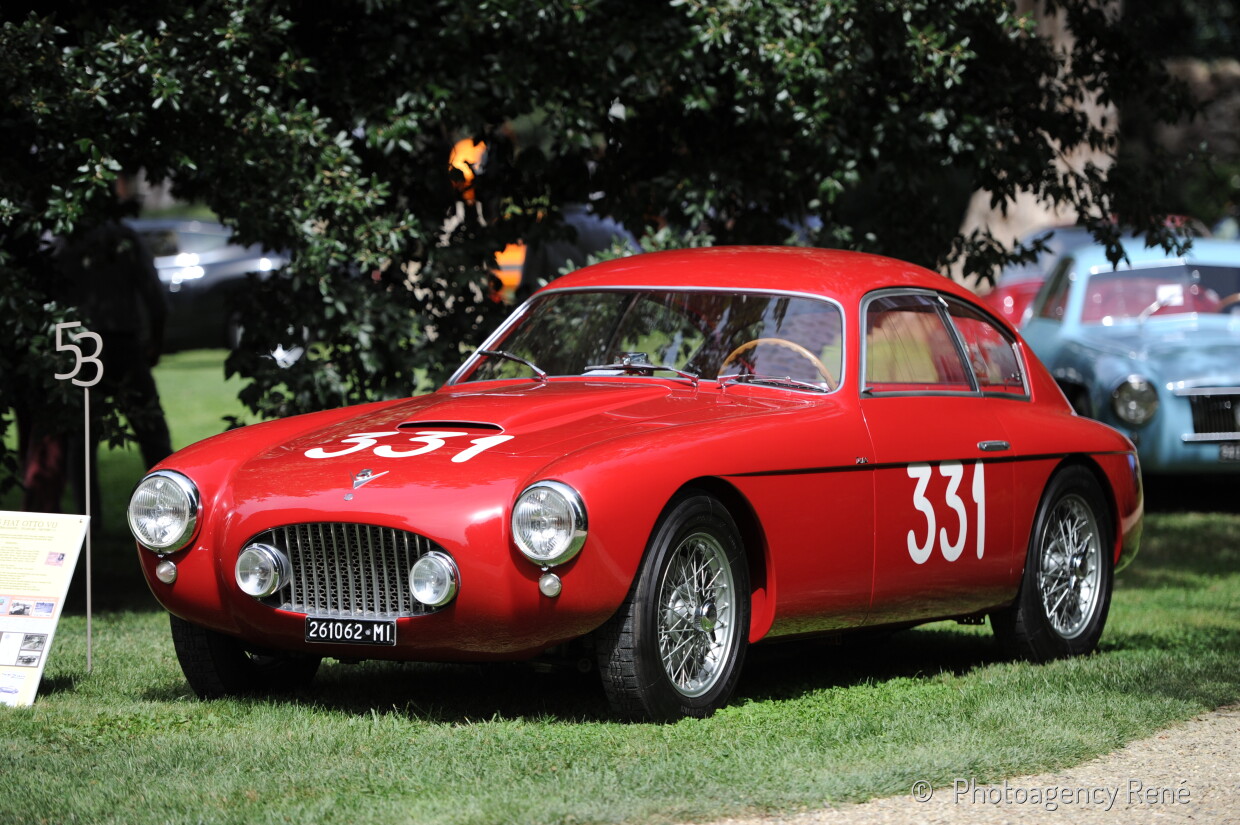
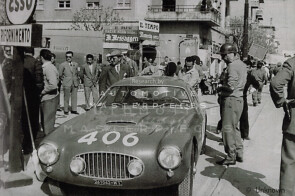
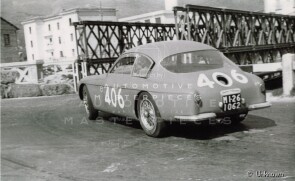
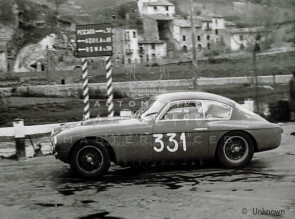
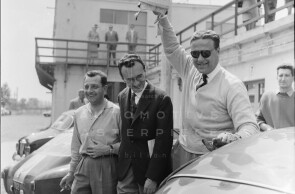
12th in class in 1955 and 13th in class in 1956 at the Mille Miglia; 13th in class at the 1956 Coppa Intereuropa. Successful in Southern California Club races.
Why am I an Automotive Masterpiece?
A. Concept and show cars
B. Prototypes
C. One-off models
D. Remaining cars from extremely limited production runs
E. Historic event cars
F. Cars owned by famous people
G. Team cars
H. Works cars
I. Press cars
J. Movie cars
K. Famous chassis’ cars
L. Limited edition cars
L. Limited edition cars
no. 31 manufactured, 3rd built. 3rd of regular production
In the postwar period, Fiat was working on an eight-cylinder engine internally known as Tipo 106. The engine was originally designed by Dante Giacosa for a luxury sedan, but that project was stopped. Rudolf Hruska, at the time working at the S.I.A.T.A., was given the task to design a car around the V8 engine. The development took place in absolute secrecy. As not to stress the experimental department of Fiat, production of the chassis was also taken up by S.I.A.T.A. Styled by chief designer Fabio Luigi Rapi, the Fiat 8V or “Otto Vù” was presented to the Italian press in February 1952 and first exhibited the following March at the Geneva Motor Show. The car shapes saw several changes in time: the prototype used an art deco grill extending into the hood which initially characterized the examples of the first series. A second series was made featuring four headlights with some of the later cars having a full-width windscreen. A high-performance coupé, destined to compete in the GT class: the 2-liter 8V model was a departure from the usual Fiat production. It was really welcomed by Italian private drivers, it inspired the tuners and it was, in a word, the car to beat in the 2-liter class, also thanks to the special versions built by Zagato or Siata. The Fiat V8 had a 70° V configuration of 1996 cc of displacement, at 5600 rpm the engine produced 105 hp in standard form with double two-barrel Weber 36 DCS carburetors, giving a top speed of 190 km/h. Some engines were fitted with two huge four-throat Weber 36 IF4/C carburetors offering 120 hp, but the intake manifold was very rare. The Fiat 8V is the only eight-cylinder built by Fiat. The engine was connected to a four speed gearbox. The car had independent suspension all round reworking the Fiat 1100 ones and drum brakes on four wheels. As the body was welded to the chassis it was a semi-unitary construction. Only 114 of these high-performance coupés had been produced, 64 of them with a “Fiat Carrozzerie Speciali” body, 34 first series and 30 second series. It was made available anyway in different body styles, offered by the factory and by various coachbuilders like Zagato, Pinin Farina, Ghia and Vignale. The production ceased in 1954.
The relationship between the Fiat 8V and Zagato began in 1952 when Ovidio Capelli, gentleman driver and FIAT dealer in Milan, commissioned a special body for his 8V chassis no. 000002 to Zagato. Cappelli was looking for a car that was lighter and faster than the production 8V designed by Fabio Luigi Rapi. The one-off was built in aluminum, embodied an “essential beauty” in terms of design, and had excellent racing qualities thanks to its lightness and agility. Cappelli’s victories convinced Fiat and Zagato to build together a small series of the 8V, leader in the GT class. Elio Zagato himself, as a perfect front man for the family business, also achieved good racing results with these cars. Carrozzeria Zagato bodied 31 cars, of which 22 were new from the bare chassis, and the other 9 were re-bodied examples originally with Fiat bodywork; within this group, there were 5 “Elaborata” (derived from the Rapi-designed model), and a one-off spider. Only six cars were built with the famous “double bubble” roof.
1954 Fiat 8V chassis no. 106.000062 was one of the 8V bodied by Zagato. It was the third of the 24 flat-roof examples produced. It features several special details, mostly present from new: alloy floor and belly pans, additional lights, no trunk opening, Plexiglas side and rear windows, Borrani steel sports rims, a knee support on the driver’s door, a hand grip on the transmission tunnel, a Jaeger rev counter, an Abarth racing exhaust, and a lightweight jack support; the extra wiper was added in 1955. The car was ordered and first owned by Lumir Leo Vesely, the entrepreneur who founded Yomo in Milan and a gentleman driver, and it was raced extensively during its early career. Entered by Vesely under the aegis of two important Italian teams, Scuderia della Guastalla and Scuderia Sant’Ambroeus, it contested an intense competition season and was 12th in class at the 1955 Mille Miglia, 13th in class at the 1956 Mille Miglia and 13th in class at the 1956 Coppa Intereuropa at Monza, among other events. By June 1957 the car had passed to Alfredo Pallavidini. He was the owner of S.I.R.C.A. (Società Italiana Rappresentanze Commercio Automobili), a Milan-based automotive representation and dealership business, linked with the commercial handling of special-bodied and competition-oriented cars by makers such as Ghia, Abarth and Zagato. The name “Sirca” also appears in connection with a small number of racing entries. By 1958 the Fiat had reached the United States, where it was owned and raced by Robert “Bob” Turner and his wife Carol. After an intense late-1950s racing period for both Bob and Carol Turner, SCCA and Cal Club merged in 1961 and the class structure changed; in practice, the transition to the SCCA classes was already operational by 1962. As a result, the 8V found itself placed in a class that did not suit it and in which it was no longer truly competitive. The Turners therefore withdrew it from regular racing, as Bob Turner himself later recalled to Tony Adriaensen, the noted Fiat 8V historian and authority, and continued to use it for weekend pleasure driving well into the 1960s. Then, probably in 1971, an electrical short occurred. After an attempt at repair, the car was simply put away and forgotten in storage, remaining in a kind of limbo for about 30 years. It was then advertised for sale, so there is no real gap in the car’s history, but rather continuity through changing circumstances. In a letter to Arthur Leerdam, Bob Turner also recalled that when he sold the car the mileage shown was only a little over 20,000 kilometres. In 2001 the new owner discovered it covered in dust and cobwebs, as the first photographs taken in daylight clearly show, but still complete. He began a complete restoration, later refreshed in 2011, which returned this Zagato-bodied Fiat 8V to renewed splendour.