
Researches
& updates
& updates
Ongoing
1954 Ferrari 750 monza
Chassis no.
0498/M
Engine no.
84 MZ
Coachbuilder
Carrozzeria Scaglietti
Beacon
ON/OFF
ON/OFF
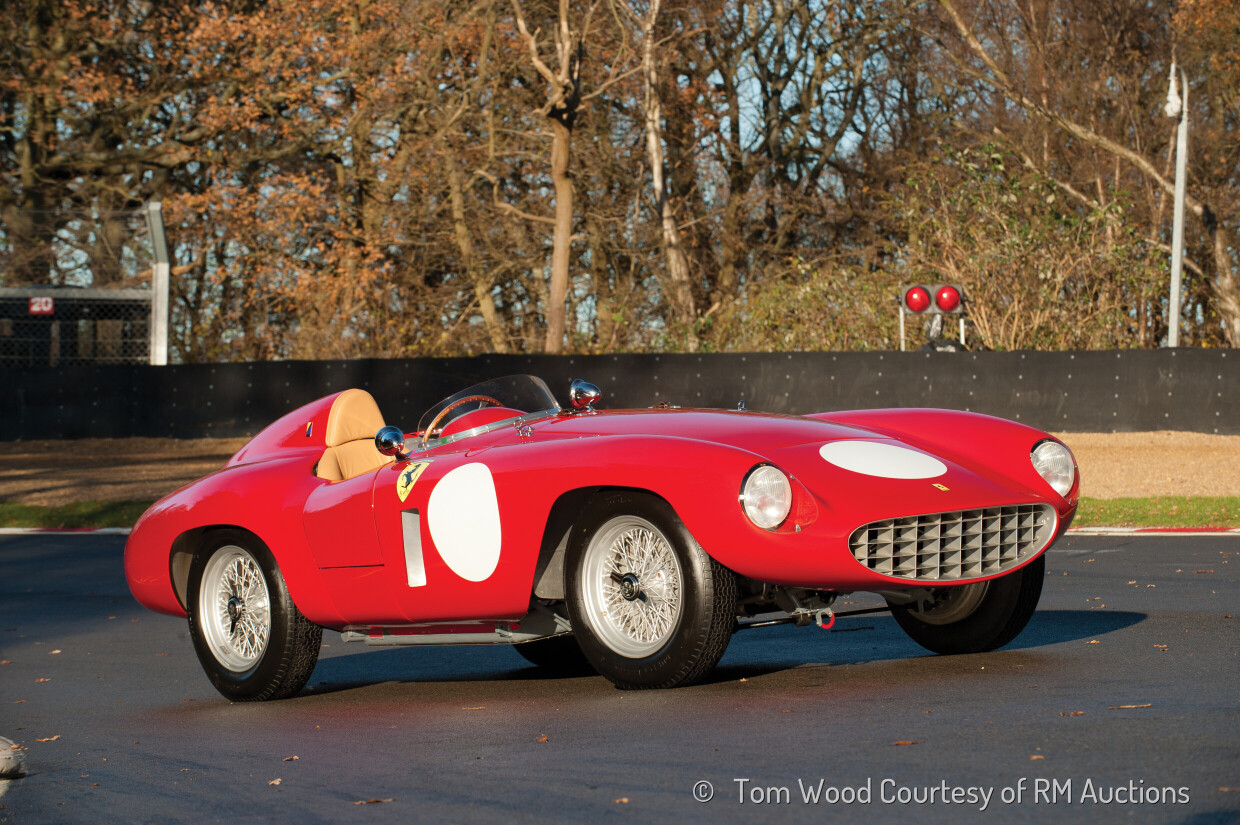
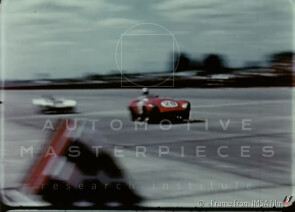
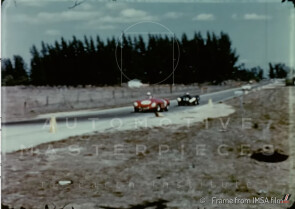
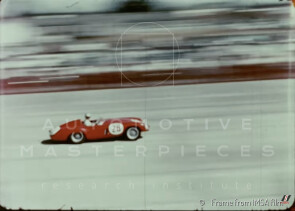
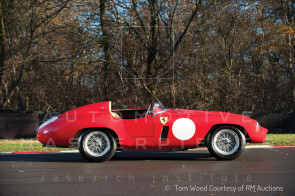
Strong debut at 55 Sebring for Chinetti with Taruffi, victories with young Phil Hill, legendary episode with Carrol Shelby at Mansfield. Long US racing history.
Why am I an Automotive Masterpiece?
A. Concept and show cars
B. Prototypes
C. One-off models
D. Remaining cars from extremely limited production runs
E. Historic event cars
F. Cars owned by famous people
G. Team cars
H. Works cars
I. Press cars
J. Movie cars
K. Famous chassis’ cars
L. Limited edition cars
G. Team cars
The Team Cars category is assigned to this car because, early in its racing career, it was entered by the semi-official operation run by Chinetti Motors—still without a formal team designation—under Luigi Chinetti, who would later establish the well-known N.A.R.T.
L. Limited edition cars
no. 31 manufactured
During the 1950 Formula Two races, Enzo Ferrari observed that four-cylinder race cars from manufacturers like HWM and Cooper exhibited superior fuel efficiency compared to his 12-cylinder cars. The Ferrari V-12 engine, designed by Gioacchino Colombo, had dominated the Formula 2 class in 1949. In 1947, Aurelio Lampredi joined Ferrari and became Colombo's assistant. By the late 1940s, Ferrari tasked Lampredi with developing a four-cylinder engine that was more fuel-efficient and lighter than the larger 12-cylinder unit. When the sport’s governing body decided that the World Championship would be run under Formula 2 regulations, the development of the four-cylinder engine became a high priority. Completely constructed of light alloy, the new engine featured a double overhead camshaft head. Two versions were created: a 2-liter and a 2.5-liter. By 1952, the engine was ready and made its debut in the 500 F2, where Alberto Ascari won the World Championship with six victories out of seven races. He won the title again the following year. In early 1954, Ferrari offered the four-cylinder sports/racer to customers as a two-liter model, with each cylinder displacing almost 500 cubic centimeters. It was named "500 mondial" in honor of Ascari's dominance in the Formula 2 World Championship. The 2-liter four-cylinder engine, equipped with two Weber carburetors, was mounted at the front and drove the rear wheels. Producing 170 horsepower, it propelled the 1,500-pound vehicle to a second-place finish in the 1954 Mille Miglia. A class victory was achieved in 1956 at the 12 Hours of Sebring endurance race.
The Ferrari 750 monza was produced between 1954 and 1955, with approximately 31 examples built. The majority were bodied by Carrozzeria Scaglietti, following a design by Dino Ferrari, Enzo Ferrari's son, while a few early units featured bodies by Pinin Farina. Developed as a successor to the 500 mondial, the 750 monza featured a larger and more powerful engine. It was powered by a 3.0-liter inline-four engine designed by Aurelio Lampredi, delivering approximately 260 horsepower at 6,000 rpm. This engine was an evolution of the earlier 2.0-liter unit used in the 500 mondial, offering increased performance and torque. The car featured a five-speed manual transmission and a lightweight tubular steel chassis, contributing to its competitiveness on the track. The 750 monza made its debut on June 27, 1954, at the Gran Premio Supercortemaggiore held at the Monza Autodrome. In this race, two examples of the model secured the top two positions. Victory went to the pair Umberto Maglioli and Mike Hawthorn, followed closely by José Froilán González and Maurice Trintignant, also in a 750 monza. This remarkable one-two finish at its debut led to the car being named after the Monza circuit. Throughout its racing career, the 750 monza achieved notable results, including a win at the 1954 Tourist Trophy. It was driven by some of the era’s top talents, such as Phil Hill, Eugenio Castellotti, and Alfonso de Portago. However, by 1955, the 750 monza began to face stiff competition from more advanced rivals, including the Mercedes-Benz 300 SLR, prompting Ferrari to develop successors like the 857 S and 860 monza. The Ferrari 750 monza played a significant role in the marque’s motorsport legacy, demonstrating the potential of Lampredi’s four-cylinder engine architecture in larger displacements and further strengthening the partnership between Ferrari and Scaglietti.
The Ferrari 750 monza chassis 0498 M with Scaglietti spider coachwork is one of the most significant examples of the series, both for its pioneering role in the spread of Ferrari four-cylinder cars in the United States and for the caliber of the drivers who shaped its racing history. Delivered new to Chinetti Motors in September 1954, it was one of the very first Monzas to reach the United States. Its debut took place in March 1955 at the 12 Hours of Sebring, where it competed in an “unofficial” entry coordinated by Nello Ugolini, the historic sporting director of Scuderia Ferrari. Entrusted to champion Piero Taruffi and Harry Schell, it finished with a significant fifth overall after 177 laps, immediately demonstrating the effectiveness of the design and the competitiveness of the Lampredi four-cylinder. At Sebring the car did not yet carry the white-and-blue livery typical of the Ferraris raced by Luigi Chinetti (it should be remembered that NART would not be founded until three years later), but instead a very traditional Ferrari Rosso Corsa. The ivory white livery, with blue detailing (the edging around the grille and the background of the roundels), arrived a few months later, when the car was sold to George Tilp, a leading figure in American motorsport, who entrusted 0498 M to a young Phil Hill. This phase of the car’s career is particularly important, as it coincides with one of the early periods of sporting development for the future world champion. Hill achieved a series of notable successes in the 1955 SCCA events, including two overall victories in the Beverly races on July 4, followed by the win in the Seattle “Shake Down” Race and the second overall in the Seafair Trophy Race held the same day. A few months later, Hill took another overall victory at Elkhart Lake and ended the year with further prestigious results, helping to consolidate the competitive reputation of the Monzas in the United States, such as the second overall at Hagerstown and the one at the Nassau Governor’s Trophy, where 0498 M finished immediately behind another factory Ferrari 750 Monza. At the end of 1955, 0498 M passed to driver Paul O’Shea, who entered it in the Montgomery races in August 1956, achieving two third places overall. In September 1956 the car came into the hands of Jack Hinkle, another very active private driver, who raced it at Coffeyville, achieving a third and then a second overall in the two heats held on the same day. This period confirms how the car continued to be competitive despite intensive use and almost two complete seasons of activity. At the beginning of 1957 the monza was purchased by another driver, A.D. Logan, whose stewardship played a key role in the technical history of 0498 M. Logan, according to photographic evidence, had the car repainted a pale yellow with red background of the roundels and installed a 3.5-liter Lampredi four-cylinder engine taken from a Ferrari 857 Sport (unit 0578M), a transformation that significantly increased performance. It was with this configuration that Ray Jones, Logan’s trusted driver, achieved an impressive series of results: first the participation in the Frostbite Races in Fort Worth; then the three consecutive overall victories at Galveston in the Gran Carrera Lafitte of July 1957, where the car arrived scenically transported on a refrigerated truck (Logan was a fruit and vegetable importer), together with a Maserati 300S, driven by Logan himself. To this phase also belongs one of the most famous episodes in the entire history of 0498 M: the Labor Day race at Mansfield in September 1957, during which Carroll Shelby, unable to race under his own name due to SCCA restrictions imposed on professional drivers, took the wheel of the monza under the pseudonym “John S. Smith.” Starting from the back of the grid, Shelby built an enormous advantage in just a few laps, nearly lapping the entire field before voluntarily returning to the pits two laps from the end. The official notes speak of a retirement due to engine trouble, but his gestures toward the crowd clearly indicated that he had already shown what he intended to show. The sources do not entirely agree on the race numbers and the individual heats, but they unanimously attribute to this chassis the famous Shelby charge, which became an integral part of his racing legend. Starting in September 1957 the car passed to driver Edwin D. Martin, who extended its career for another two years with numerous significant results: the performance at Fort Pierce, the Lawrenceville race, the participation at Virginia International Raceway, the Galveston events with an overall victory, and the double engagement at the Bahamas Speed Weeks in December 1957. In 1958 the car continued to appear on tracks in the American South, with results of absolute importance such as the victories at Stout Field and Chester and the second place in the preliminary race at Courtland, where the car appeared red once again. Even in 1959, 0498 M remained competitive, achieving a second overall in the main race at Courtland on October 11. The fact that the car was still winning after four full seasons of racing testifies to the robustness of the design and the care taken in the interventions carried out by its owners. In 1960 the car passed to Chuck Nervine, who took it to an overall victory at Tuskegee, while the following year it appears associated with the name of Henry Jackson, although more recent documentation suggests that this reference may concern another chassis. Another “uncertain” chapter is the probable installation by Nervine, in 1961, of a Chevrolet V8 engine on chassis 0498 M. From mid-1962 no further significant results are recorded, and in 1963 the car was purchased by enthusiast and collector Jim Hinson for $5,000. But perhaps his plans changed; from that moment it remained unused and, as often happened to retired racing cars, it was abandoned outdoors next to a barn for over thirty years, in Texas, with the consequent deterioration of the bodywork. Found again in the mid-1990s, it was described by Ferrari specialist Mike Sheehan as follows: “No engine, transaxle and oil tank, correct Ferrari brakes, sat outside under a tree for 30 years, basically a good frame, front suspension and fuel tank and bodywork, enough to copy for pattern.” In 1998, 0498 M was purchased by Australian collector Terrence Healy, who began an extensive restoration program. Since the original Scaglietti bodywork was severely compromised, a new body was built, faithful to the original lines and taken directly from the surviving panels; the latter, preserved, showed interesting diagonal air vents and rear brake-cooling ducts, rare features among the Monzas. During the restoration, a correct 3-liter Lampredi four-cylinder engine was installed, purchased from Tom Wheatcroft and generally identified as ex-625 GP; later research, however, found that it is not possible to confirm with certainty the identification as engine no. 006, a detail that remains open. In 2004, still as a “work in progress,” the car was purchased by another Australian collector, Peter Harburg, who initiated the completion of the restoration, followed by Geoff Smith, who gave new life to the car after decades of deterioration. During the restoration, Smith also built a replica of this car, with an engine from a 250 GT, completed around 2007 and remaining in Australia until 2020, before being sold in Europe. In February 2006, the original 0498 M was auctioned by RM in Paris with the original body parts, still preserved as a valuable testimony to its initial configuration. The car was sold for a significant amount to a Swiss collector who, after almost 20 years, transferred it to the current owner, who has brought the 750 monza back to the United States. Two further chapters mark the most recent history of 0498 M. In 2018 the car underwent a complete restoration carried out directly by Ferrari. A complete new engine, complying with the original specifications, was built by Ferrari itself. On that occasion, the factory developed and patented an innovative process aimed at preserving the original Scaglietti bodywork: by recreating the exact chemical composition of the original alloy and applying it through a hot-spray coating technique, Ferrari was able to stabilize, consolidate and permanently bond the existing metal, effectively saving the body in its entirety rather than replacing it. Upon completion of the restoration, chassis 0498 M was delivered to the Ferrari Design Studio, where it served as a reference model during the development of the Monza SP1 of the Icona series, thus linking one of the most significant four-cylinder sports racers of the 1950s to a contemporary reinterpretation of the same spirit.