
Researches
& updates
& updates
Ongoing
1965 De Tomaso VALLELUNGA
Chassis no.
807DT*0101*
Engine no.
701M6015BA
Coachbuilder
Carrozzeria Ghia
Beacon
ON/OFF
ON/OFF
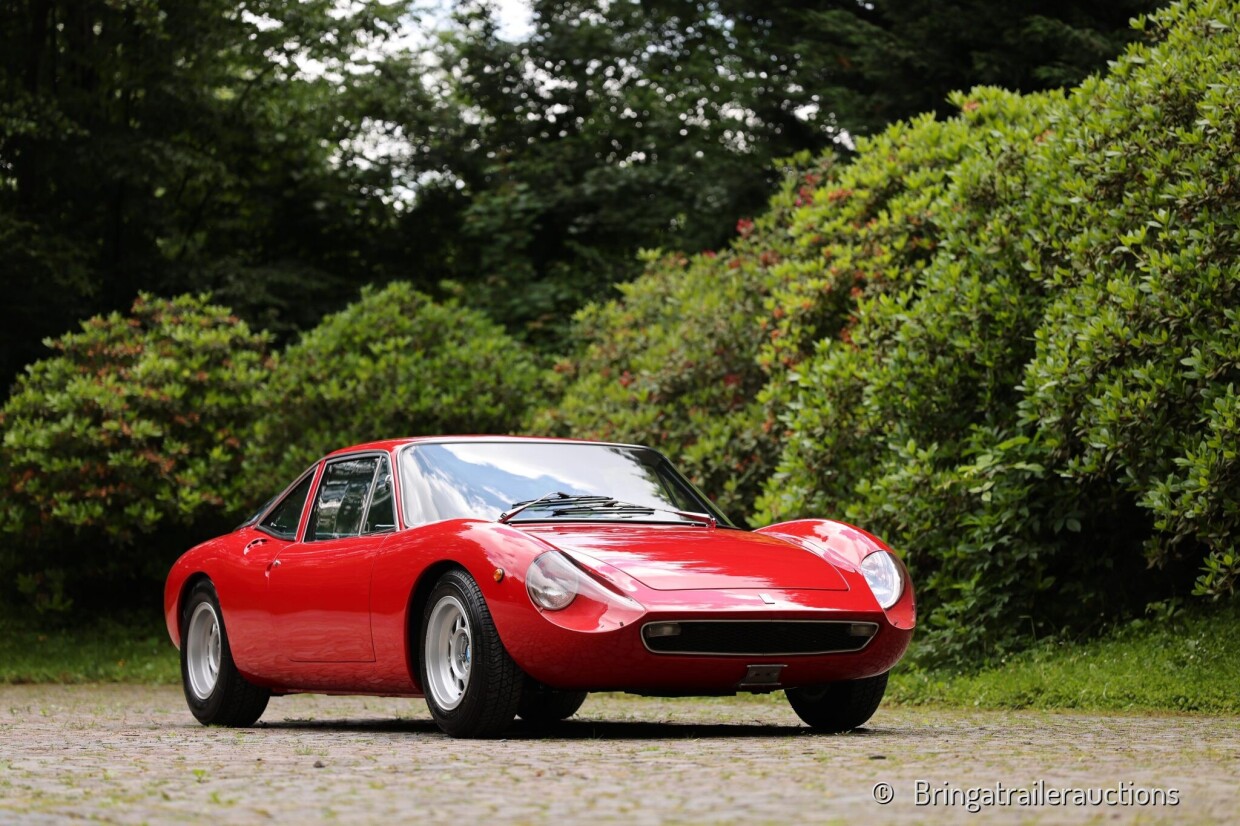
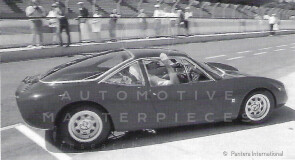
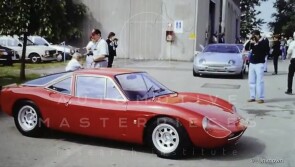
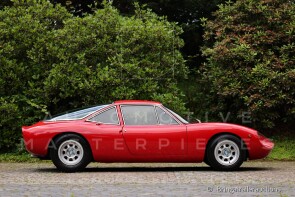
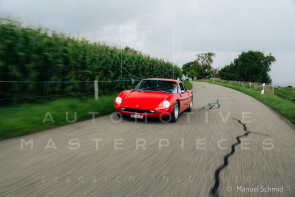
The first production Vallelunga of supposed 50 examples built by Ghia with fiberglass body. Cornerstone of car design. Owned and restored by marque enthusiasts.
Why am I an Automotive Masterpiece?
A. Concept and show cars
B. Prototypes
C. One-off models
D. Remaining cars from extremely limited production runs
E. Historic event cars
F. Cars owned by famous people
G. Team cars
H. Works cars
I. Press cars
J. Movie cars
K. Famous chassis’ cars
L. Limited edition cars
K. Famous chassis’ cars
First example of regular Ghia production and therefore featuring the fiberglass body.
L. Limited edition cars
no. 50 manufactured, 1st built. 50
The Vallelunga was the first road-going De Tomaso, intended for production. Its name referred to the Vallelunga circuit, where De Tomaso often tested its racing cars. In original plans, the project was intended to be sold to an automotive group and the car built in one hundred examples, to compete in the GT category. After failing to arouse interest from any manufacturer, De Tomaso decided to build the car himself. A first Vallelunga barchetta prototype was shown in 1963, but the better-known closed version appeared the following year on the Fissore stand, at the 1964 Salone dell’automobile in Torino—a compact mid-engined aluminum berlinetta. Its curving fenders, taut waistline, and glassy tail reprised forms from traditional sports cars, updating them and setting a stylistic direction for much of the 1960s. Fissore had developed the Vallelunga’s shape in-house: the head of design was Mario Fissore, son of founder Bernardo, assisted by a young Franco Maina, credited with the drawings. The car was admired by the specialized press and described on Motor Italia as “the most interesting work in the field of medium-displacement GT cars.” The Vallelunga featured sophisticated solutions, that later became standard. The chassis was a backbone structure with a tubular rear subframe, while the engine and gearbox assembly formed a stressed part; the suspension featured double wishbones at the front, an articulated rear layout with upper and lower links, coil springs, anti-roll bars, and four-wheel disc brakes. The 1.5-litre Ford inline four engine, derived from the Cortina/Corsair, fed by twin Weber dual barrel, could reach an output of about 104 hp at 6,200 rpm; the 4-speed manual gearbox was on Volkswagen basis with Hewland parts. Dry weight is given as approximately 700 kg and claimed performance suggested a top speed of over 200 km/h. As an entrepreneur, Alejandro de Tomaso proved to be a volcanic and charismatic figure, but also a controversial one, and earned a reputation for “creative borrowing.” To secure greater visibility and production capacity, De Tomaso developed a business relationship with Ghia and had the Vallelunga’s production transferred there. At the 1965 Salone dell’automobile in Torino, the same Vallelunga appeared again—this time on Ghia’s stand. The Ghia version differed from Fissore in several measures, useful for low-volume production: the body was fiberglass instead of aluminum, the access to the engine was through a glass hatch instead of through the fully hinged rear section, certainly more expensive. The simplifications were, howewer, accompanied by comfort-oriented solutions, unusual for a small sports car of the period. The changes can be attributed to the only significant figure at Ghia during this period: Sergio Coggiola, later founder of Carrozzeria Coggiola. To indicate the Vallelunga’s appreciation was its inclusion in the MoMA exhibition “The Racing Car: Toward a Rational Automobile,” in autumn 1966; honored as “an example of technological progress and outstanding design.” Unfortunately, Fissore’s credit had been erased. It’s also reported that De Tomaso didn’t pay for already made bodies, therefore sent to a local scrapyard. The Vallelunga was built in extremely small numbers, with production life ending by 1968. Sources do not fully agree on the total number built. There are photographs of two aluminum Fissore prototypes, distinguished by a different grille treatment. According to research, however, the numbers appear to be as follows: five aluminum-bodied cars made by Fissore. One of them, unstamped, was rebodied at Ghia in fiberglass and retained by De Tomaso. This car was the first one presented by Ghia. Then the four cars made from unbodied chassis originally made at Fissore (chassis no. VL1602D, VL1607, VLD1611, and VL1612). Regular Ghia production amounted to a total of 50 cars (chassis numbers 807 DT from 0101 to 0150). It is supposed that additional chassis were built, with some variations, and used for other models, and that not all of them were stamped. The De Tomaso Vallelunga had a long-lasting legacy: Tom Matano, head of Mazda design, when designing the Miata prototype, brought two cars into the studio for inspiration: a Lotus Elan and his own Vallelunga. He and his team studied them from every angle to understand why they worked so well visually, and so they did for the Vallelunga-inspired second-generation Mazda MX-6.
The De Tomaso Vallelunga with chassis no. 807 DT 0101 was the first example of regular Ghia production and therefore featured a fiberglass body; although no production date is recorded, it may reasonably be assumed to have been built in September 1965, when production began. The circumstances—its being the first chassis number, its presumed production date, and the car’s subsequent presence in Switzerland with its earliest known owners—are consistent with the hypothesis that this example may have been the car displayed on the Ghia stand at the Geneva International Motor Show twice, in March 1966 and March 1967. This hypothesis, however, remains to be verified. The car then appears to have had an exclusively road-going life and was never used in competition. The earliest documented Swiss registration dates from August 4, 1969, when the car was recorded with licence plate SO 58454, although the owner at that stage remains unknown. By July 26, 1971, the Vallelunga was registered to Erich von Känel, in the Canton of Solothurn. It later passed to E. Plüss of Brittnau. By 1979, the car is reported as having blue paint and as being disassembled, without engine or gearbox; the possible owner at that time was Erwin Müller. In 1982, it was photographed in this condition in a number of shots by enthusiast and racing driver Hansuli Büchi. During the 1980s it belonged to Ulrich Senn, who eventually sold chassis 0101 around 1994 to the marque specialist Marcel Schaub, in poor condition but complete and with only 23,000 km on the clock. Schaub undertook a demanding restoration, carried out partly in collaboration with the factory; suffice it to say that, thanks to original moulds found at De Tomaso, the destroyed windscreen could be recreated. The work lasted approximately two years, and the car was finished in red. He subsequently attended some meetings with the restored car. In May 1996, De Tomaso organized a major event at its Modena factory, bringing together De Tomaso clubs from around the world for a preview presentation of the first Biguà prototype to clients and enthusiasts. The gathering took place over several days, from 16 to 19 May 1996, shortly after the model’s Geneva Motor Show debut and Schaub drove his Vallelunga to Modena to attend this event. There, he had the opportunity to meet Alejandro De Tomaso in person and chassis no. 0101 was awarded “Best of Show”. The car left Switzerland for Germany in 2004, when Schaub sold the Vallelunga to Manfred Lang, an active figure within the De Tomaso world. A receipt dated 22 December records the sale, describing the car as a restoration project with fire damage and missing parts: something had happened after Modena, apparently starting with the carburetors. The car remained in a long period of limbo, and only by late 2023- early 2024 did Lang entrust it to marque specialist Roland Jaeckel in Hamburg. The work is said to have included repairs to the affected areas, the installation of replacement dual Weber carburetors, a retrimming of the cabin in black by Autosattlerei Jach of Herford, and mechanical servicing of the Ford Kent inline-four. The car now had (very few anyway) 27,000 km on the clock. In December 2023, Marcel Schaub passed away, and the book he had written together with the Argentine author Alejo Perez Monsalvo, De Tomaso – Racing Blue Blood, was published posthumously. Conceived as a sort of opera omnia on De Tomaso cars, the book’s release and Shaub’s passing were celebrated by an event held at the Meilenstein business hotel in Langenthal, Switzerland, featuring a large exhibition of cars from the Argentine manufacturer, including the newly restored Vallelunga chassis no. 0101. In July 2024, the car was sold by ImagestreetClassics, a Bring a Trailer partner, on behalf of Manfred Lang to the current owner, Collezione Il Maneggio, thus returning to Switzerland once again.