
Researches
& updates
& updates
Ongoing
1935 Fiat 508 S Balilla Sport
Chassis no.
508S070266
Engine no.
108CS000283
Coachbuilder
Carrozzerie Speciali Fiat
Beacon
ON/OFF
ON/OFF
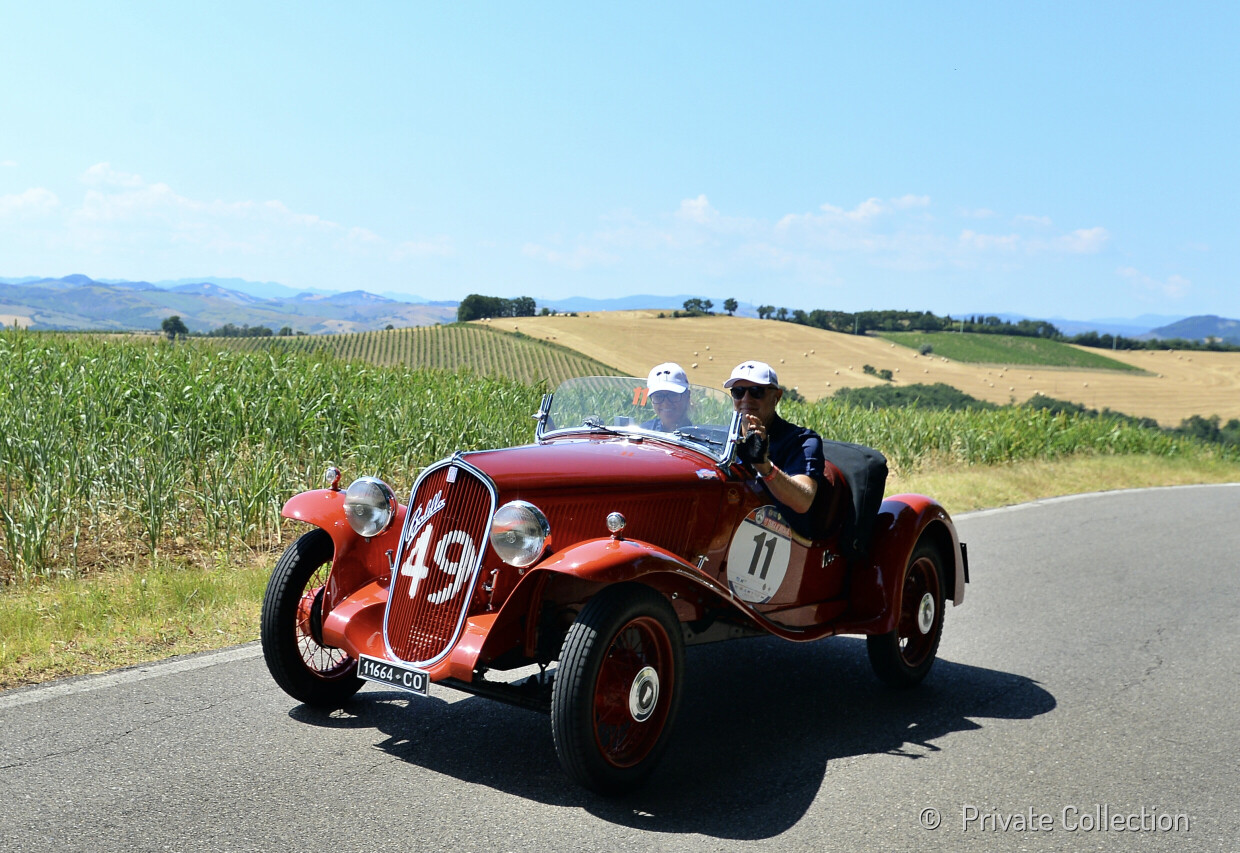
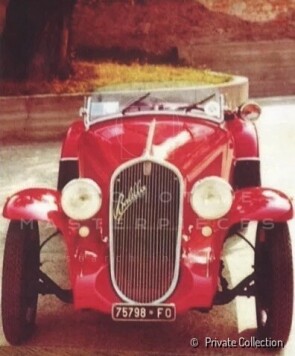
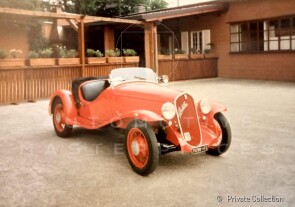
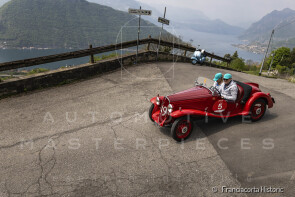
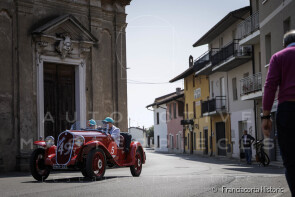
Mille Miglia 1937. Racing career under investigation. Notable Italian ownership chain, later linked to the Besana family and Bburago historic model-car legacy.
Why am I an Automotive Masterpiece?
A. Concept and show cars
B. Prototypes
C. One-off models
D. Remaining cars from extremely limited production runs
E. Historic event cars
F. Cars owned by famous people
G. Team cars
H. Works cars
I. Press cars
J. Movie cars
K. Famous chassis’ cars
L. Limited edition cars
Launched in 1932, the Fiat 508 Balilla quickly established itself as the car that put Italy on wheels. Developed under the technical direction of Tranquillo Zerbi, with contributions from Antonio Fessia and Dante Giacosa, the Balilla was designed to embody the regime’s ambition of creating an affordable national car. Its release aligned with the Fascist government’s push for modernization and industrial self-sufficiency, aiming to broaden access to mobility and reinforce national pride through Italian engineering. The car’s success stemmed from its low purchase price, modest operating costs, and ease of maintenance—key factors in a country still emerging from postwar economic hardship. Powered by a 995-cc inline four-cylinder side-valve engine producing around 20 hp, the Balilla offered adequate performance for its class. It featured a three-speed gearbox, rear-wheel drive, and a simple yet robust ladder-frame chassis with solid axles and leaf springs, prioritizing reliability and ease of repair. Compact, mechanically straightforward, and affordable, the Balilla became a cornerstone of Italian mass motorization. It was not only popular among private buyers, but also widely used in commercial and institutional roles—becoming a true icon of Fiat’s pre-war production and Italy’s automotive awakening.
The 508 S Balilla Sport, a competition version, was inspired by an original design by Carrozzeria Ghia. The first examples were built on the Fiat 508 Spyder chassis, suitably modified as “tipo corsa” (i.e. racing type), and still bore chassis numbers without the letter "S". In 1933, Fiat officially introduced the sporting version 508 S Balilla Sport, characterized by a lighter, elegant, and attractive body, which soon became a dream car for the younger generation. Fiat acquired the design rights from Ghia and produced two versions: the standard version, known as “Coppa d’Oro”, featured fully enclosed fenders, while the “Mille Miglia” version used lighter cycle fenders and a more lightweight chassis. The engine was also uprated from the standard 36 hp to 43 hp. The Coppa d’Oro version won the Coppa d’Oro del Littorio, from which it took its nickname, while the Mille Miglia version won the 1933 Mille Miglia in the up to 1100 cc Utility Class. Clothed in stylish open two-seater bodywork with a distinctive finned tail, the early "Spider Sport" models retained the crash gearbox of the standard cars but featured a special carburetor. Combined with a raised compression ratio of 7:1, this allowed for a maximum output of 36 hp at 4,000 rpm. In 1934, the second series 508 CS was introduced, improving on this successful formula. It adopted a four-speed synchromesh gearbox and an overhead-valve engine producing 46 hp. The final drive ratio was also modified, allowing for a top speed of 110 km/h. At the time, Siata was already producing accessories and performance parts for the Balilla, making it arguably one of the earliest car tuning companies in automotive history.
The Fiat 508 S Balilla Sport, chassis no. 070266 and engine no. 000283, was manufactured on 22 March 1935 and bodied by Carrozzerie Speciali Fiat. First registered in Genoa with the plate GE-19396, it was initially owned by Danilo Albaredi and then by Eligio Castelletti. Castelletti, of Piedmontese origin and resident in Cuneo at the time, is presumed to be the same who married Maria Beccaria in 1931. Beccaria belonged to a well-to-do Genoese family, a connection that may help explain the car’s early link between Genoa and Cuneo. Castelletti’s precise professional activity has not yet been fully established, although he appears to have been connected with industrial circles. The car passed in March 1937 to Umberto Villa, a renown racing driver and Fiat dealer in Oggiono (LC). Under his ownership, the car was entered in the XI Coppa delle Mille Miglia, held on 4 April 1937, carrying race number 49 in the Turismo category, 701–1100 cc class, with the same Umberto Villa driving and Efrem Castelli as co-driver. The crew retired during the race, but the entry remains a significant part of the car’s early sporting history. Shortly afterwards, the car passed to Giovanni Lietti, brother of Mario Lietti, a documented competitor in major Italian road races after the war. Given Mario’s known sporting activity, Giovanni’s ownership may have related to his brother’s racing interests, possibly even as a nominal registration, although this remains only a working hypothesis. Ongoing research also suggests that Mario Lietti may have used the car in competition; significantly, he is documented as having raced with Efrem Castelli as co-driver, the same co-driver who had taken part in the 1937 Mille Miglia on this car with Umberto Villa. In 1939, the car returned to dealer Villa. Its subsequent history is documented through a long chain of Italian ownership, with later registrations in Milan and Forlì. Among its later owners was Count Vincenzo Antolini Ossi, a figure of local and sporting relevance, documented as a competitor in the Mille Miglia during the 1950s. He was connected with the Forlì automotive world, including activities traditionally associated with the Fiat dealership in the so-called Palazzo della Fiat in Piazzale della Vittoria, and with wider family links to prominent Italian sporting circles. Period photographs of the car before restoration are recorded in 1978 and 1979. In more recent years, the car entered the Besana family collection. Marco and Alessandro Besana belonged to the family behind Bburago, the well-known Italian manufacturer of die-cast toy and scale-model cars, whose production occupied an innovative position between toys and collectable models by offering well-detailed miniatures at accessible prices. The company was known for studying real cars closely in order to reproduce them with accuracy, as happened with several historic models; it is plausible that this Fiat 508 S Balilla Sport was acquired in the same spirit. Following Bburago’s financial crisis and bankruptcy in 2005, caused by a combination of increasing international competition, pressure from lower-cost Asian production, and the company’s inability to sustain its Italian manufacturing model in a rapidly changing die-cast market, the car was included among the assets sold through the bankruptcy proceedings. It was then reacquired by Besana, a circumstance that clearly suggests a particular personal attachment to this specific Fiat 508 S Balilla Sport. The car later passed from the Besana family to a collector before entering its current private collection in 2024. Its identity is further supported by a Fiat Classiche certificate of origin issued in September 2024, a FIVA Identity Card issued by ASI in August 2025, and recent photographic documentation of the chassis and engine numbers.
