Researches
& updates
& updates
Ongoing
1961 O.S.C.A. 1600 GT
Chassis no.
0014
Engine no.
0014
Coachbuilder
Carrozzeria Touring
Beacon
ON/OFF
ON/OFF
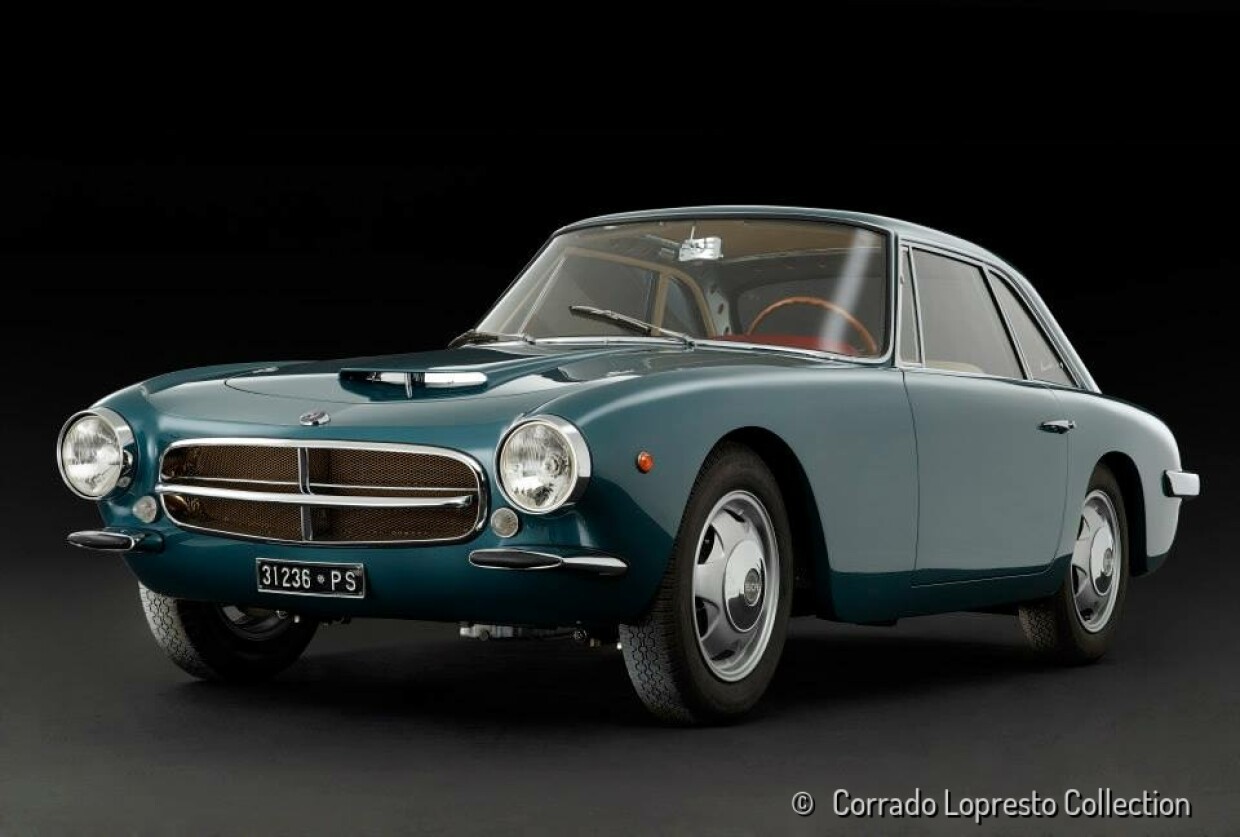
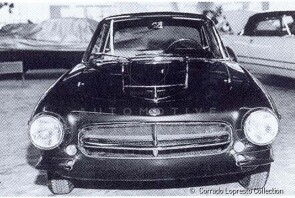
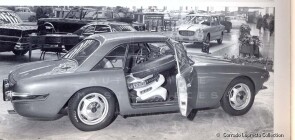
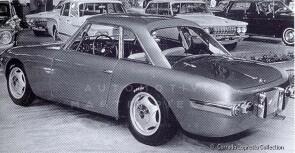
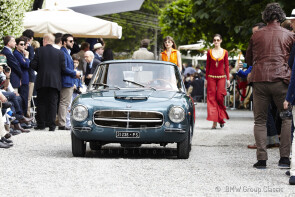
One of the two OSCA 1600 GT prototypes, bodied by Carrozzeria Touring with Superleggera system. Example exhibited at the 1961 Salone dell'Automobile in Torino.
Why am I an Automotive Masterpiece?
A. Concept and show cars
B. Prototypes
C. One-off models
D. Remaining cars from extremely limited production runs
E. Historic event cars
F. Cars owned by famous people
G. Team cars
H. Works cars
I. Press cars
J. Movie cars
K. Famous chassis’ cars
L. Limited edition cars
In 1937 the three surviving Maserati brothers — Ettore, Ernesto, and Bindo — sold their original company, Officine Alfieri Maserati, to the Orsi family of Modena. The sale contract included a ten-year consultancy agreement for the brothers. Once that period ended, they chose to return to San Lazzaro di Savena, near Bologna, and in 1947 founded Officine Specializzate Costruzione Automobili – Fratelli Maserati S.p.A., universally known by the acronym O.S.C.A. The intention was to build exclusive racing cars of small displacement, continuing the Maserati tradition of competition-oriented machinery. OSCA’s first model was the MT4 (Maserati Tipo 4 cilindri), a small, lightweight sports racing car powered by an overhead-cam engine, which made an immediate impact in post-war competition. During the 1950s, OSCA concentrated largely on racing programmes, developing its own twin-cam engines in a range of displacements. These engines — admired for their performance — also attracted the attention of Fiat: OSCA designed a twin-cam four for Fiat, later installed in Fiat sports models (notably the Fiat 1600S) and built in the Fiat works under OSCA supervision. Around 1960, OSCA decided to produce a road-going GT car to broaden its market beyond pure competition. The result was the OSCA 1600 GT, a sleek grand tourer built on a purpose-designed tubular steel chassis with independent suspension and powered by a 1,568-cc twin-cam four-cylinder engine developed by OSCA and closely related to the Fiat/OSCA family of twin-cams — though not simply a Fiat unit. Production extended through the early 1960s — approximately 128 cars in total — with the vast majority bodied by Zagato, often with the hallmark “double bubble” lightweight aluminium coachwork. Other coachbuilders contributed a handful of cars: Fissore, Boneschi, Morelli and the historic Touring Superleggera of Milan. The OSCA 1600 GT debuted to positive reception at the 1960 Turin Auto Show, and variants included GT, GT2 and higher-tuned versions with different carburation levels and outputs. Despite its technical merits and sporting character, commercial success was limited: the exquisite hand-built nature and resulting high-cost restricted sales. OSCA itself was eventually sold in the mid-1960s (to the Agusta group) and ceased production entirely in 1967.
Built using the lightweight Superleggera technique by Carrozzeria Touring, the OSCA 1600 GT incorporates several highly innovative solutions, including a concave rear window intended to improve both light entry and aerodynamics, and a distinctive mechanism to extract the spare wheel — stowed behind the seats — through the passenger door. Only two Touring-bodied OSCA 1600 GT examples are believed to have been built, and both are known to survive.
OSCA 1600 GT with chassis no. 0014, was exhibited at the 1961 Salone dell'Automobile in Torino, where this Touring-bodied version was shown for the first time. Its presence at the Turin show underlines Touring’s commitment to applying advanced coachbuilding techniques to competition-derived GT models.