
Researches
& updates
& updates
Ongoing
1964 Alfa Romeo Giulia TZ
Chassis no.
AR10511750018
Engine no.
AR00511000002
Coachbuilder
Zagato
Beacon
ON/OFF
ON/OFF
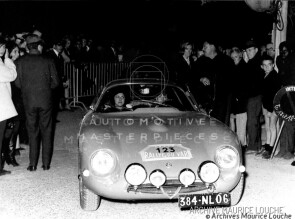
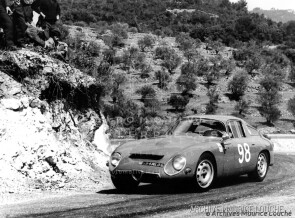
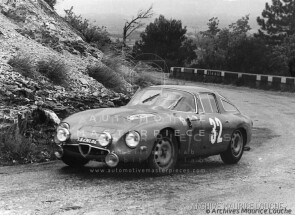
With female driver Christiane Petit, it raced Rallye du Var, Course de Côte Nationale Automobile d'Ampus, Course de Côte de Turckheim-Trois Epis, among others.
Why am I an Automotive Masterpiece?
A. Concept and show cars
B. Prototypes
C. One-off models
D. Remaining cars from extremely limited production runs
E. Historic event cars
F. Cars owned by famous people
G. Team cars
H. Works cars
I. Press cars
J. Movie cars
K. Famous chassis’ cars
L. Limited edition cars
The Alfa Romeo Giulia was introduced on 27 June 1962 at the Monza racing circuit, marking a further stage in the company's transformation into a large-scale manufacturer. Developed under the direction of Orazio Satta Puliga, the new Tipo 105 saloon succeeded the Giulietta Berlina, retaining its basic mechanical philosophy while introducing a completely redesigned body, improved performance and greater interior space. Its launch also coincided with the expansion of Alfa Romeo's manufacturing activities, including the development of the new Arese plant, intended to supplement and eventually replace the historic Portello facilities. The original Giulia TI was powered by a 1,570 cc four-cylinder engine, developed from the Giulietta's light-alloy twin-cam unit. Producing 92 hp, it was coupled to a five-speed manual gearbox driving the rear wheels. The suspension combined independent front wheels with a rigid rear axle, while the braking system, initially employing drums, was subsequently upgraded to four-wheel discs. The Giulia's distinctive angular body was also the result of careful aerodynamic development, contributing to performance that compared favourably with contemporary saloons of similar displacement. The range progressively expanded with the introduction of the Giulia TI Super in 1963, the 1300 models from 1964 and the Giulia Super in 1965. The latter became one of the most successful versions, combining improved equipment with increased engine performance. Further developments and revisions followed throughout production, which continued until 1978. Alongside the saloon, Alfa Romeo developed an extensive family of sporting derivatives. The first Giulia Sprint and Spider models retained the established Giulietta-derived bodies, while the entirely new Giulia Sprint GT, designed by Giorgetto Giugiaro for Bertone, was introduced in 1963. The coupé range subsequently evolved through the GT Veloce and GT Junior models, while the Pininfarina-designed Spider introduced in 1966 established a new and particularly long-lived branch of the family. The same mechanical architecture also provided the basis for the later 1750 and 2000 series. Competition remained an essential part of the Giulia programme. In addition to the racing versions of the saloon and the lightweight Giulia Sprint GTA developed with Autodelta, Alfa Romeo introduced the Giulia TZ in 1963, followed by the more extensively developed TZ2 in 1964. Both models were specifically conceived for competition.
In the late 1950s, Alfa Romeo began developing a new lightweight Gran Turismo racing car intended to succeed the Giulietta Sprint Zagato. Under the technical direction of Orazio Satta Puliga and Giuseppe Busso, the project combined mechanical components derived from the forthcoming Giulia with a purpose-built tubular chassis and aerodynamic bodywork. The resulting Giulia TZ, whose designation stood for “Tubolare Zagato”, represented a significant departure from the production-based sports cars previously used by Alfa Romeo in competition. The prototype was presented at the Turin Motor Show in October 1962. Its multi-tubular chassis, manufactured by SAI Ambrosini, was clothed in lightweight aluminium coachwork designed and built by Zagato. The body incorporated the distinctive truncated tail, or “coda tronca”, already developed for the Giulietta SZ, applying aerodynamic principles associated with the research of Wunibald Kamm. The mechanical components were supplied by Alfa Romeo, while assembly and competition development were entrusted to Auto-Delta, established in March 1963 by Carlo Chiti and the Chizzola brothers at Feletto Umberto, near Udine. The company subsequently became Alfa Romeo's official racing department. Although derived from the Giulia range, the TZ was conceived specifically for competition. Its 1,570 cc twin-cam four-cylinder engine was installed in a lightweight tubular spaceframe chassis, with independent suspension and four-wheel disc brakes. The aluminium bodywork and simplified equipment contributed to a weight of approximately 650 kg. Engine development progressively increased output from around 112 hp in road specification to approximately 160 hp in competition trim, allowing the car to achieve considerably higher performance than its production-based predecessors. The Giulia TZ made its racing debut in 1963, achieving an important early success at the Coppa FISA held at Monza on 24 November, where four examples occupied the first four positions in the 1,600 cc prototype category. Following homologation for Gran Turismo competition, the TZ established an impressive racing record, with notable results at the 24 Hours of Le Mans, the Targa Florio, the Nürburgring 1000 Kilometres, the Coupe des Alpes and the Tour de Corse. The TZ also marked the beginning of Alfa Romeo's renewed official involvement in motor racing through Autodelta. According to Alfa Romeo's historical records, 117 examples were produced between 1963 and 1966. Its development led to the considerably revised TZ2, introduced in 1964 and intended exclusively for competition.
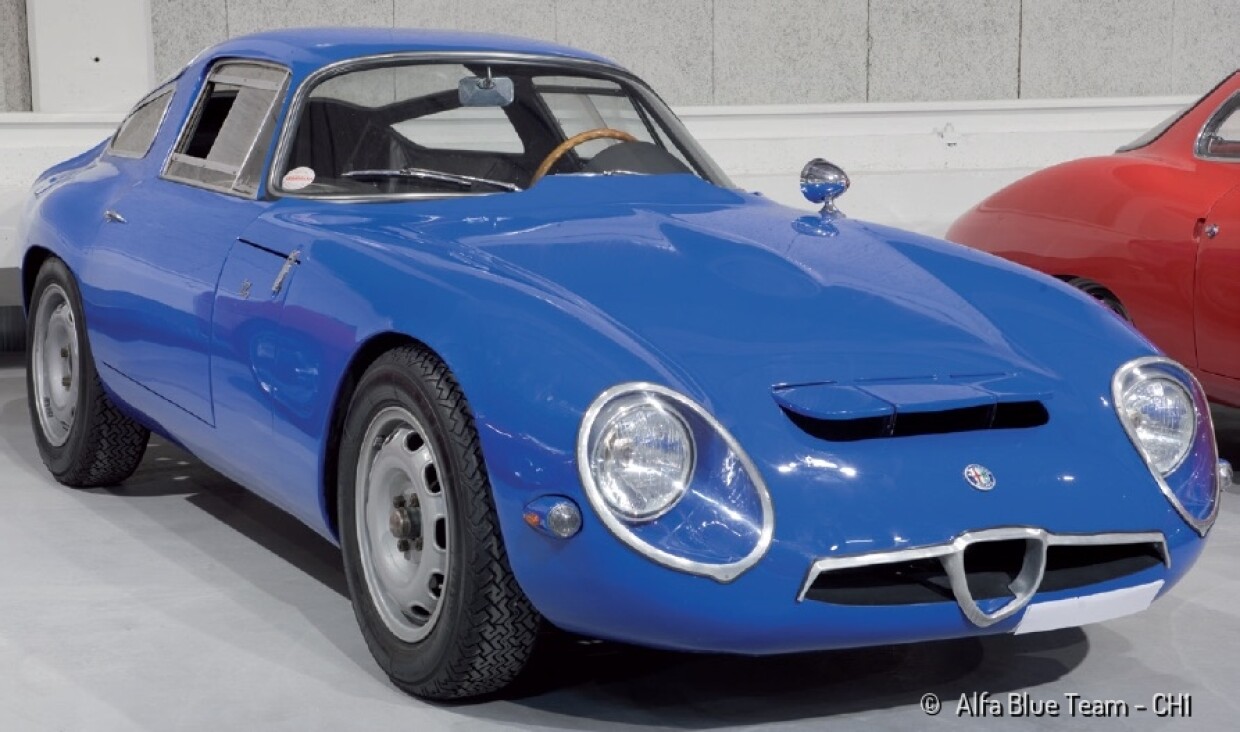
Chassis 750018 was sold to French Alfa Romeo Importer So.F.A.R. The original color was blue. It was sold to the driver Christiane Petit and ran some races as Rallye du Var, Course de Côte Nationale Automobile d'Ampus, Course de Côte de Turckheim - Trois Epis, among other. The interior is completely original. All alloy panels are signed with the coach number 623.