
Researches
& updates
& updates
Ongoing
1952 Ferrari 166 millemiglia berlinetta
Chassis no.
0244M
Engine no.
no number
Coachbuilder
Carrozzeria Alfredo Vignale & C.
Beacon
ON/OFF
ON/OFF
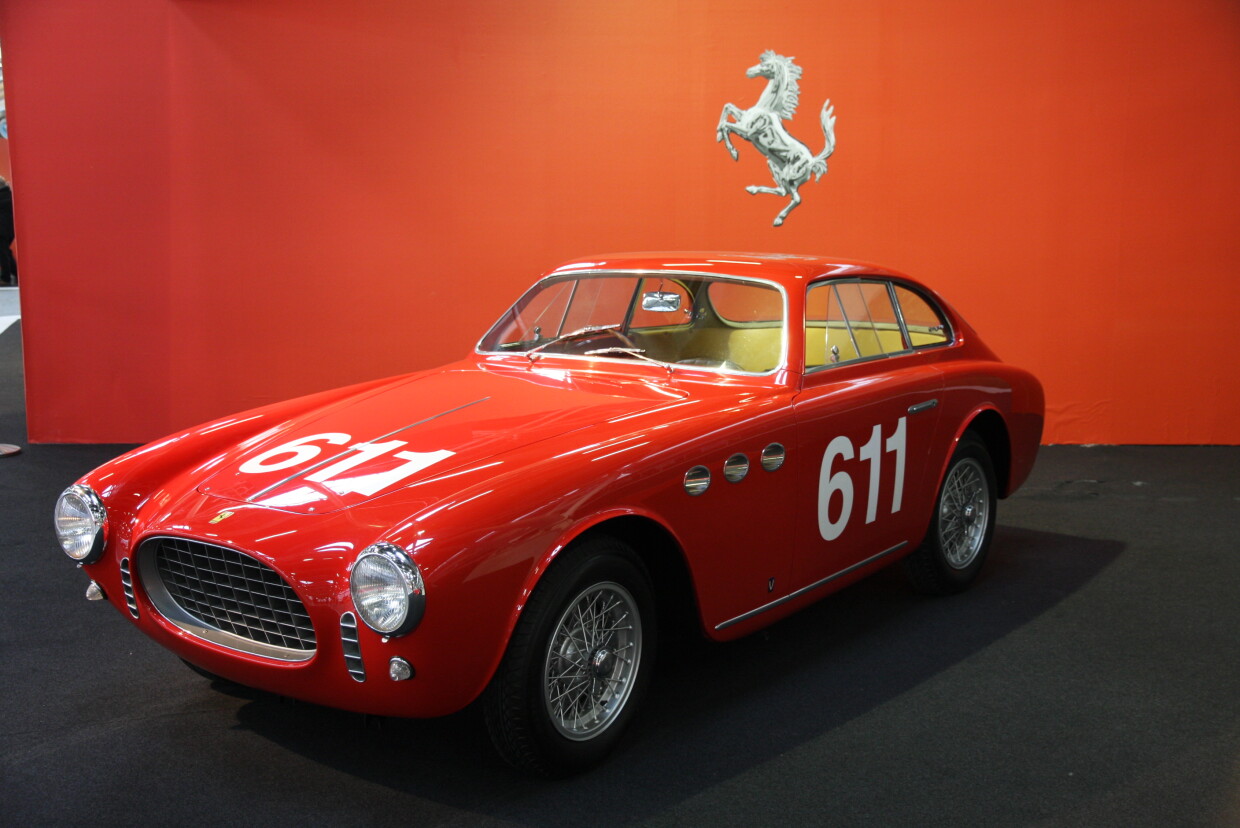
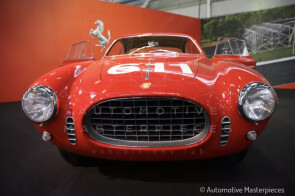
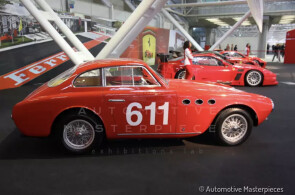
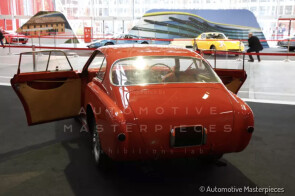
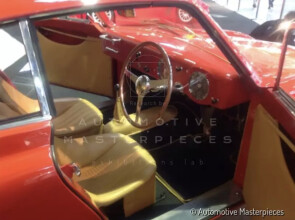
One of 4 Ferrari 166 millemiglia berlinetta Vignale bodied. Winning car at 1953 12 Heures internationales d’Hyères and 2nd at 12 Heures internationales de Reims.
Why am I an Automotive Masterpiece?
A. Concept and show cars
B. Prototypes
C. One-off models
D. Remaining cars from extremely limited production runs
E. Historic event cars
F. Cars owned by famous people
G. Team cars
H. Works cars
I. Press cars
J. Movie cars
K. Famous chassis’ cars
L. Limited edition cars
1948 is generally regarded as Ferrari’s first full racing season, marked by the debut of the 2-litre version of its V12 engine, created for a new family of models destined for both sports-car competition and Formula Two. This was the beginning of the successful and long-lasting “Tipo 166” series, which played a major role in establishing Ferrari’s early international prestige. Designed to compete in the 2-litre class, the 166 was an evolution of the 159 S, itself directly derived from the first 125. It quickly proved competitive and achieved important successes in period. The 166 family included the 166 S, the 166 MM, the road-going 166 Inter, and the 166 F2 single-seater, all sharing the same basic 2-litre Colombo V12 architecture. The chassis and suspension layout were only slightly revised from the earlier models; the tubular steel frame was a Ferrari design and was built by Gilco. The engine was the well-tested 60-degree V12 designed by Gioacchino Colombo, enlarged to 1,995.02 cc in order to reach the limit of the 2-litre class. With up to 140 hp in sports-car form, it appealed to many gentlemen drivers of the period, while its flexibility and robustness made the 166 suitable for virtually every kind of competition. As was Ferrari practice, the model name referred to the displacement of each individual cylinder. In 1953, Ferrari introduced a second series of the 166 MM, known as the 166 MM/53, intended to keep the model competitive in the 2-litre sports category. With mechanical updates and revised bodywork by several coachbuilders, this later development extended the racing life of the 166, although by then competition from increasingly advanced rivals, especially Maserati, had become stronger.
To pay tribute to the first great success at the 1948 Mille Miglia, Ferrari wanted to produce a car unequivocally for competition, for the sports category; so, it upgraded the 166 Sport into the 166 millemiglia (aka MM). The first example, in the Touring barchetta version, was presented on September 15, 1948, at the Salone dell’Automobile in Torino. It was a special occasion: it seems that the term "barchetta" referring to a car was born from a comment by Gianni Agnelli who, observing the Ferrari 166 MM at the show, exclaimed: "But this is not a car; it’s a little boat!" The name was picked up by Giovanni Canestrini and proposed to designate the open version of the 166 MM and, from then on, all cars with this type of bodywork. The millemiglia, like any other 166, sat on the Gilco dedicated tubular chassis and was fitted with the 2-liter V12, in this case capable of 140 hp at 6600 rpm: the exceptional power-to-weight ratio gave the car the qualities of an excellent racing car. In its first racing season, in 1949, it won with Luigi Chinetti in Paris, Le Mans (the first win for the company on the Circuit) and at the 24 Hours of Spa; while at the Mille Miglia, it qualified first and second overall with Biondetti and Bonetto. The 166 millemiglia ensured Ferrari's prestige more than any other previous model, scoring many of Ferrari's first international victories and establishing the company as a great manufacturer of sports cars. It is believed that a total of 48 millemiglia cars were built in two series, both in berlinetta and barchetta versions: 35 were from the first series and 13 from the (/53) second series. Most of the first series were aluminum-bodied by Carrozzeria Touring, with the Superleggera system: 25 barchetta and 6 berlinetta. A few others were bodied by Vignale, Zagato, Campana, and an example designed by Dino Ferrari realized by Scaglietti. In 1953, a second version of Ferrari’s 166 Mille Miglia (MM) was produced, and it was again Ferrari’s sports car of choice in the 2-liter class; named MM/53, it was employed with renewed success in sports races. The renewed car used an upgraded engine with new 4-barrel Weber 32 IF4C carburetors, new heads, and roller cams. Along with other tweaks, 160 bhp were reached at 7,200 rpm. The chassis and running gear were similar to the first model. Most of the 166 MM/53 were bodied by Carrozzeria Vignale: 5 barchetta and 3 Berlinetta, while the remaining cars were quite special: two barchetta bodied by Ferrari/Carrozzeria Autodromo, and a barchetta Touring. Abarth, at the request of the Scuderia Guastalla, made a Berlinetta with a body consisting of a series of detachable aluminum panels, weighting only 54 kg. The last one was created by Pinin Farina: an elegant two-tone berlinetta, similar to a scaled-down 250 MM.
This chassis is one of four Vignale bodied in a “berlinetta” shape. It’s peculiar for its three ovoid portholes on the flanks. All of Vignale's Ferraris are made up of many body panels that are formed on the chassis underneath it. The body was built in aluminum and almost all the design come from Giovanni Michelotti. He worked closely with Alfredo Vignale, one of the newest coachbuilders in Turin, at the time. The two had worked together before at Stabilimenti Farina. The basis is the chassis of the second series of Ferrari 166 millemiglia born in 1953, also known as 166 MM/53. The car was sold new to the French racing driver Francois Picard and was originally painted “French” blue. During the season 1953 this car won the 12 Heures internationales d’Hyères and came second at the first 12 Heures internationales de Reims. In 1954 the car raced in Italy in uphill races like the Trento-Bondone and the Trieste-Opicina. It is yet to be confirmed its entry at the 1957 Mille Miglia. The car was restored in early 90s by the specialist Dino Cognolato and is now part of the Museo Ferrari.