Researches
& updates
& updates
Standby
1955 Lancia Aurelia B24 Spider
Chassis no.
B24-1021
Engine no.
B24-1058
Coachbuilder
Pinin Farina
Beacon
ON/OFF
ON/OFF
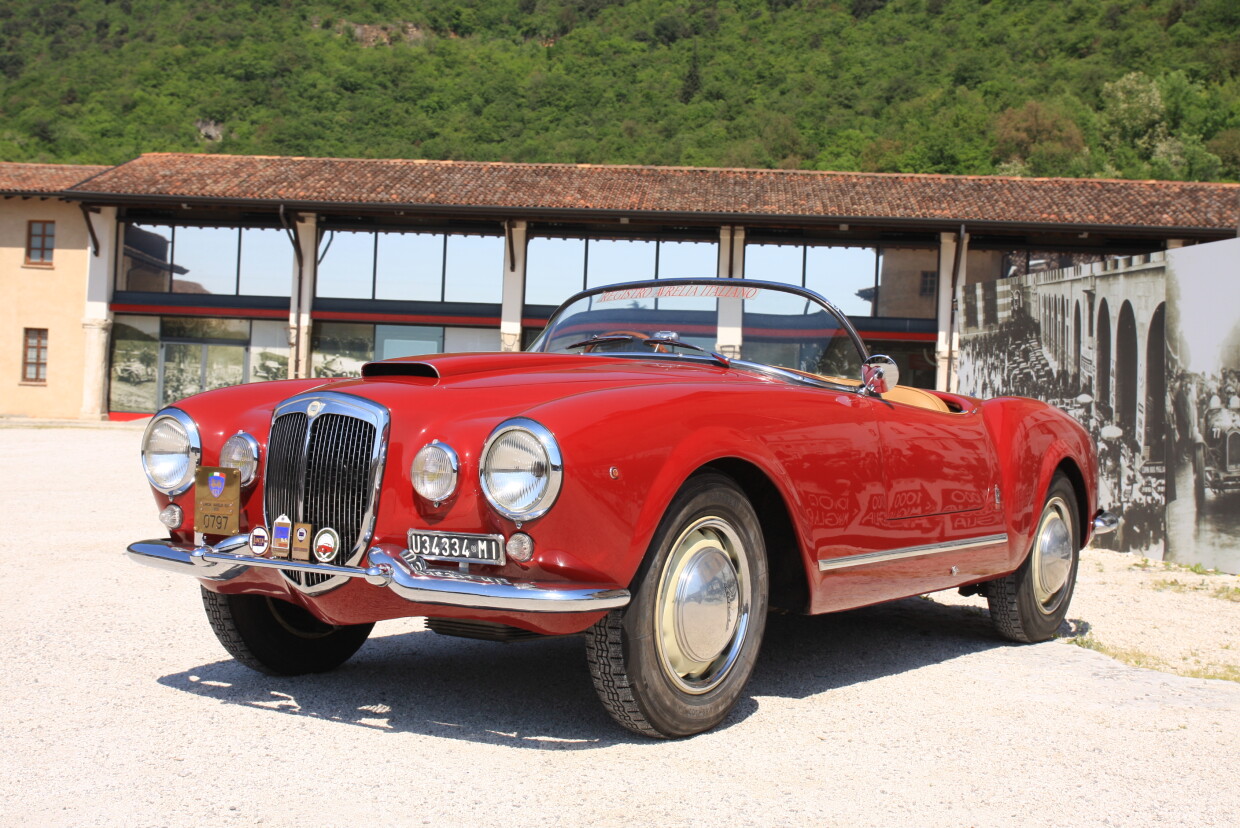
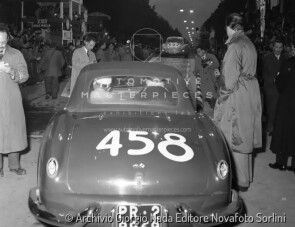
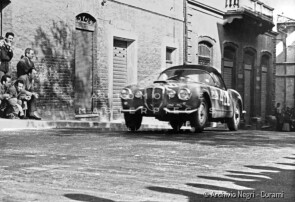
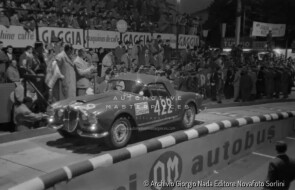
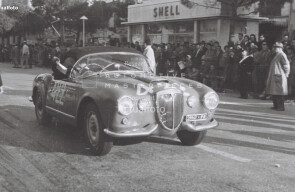
A B24 Spider with special custom features both in mechanic and in devices that make it a one-off. This is the only B24 racing two Mille Miglia, in 1956 and 1957.
Why am I an Automotive Masterpiece?
A. Concept and show cars
B. Prototypes
C. One-off models
D. Remaining cars from extremely limited production runs
E. Historic event cars
F. Cars owned by famous people
G. Team cars
H. Works cars
I. Press cars
J. Movie cars
K. Famous chassis’ cars
L. Limited edition cars
L. Limited edition cars
. no. 59 manufactured, 21st built
The post-war period brought a desire, almost a hunger, for renewal. Everything that evoked the years before the war had to be overcome. Cars quickly became one of the clearest symbols of this rebirth. From its very first appearance, the Lancia Aurelia caused quite a stir, not only because, together with the contemporary Fiat 1400, it represented one of the first genuinely new Italian automotive products of the post-war period, but also for the remarkable technical innovations it introduced. Presented in 1950 and designed by Vittorio Jano, the Aurelia was the first Lancia of the new era. It featured a series of advanced engineering solutions, among them the first production V6 engine, a compact 60° unit developed by Francesco de Virgilio, initially displacing 1.8 litres. The car also adopted a monocoque structure, a transaxle layout combining clutch, gearbox and differential, inboard rear brakes, and a De Dion rear suspension, all contributing to exceptional balance and road holding. Soon the Aurelia platform gave birth to some of the most refined Italian gran turismo cars of the decade. In 1951 the B20 coupé appeared, combining higher performance with elegant Pinin Farina styling and quickly achieving remarkable sporting success in events such as the Mille Miglia and the Targa Florio. The development of the Aurelia continued with larger engines and further mechanical refinements, eventually leading to the creation of one of the most celebrated open sports cars of the 1950s: the B24 Spider.
The Lancia Aurelia B24 Spider represented the open, sporting evolution of the Aurelia Gran Turismo concept. Mechanically derived from the later B20 coupés, it adopted the 2.5-litre V6 and a shortened chassis, giving the car a more compact and dynamic character. The project reflected Gianni Lancia’s intention to create an elite and highly sporting open car, clearly aimed at international markets and stylistically influenced by contemporary American trends. For its design he turned once again to Pinin Farina, who already had experience in the field of sporty spiders, having developed a similar concept in 1952 for the American manufacturer Nash. Designed and built by Pinin Farina, the Spider was first presented at the Brussels Motor Show in January 1955. Its styling immediately attracted attention for the exceptional purity of its lines and for several distinctive details, including the dramatic wraparound panoramic windscreen, the cut-down doors without external handles, and the elegant split bumperettes. The cockpit was positioned almost centrally between the long bonnet and the extended rear deck, creating proportions that have since become iconic. Production lasted only one year, ending in October 1955 after just 240 examples had been completed. Of these, 181 were built in left-hand drive configuration (identified by the chassis prefix B24S, with “S” standing for sinistra) and 59 in right-hand drive. The Spider was soon followed, in 1956, by a more conventional open version known as the B24 Convertibile, which adopted a flatter windscreen, winding windows and a more practical hood. While more comfortable and better suited to everyday use, the later model lost some of the original Spider’s distinctive and radical character.
Chassis 1021 is a very special car with unique features, one of the 59 B24 right-hand drive built. It was built for Guido Maria Terzi, the brother-in-law of famous Lancia privateer driver Ingegner Castiglioni known as “Ippocampo”. The car was fitted with a B20 engine with Nardi manifold and two camshafts. It was equipped with dual driving lights which were useful for the Mille Miglia and other races. Other features are a 1955 B20-style dashboard with easy-to-view Jaeger instruments, including a tachometer (two instruments instead of three) and in the windshield washer. This car is one of only two B24 Spider that ran the Mille Miglia in 1956 and the only one in 1957.