Researches
& updates
& updates
Standby
1965 Alfa Romeo Giulia Sprint Speciale
Chassis no.
TBD
Engine no.
TBD
Coachbuilder
Bertone
Beacon
ON/OFF
ON/OFF
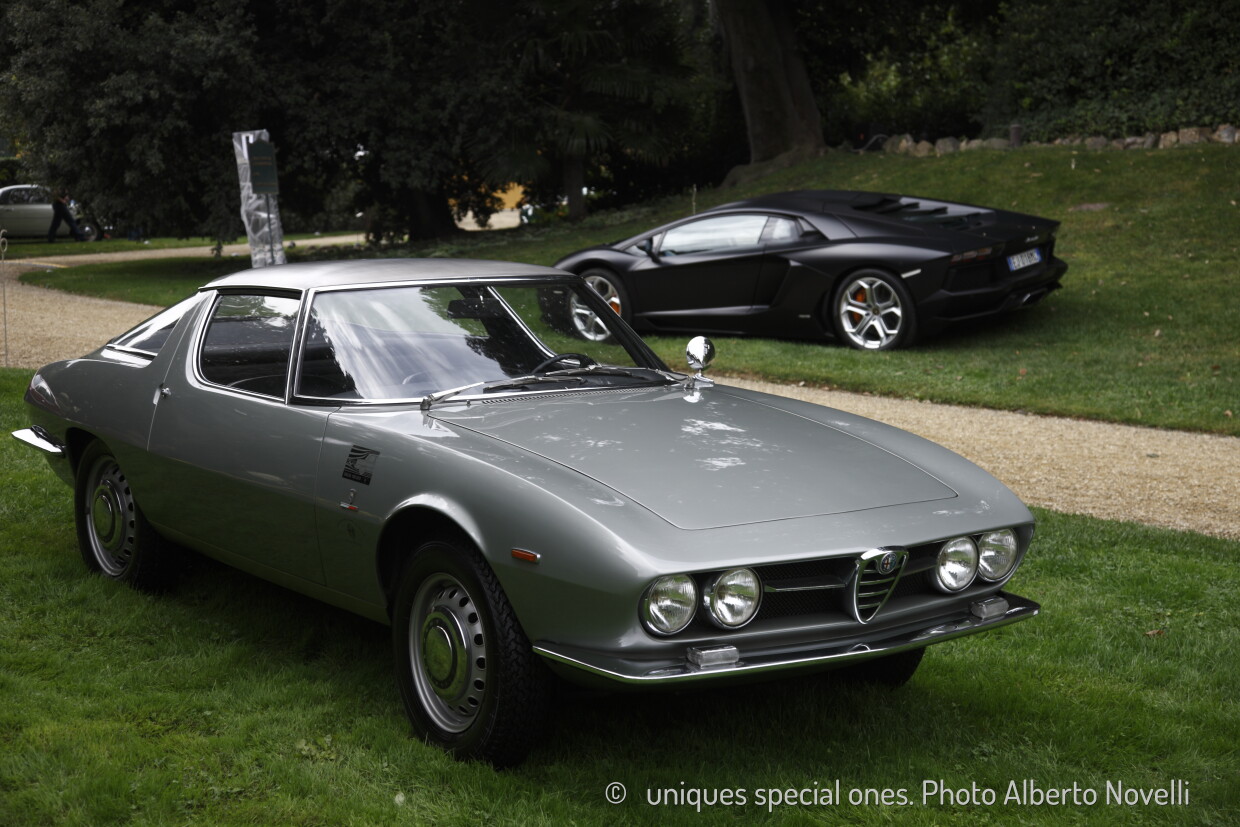
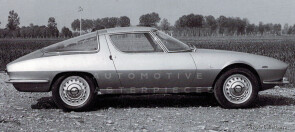
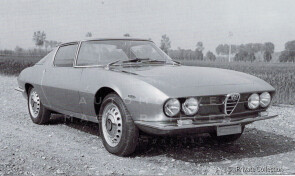
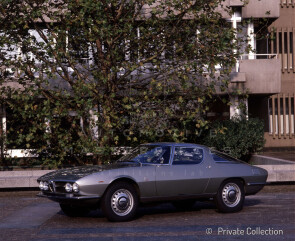
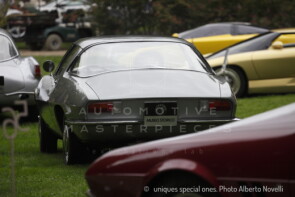
A prototype for a Giulia Sprint Speciale by Giorgetto Giugiaro during his last period in Bertone. A design that is a flash forward in the 1970s. It's a one-off.
Why am I an Automotive Masterpiece?
A. Concept and show cars
B. Prototypes
C. One-off models
D. Remaining cars from extremely limited production runs
E. Historic event cars
F. Cars owned by famous people
G. Team cars
H. Works cars
I. Press cars
J. Movie cars
K. Famous chassis’ cars
L. Limited edition cars
The Alfa Romeo Giulia was introduced on 27 June 1962 at the Monza racing circuit, marking a further stage in the company's transformation into a large-scale manufacturer. Developed under the direction of Orazio Satta Puliga, the new Tipo 105 saloon succeeded the Giulietta Berlina, retaining its basic mechanical philosophy while introducing a completely redesigned body, improved performance and greater interior space. Its launch also coincided with the expansion of Alfa Romeo's manufacturing activities, including the development of the new Arese plant, intended to supplement and eventually replace the historic Portello facilities. The original Giulia TI was powered by a 1,570 cc four-cylinder engine, developed from the Giulietta's light-alloy twin-cam unit. Producing 92 hp, it was coupled to a five-speed manual gearbox driving the rear wheels. The suspension combined independent front wheels with a rigid rear axle, while the braking system, initially employing drums, was subsequently upgraded to four-wheel discs. The Giulia's distinctive angular body was also the result of careful aerodynamic development, contributing to performance that compared favourably with contemporary saloons of similar displacement. The range progressively expanded with the introduction of the Giulia TI Super in 1963, the 1300 models from 1964 and the Giulia Super in 1965. The latter became one of the most successful versions, combining improved equipment with increased engine performance. Further developments and revisions followed throughout production, which continued until 1978. Alongside the saloon, Alfa Romeo developed an extensive family of sporting derivatives. The first Giulia Sprint and Spider models retained the established Giulietta-derived bodies, while the entirely new Giulia Sprint GT, designed by Giorgetto Giugiaro for Bertone, was introduced in 1963. The coupé range subsequently evolved through the GT Veloce and GT Junior models, while the Pininfarina-designed Spider introduced in 1966 established a new and particularly long-lived branch of the family. The same mechanical architecture also provided the basis for the later 1750 and 2000 series. Competition remained an essential part of the Giulia programme. In addition to the racing versions of the saloon and the lightweight Giulia Sprint GTA developed with Autodelta, Alfa Romeo introduced the Giulia TZ in 1963, followed by the more extensively developed TZ2 in 1964. Both models were specifically conceived for competition.
The Alfa Romeo Giulia GT is a coupé derived from the Giulia built by Alfa Romeo between 1963 and 1975. The Giulia GT would have replaced the Giulia Sprint 1600, a Giulietta Sprint with 1.6 engine of the Giulia Ti, of which it maintains the general bodywork setting and also the classic front engine and gearbox placement with rear wheel drive. The bodywork, the work of a very young Giorgetto Giugiaro at the time employed by Bertone, was mounted on the floor of the Giulia Ti sedan with a shortened wheelbase from 2510 to 2350 mm and was a sleek 2 + 2 sports coupe. The curious front "scalino" (i.e. step) that characterized all the versions produced up to 1968 and part of those produced up to 1971 was due to a rethinking between the approval of the design and the production of the car. Originally it had to be an air intake, then abolished to contain costs, which, leaving room for the "step", defined an important (and recognizable) stylistic figure. Thanks to its lines and excellent road qualities, this car became one of the most sought-after cars of the period. Several versions of Giulia GT were produced in the various series that can be classified into: Sprint GT, GT Junior, GTC (convertible), GTA (alleggerita/lightened), and GT Veloce. The Sprint GT Coupé lived up to its name, as it had a five-speed manual gearbox, a high-revving inline four-cylinder engine, and four-wheel disc brakes. So sophisticated was the Sprint GT that even at the end of the model’s life more than a decade later, it was still heralded by journalists all over the world.
This intriguing gran turismo is based on the platform of Giulia Sprint GT and was styled and built by Bertone; it’s a one-off example designed by Giugiaro in 1965; quite sadly, never made it into production. One of the reasons of not putting it on the production line was lack of the rear seats, while the production type Sprint GT was intended to secure ample space for the rear seats. The Alfa Romeo Giulia Sprint Speciale Prototipo by Bertone was supposed to replace the Giulia Sprint Speciale (on Giulietta basis) that was in the market since 1959; it was completely unreleased and presents styling solutions that anticipate some Italian sports cars of the 1970’s. The car is now part of the Museo Storico Alfa Romeo.