
Researches
& updates
& updates
Ongoing
1933 Lancia Astura Torpedo Sport
Chassis no.
30*2137
Engine no.
1145
Coachbuilder
Viotti
Beacon
ON/OFF
ON/OFF
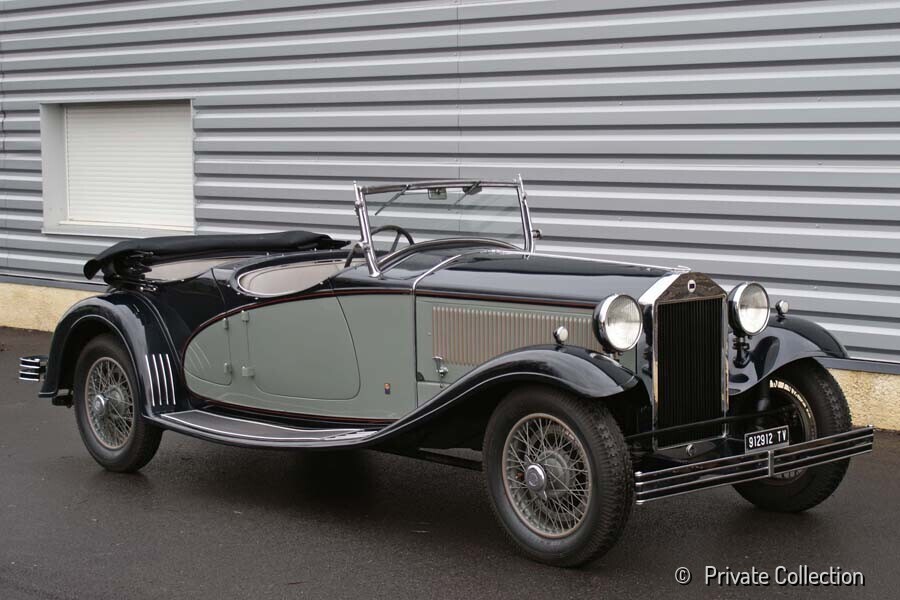
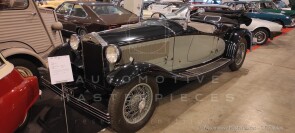
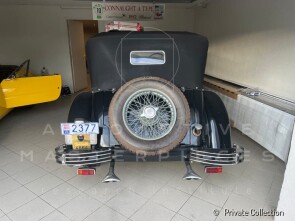
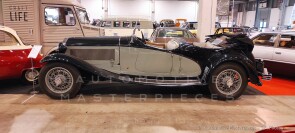
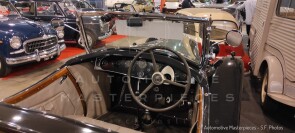
Rare bespoke Astura Torpedo Sport by Viotti, designed by Count Mario Revelli di Beaumont. 1980s restoration supervised by the designer himself. Notable owners.
Why am I an Automotive Masterpiece?
A. Concept and show cars
B. Prototypes
C. One-off models
D. Remaining cars from extremely limited production runs
E. Historic event cars
F. Cars owned by famous people
G. Team cars
H. Works cars
I. Press cars
J. Movie cars
K. Famous chassis’ cars
L. Limited edition cars
The Lancia Astura was a car produced by the Turin-based company from 1931 to 1939. In the early 1930s, Lancia’s latest model was the large Dilambda (launched in 1929), while the Lambda—after nearly a decade in production—was due to be replaced. The Dilambda featured a V8 engine with a 4-liter displacement, whereas the Lambda, originally equipped with a 2.1-liter engine, reached over 2.5 liters in its final series. Although the Dilambda retained its flagship status, Lancia decided to replace the Lambda with two new models aimed at different customers: the Artena, a 4-cylinder car with a displacement under 2 liters, and the Astura, fitted with a 2.6-liter V8 engine. The two models were mainly differentiated by their engines but also had different wheelbases: the Artena had a 299 cm wheelbase, while the Astura’s was 19 cm longer to accommodate the larger engine. Unlike previous Lancia models, the Astura was named after a historic castle near the Roman city of Nettuno. Its V8 engine, with a 19° angle between banks, was a simplified and downsized version of the Dilambda unit, with a displacement of 2606 cc and an output of 72 hp at 4000 rpm. In addition to a cast-iron engine block, triple chain-driven distribution, and a self-cleaning oil filter, the engine’s most distinctive feature was its unique two-piece cylinder head: the lower part (cast iron) housed the valves, while the upper part (aluminum) contained the rocker arms and their shaft, with the central camshaft rotating between the two. The water-based cooling system, derived from the Artena, included a thermostat-controlled throttling device. The Astura also shared the centralized lubrication system with the Artena. Moving away from the unitary body construction of the Lambda, both the Astura and the Artena employed a chassis made of two vertical box-section side members reinforced by an X-shaped brace. Two longitudinal round tubes branched from a central cross-member and were integrated into the front ends of the side members, which slightly converged. The suspension system combined different solutions: at the front, Lancia’s classic layout was retained—though without the diagonal braces that, in the Lambda, had connected the radiator frame to the suspension cylinders, now made redundant by improved chassis rigidity—while the rear used a conventional live axle with semi-elliptical leaf springs and Siata friction shock absorbers. Powered by a Zenith double-barrel carburetor, the Astura offered excellent performance thanks to its favorable power-to-weight ratio. The chassis weighed just under a ton (960 kg), and even the sedan version remained relatively light at 1,250 kilograms, enabling a top speed of around 125 km/h. While Lancia did produce a sedan version—available with either four windows and 4–5 seats or six windows and 6–7 seats—the Astura became the queen of custom coachbuilt cars of its era. Nearly all major Italian coachbuilders, as well as several international ones, created special-bodied examples. Notable names included Bertone, Boneschi, Borsani, Brianza, Castagna, Colli, Garavini, Ghia, Stabilimenti Farina, Touring, and Viotti, along with international firms such as Weinberger & Buhne, John Charles, Abbott, and Kevill Davies & March. A cabriolet by Pinin Farina, built in 1936, was awarded Best of Show at the Pebble Beach Concours d’Elegance in 2016. Another cabriolet by Stabilimenti Farina won the 1947 edition of the Concorso d’Eleganza Villa d’Este, although it never entered mass production. First introduced at the Paris Motor Show in October 1931, the Astura underwent a minor update about a year later (Second Series). In 1933, with the Third Series, more significant changes were introduced: the chassis was made available in two different wheelbase lengths, the engine displacement was increased (from 2.6 to 3 liters), power was improved by about 10 hp, and the braking system was revised. Further significant changes were made to the chassis in 1937 with the Fourth Series, which effectively replaced the discontinued Dilambda. Chassis from this series were often used for official government vehicles, mostly designed by Boneschi and Pinin Farina, sometimes with monumental proportions. The engine of the final Astura series also served as the basis for the Lince armored car, occasionally referred to as the “Astura armored car.” A total of 2,912 Astura units were produced.
Introduced in the summer of 1932, the second series of the Astura was produced until the autumn of 1933 and comprised approximately 750 units. While the fundamental architecture of the chassis and the narrow-angle 2,606 cc V8 with 72 hp remained the same as the first series, several refinements were introduced to enhance refinement and durability. Among the most notable were the application of silentbloc rubber mounts to the leaf springs and revised brake linkages, as well as modifications to the body-to-frame attachment points — changes aimed at reducing vibration and improving ride comfort. The series is identifiable in production records by continuous vehicle numbers from 501 to 1,250 with chassis numbers from 30-1501 to 30-2250. As with other early Asturas, it continued to serve as a prestigious basis for bespoke coachwork, setting the stage for the more substantial technical evolution introduced with the third series.
At the time of the Astura’s debut, Lancia circulated a portfolio of recommended coachwork designs for the new Tipo 230 chassis. Among these was a Torpedo Sport body styled by Count Mario Revelli di Beaumont and presented as a Viotti creation. The design was specifically conceived for the 3,177 mm wheelbase of the Tipo 230 and required careful proportional adaptation to the chassis architecture. At the Olympia Motor Show in London in October 1932, where the Lancia Augusta made its debut, additional models were displayed, with the Astura receiving significant attention in the contemporary press. In its issue of 18 October 1932, The Motor wrote: “For the open-car motorist there is displayed a special four-seater tourer on the 20 h.p. Astura chassis, the coachwork being by Viotti of Turin, a well-known Italian bodybuilder.” The price declared for this model was £875. Less than a year later, the 1933 Lancia Astura Serie II, with chassis no. 30*2137 represents a direct realization of this proposal, bodied as a Torpedo Sport by Carrozzeria Viotti of Turin to Revelli di Beaumont’s design, effectively reinterpreting the traditional double phaeton in a modern form. It is one of the most refined sporting interpretations realized by Viotti on a Lancia chassis, with its design developing themes explored the previous year on Fiat-based bodies, here refined with greater elegance and aerodynamic awareness. The graphic treatment of the flanks, the flowing beltline, and the integration of the spare wheel contribute to a dynamic yet balanced profile, characteristic of Viotti’s more sporting creations. Style and aerodynamic sensitivity are combined with structural quality and technical innovation. In the early 1930s Viotti stood at the forefront of Italian coachbuilding; the firm had adopted advanced construction solutions, including the “Silent block” door-closing system developed by SIATA, which ensured firm locking and contributed to overall body rigidity by reducing vibration and squeaks. High-quality suppliers were consistently employed: Bosch components were used for equipment such as the windshield wipers, while the windshield itself was made of VIS “Security” tempered safety glass, resistant to minor impacts. The seats were fitted with patented Epeda spring cushions mounted on sliding rails, reflecting the attention paid to comfort and mechanical refinement. Chassis no. 30*2137 falls within the second series production range (30*1501 to 30*2250), corresponding to the 637th example out of 750 built, placing it in the final phase of the series’ manufacture. While the total second-series production is documented, no published source currently specifies how many of these were bodied by Viotti in Torpedo Sport configuration, which appears to have been produced in limited numbers on a bespoke basis. According to available documentation, the car was originally registered abroad in 1933, reportedly in the United States or the United Kingdom. It was imported into Italy from the U.S.A. in January 1982 through the Customs Office of Turin, by Piero Crespi. The restoration was supervised in the 1980s by Count Mario Revelli di Beaumont, designer of the original bodywork, following the car’s return from overseas, and entrusted to the Turin-based specialist Carrozzeria Novajra, a firm active since the pre-war period. According to Giuseppe Novajra, Revelli—who passed away in 1985—visited the workshop while the car was under restoration and noted that the car had originally been fitted with orange-painted wire wheels, a distinctive feature possibly associated with the example exhibited at the London Motor Show. Novajra also recalled that the car had undergone various alterations during its time in the United States, requiring corrective work during the Italian restoration. It was further remembered that budget-conscious decisions influenced certain aspects of the restoration process at the time. According to Luciano Rupolo, mechanic and historic-car researcher who later worked on the car for Camillo Bianchi, during the restoration the entire internal wooden body framework was replaced and the car subsequently reassembled. The removed wooden framework was reportedly delivered to Bianchi at the time of his purchase. Rupolo also recalls that, when acquired by Bianchi, the car was missing its hood (convertible top), which Bianchi had newly made. After Piero Crespi’s passing during a meeting, while he was driving this car, ownership history includes his wife Wanda Crespi, President of the Veteran Car Club of Como from 1984 to 1992 and the first female Federal Councillor of ASI. According to Rupolo’s recollection, the car was used extensively during her ownership; on one occasion, while en route to a meeting in Mestre, the engine reportedly suffered bearing damage on the motorway. Rupolo subsequently recovered the car and carried out the necessary engine repairs. The car later passed to Camillo Bianchi and, after his death in 1991, to his son Diego Bianchi, who re-registered the vehicle in Treviso that same year. The Italian registration was subsequently cancelled for export to another European Union country on 11 January 2011. More recent ownership includes Michel Auguste Mazzone of Monaco and, from 2024, the current owner.