Researches
& updates
& updates
Ongoing
1947 Fiat 1100 S
Chassis no.
1100S*500006*
Engine no.
1100S*500002*
Coachbuilder
Carrozzerie Speciali Fiat
Beacon
ON/OFF
ON/OFF
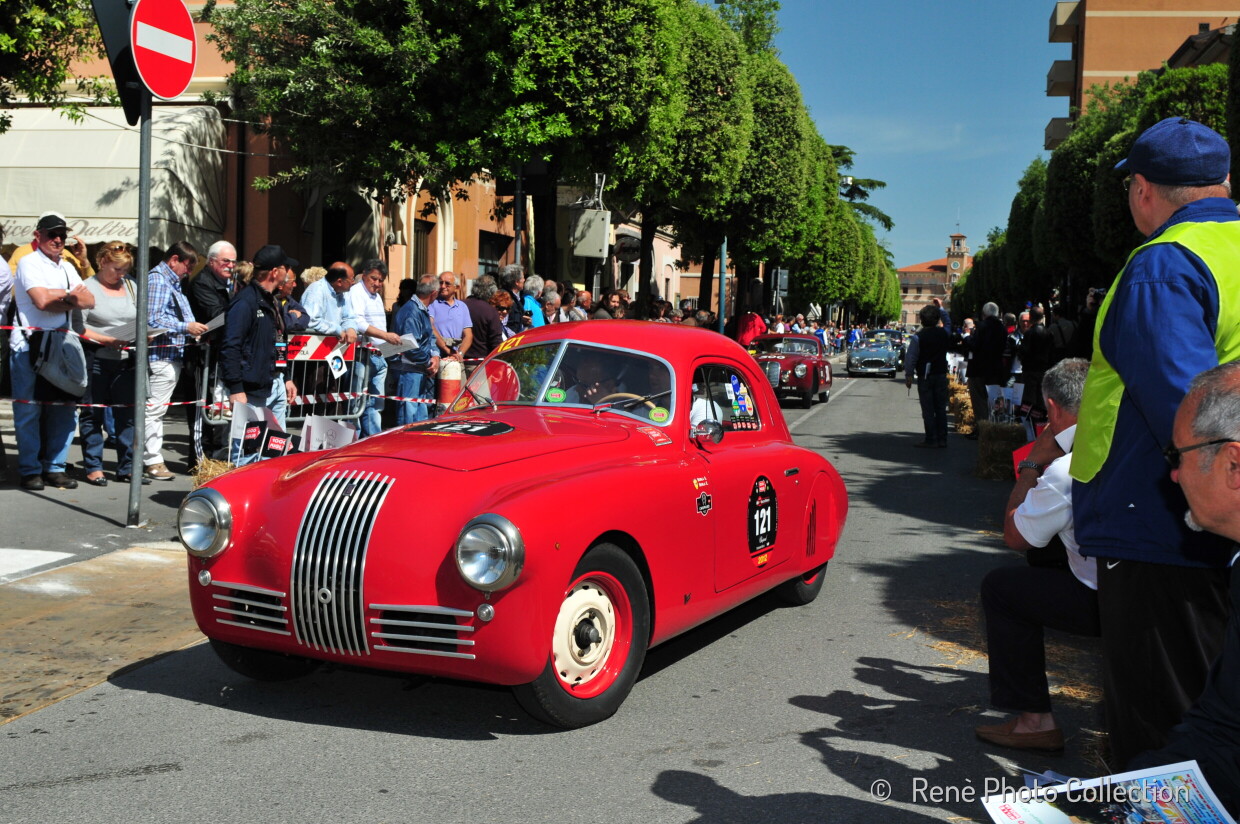
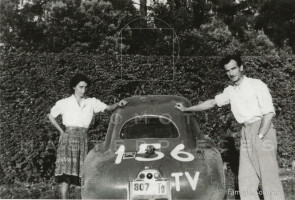
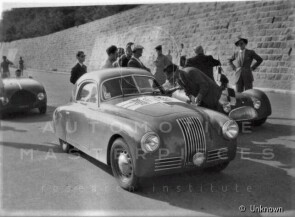
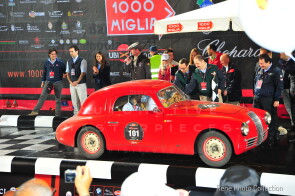
5th of 11 pre-series cars built for competition. Matching engine was the 1st built. 8th OA - 6th CL at the 1947 Mille Miglia with Comirato-Dumas. Famous owners.
Why am I an Automotive Masterpiece?
A. Concept and show cars
B. Prototypes
C. One-off models
D. Remaining cars from extremely limited production runs
E. Historic event cars
F. Cars owned by famous people
G. Team cars
H. Works cars
I. Press cars
J. Movie cars
K. Famous chassis’ cars
L. Limited edition cars
L. Limited edition cars
no. 11 manufactured, 5th built. Fiat built a pre-series of 11 examples specially prepared for competition use. The chassis numbers ranged from no. 500001 to no. 500012, but chassis no. 500003 was bodied only at a later stage.
The 1100 S was Fiat’s first post-war sports car, but it had a strong lineage with the pre-war 508C “Nuova Balilla” 1100, introduced in 1937. The car was intended as a Mille Miglia racer for the 1100 cc class, the most popular at the time. The 1100 S was based on the light and rigid X-member frame of the 1100 B saloon. It featured a tuned engine and a dramatic streamlined body by Fiat which was loosely based on the pre-war 508 CMM, with the peculiar "Gobbone" tail which had proved to be particularly effective for efficiency and helped the car achieve nearly 160 km/h. The two-seater body was produced by Carrozzerie Speciali at Fiat’s own Officine Lingotto under the direction of Giuseppe Cogno. Several of the early cars have a badge with this script on the body. The 1100 cc engine offered significantly more power than its predecessor and produced 51 hp at 5200 rpm. The S-spec engine had different camshafts and valves, a lubrication system with oil cooler, a centrifugal water pump with redesigned radiator and a crankshaft placed on four main bearings. Wind-tunnel testing allowed the 1100 S to reach speeds of 150 km/h, and 1100 S berlinettas took 5th, 6th, 7th and 9th overall positions at the 1947 Mille Miglia, followed by 2nd and 3rd place overall in 1948, with other Fiat berlinettas among the top fifteen. A total of 401 units of the 1100 S were made, but this might be an overambitious number that includes several other body styles. The chassis numbers went, anyway, from 500001 to 500401. Despite the race purpose of the model, many 1100 S were sold to normal customers, convinced by the high speeds, over 150 kph, allowed by the powerful engine. Shortly afterwards, in 1949, the following Fiat 1100 S Berlinetta by Pinin Farina represented the first example of a small-series Pinin Farina car built for Fiat. The 1100 S was later followed by the 1100 E/S, the sports version of the 1100 E saloon.
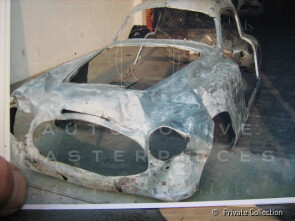
The chassis no. 1100S*500006* is the fifth example of the Fiat 1100 S and one of the earliest cars produced. In the first months of 1947, Fiat built a pre-series of 11 examples specially prepared for competition use. The chassis numbers ranged from no. 500001 to no. 500012, but chassis no. 500003 was bodied only at a later stage. These pre-series examples had special features compared with the models that would later be built in series. The main peculiarity of the pre-series cars was their windscreen, divided by a thick aluminium frame, which was later made thinner on the first production cars; subsequently, the divided windscreen was finally replaced by a single-piece glass. Another characteristic of the pre-series cars was the external, protruding rear fuel filler cap, which on the production model would be hidden behind a flap. The chassis no. 1100S*500006* has the matching engine no. 500002 and the particular feature of not having the “step” above the side whiskers, but rather integrated into the whiskers themselves. The chassis was built by Fiat, while the bodywork was commissioned to Motto’s “martelleria” in Turin and made entirely of aluminum, between April 4 and May 5, 1947. The painting was carried out by Carrozzeria Elba, from May 7 to May 31, 1947. The engine was prepared by the factory, and no. 500002 appears to be the first unit built, since no. 500001 seems not to have been produced. It was still an experimental engine, as it did not yet have an oil cooling circuit; it represented an evolution, not yet fully developed, of the “old” engine fitted to the 508 C. The car was first sent and invoiced to the Bologna branch on June 10, recalled to Turin on June 18, and then finally delivered and re-invoiced to the Padua branch on June 19. In June 1947, immediately after completion, chassis no. 1100S*500006* was entered in the XIV Mille Miglia – Coppa Franco Mazzotti, held from June 21 to 22, with race number 156. It was driven by Alberto Comirato, with his wife Lia Dumas as co-driver, in the Sport category, up to 1100 cc class. The famous gentleman driver had a long career before and after WWII and was recorded in nine Mille Miglia appearances. The car finished 8th overall and 6th in class, confirming the competitiveness of these early pre-series Fiat 1100 S cars in the event for which they had been specifically conceived. In May 1948, the car passed to Alberto Comirato, who registered it with the Treviso plate TV-17022. On June 29, 1948, Comirato drove it again at the Raduno Automobilistico Triestino – Chilometro lanciato, in the sports car category up to 1100 cc, finishing 2nd in class. The car later passed through new ownerships, including Sergio Bortolozzo, the seventh post-war president of the Aero Club of Padua, before belonging to “Lino” Guaschino, a professional footballer with a long career in B and C series. It was later owned by Franco Cavaleri, who had it completely restored in both body and engine. From the 1990s onwards, its documented history continued with further restoration work, appearances in specialist publications and a long career in historic car events, including the Coppa d’Oro delle Dolomiti, the Mille Miglia re-enactment, the Aosta–Gran San Bernardo and the Coppa Milano–Sanremo. The car was issued with a FIVA Identity Card and, in 2026, a RINA Certificate for the historical research conducted on the car through a validation process of its proven historicity and provenance.