
Researches
& updates
& updates
Ongoing
2022 Dallara Macchina Posto Singolo
NEW FEATURE
Chassis no.
ZA9MPS001PVM15001
Engine no.
EF01A19015121310
Coachbuilder
Dallara Automobili
Beacon
ON/OFF
ON/OFF
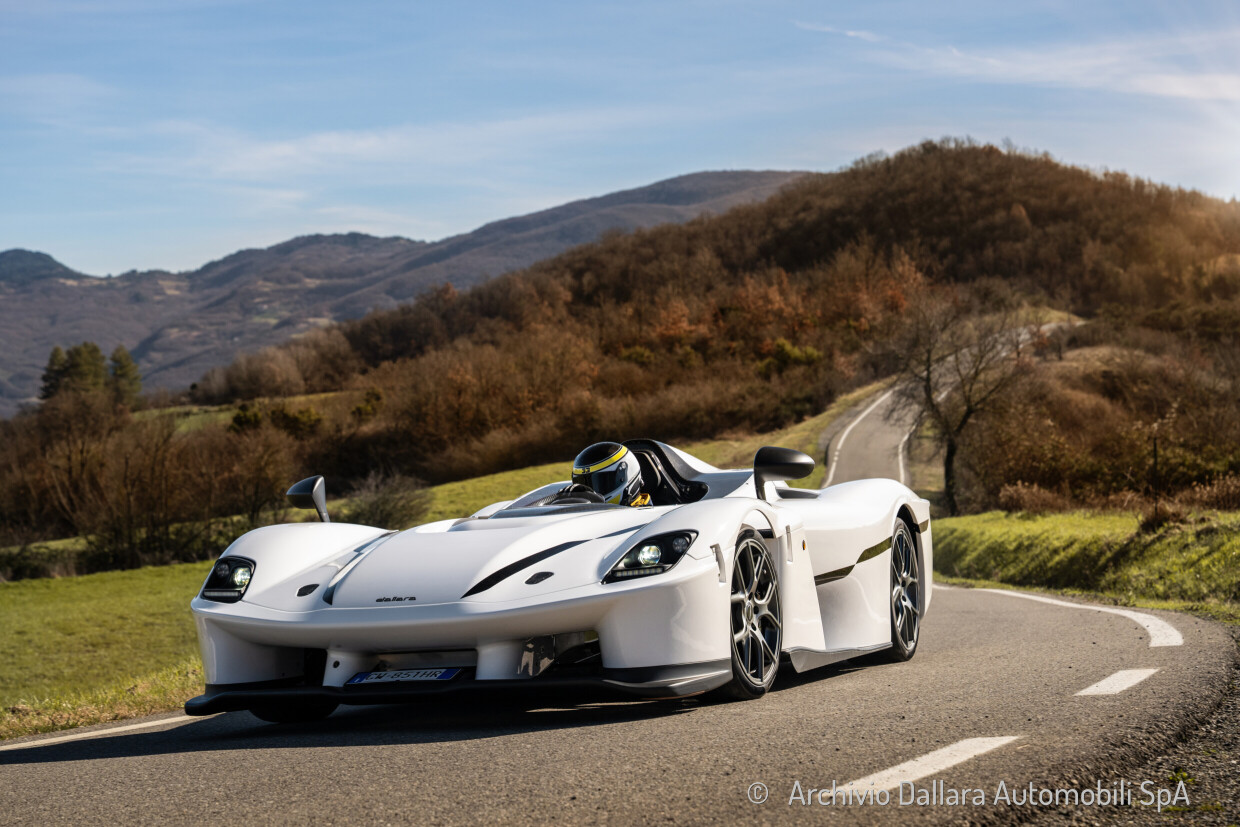
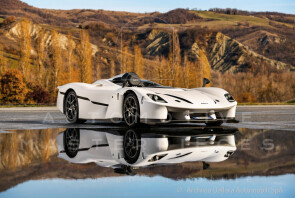
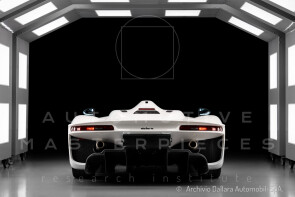
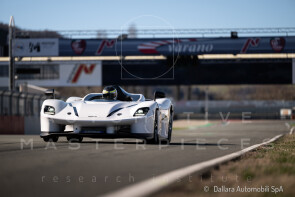
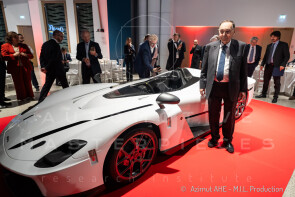
Giampaolo Dallara's one-off built around a central driving position. A tribute and synthesis of the Dallara racing experience, designed for both road and track.
Why am I an Automotive Masterpiece?
A. Concept and show cars
B. Prototypes
C. One-off models
D. Remaining cars from extremely limited production runs
E. Historic event cars
F. Cars owned by famous people
G. Team cars
H. Works cars
I. Press cars
J. Movie cars
K. Famous chassis’ cars
L. Limited edition cars
The Dallara MPS, whose initials stand for Macchina Posto Singolo, is a road-legal single-seater conceived by Giampaolo Dallara as a unique automobile. The idea emerged in the spring of 2020, during the first Covid-19 lockdown in Italy, when the usual rhythm of work at Varano de' Melegari had abruptly changed. It did not originate in a client's commission or in a programme for a new production model. Within Dallara, the project soon became known by the informal name "the Engineer's single-seater". The MPS belongs to a much longer engineering story and pays tribute to Dallara's roots and principles. After working for Ferrari, Maserati and Lamborghini, Giampaolo Dallara founded Dallara Automobili in 1972, developing specialist expertise in aerodynamics, vehicle dynamics, lightweight structures and composite materials, chiefly through international motor racing and later through high-performance road cars. The first car to bear the Dallara name, the SP1000, was also created in 1972. It placed the driver at the centre, with a passenger seat on either side and combined a sheet-steel structure with fibreglass bodywork that enclosed the wheels to reduce aerodynamic drag. Powered by a Dallara-modified engine derived from the Fiat 128, it weighed only 480 kilograms and could reach 240 km/h. The SP1000 made its competition debut at Varano de' Melegari with Swiss driver Bruno Pescia, who became the first driver to win in a Dallara automobile. More than fifty years later, the colours and livery of the MPS were chosen as a tribute to the SP1000. The association went beyond appearance: the driver had stood at the centre of Dallara's first automobile as well. A second and more direct antecedent was the Dallara Stradale, introduced in 2017 as the company's first road car. Dallara regarded the Stradale as a synthesis of the knowledge acquired throughout its history: a light, essential and road-legal automobile developed through experience gained in competition. Its architecture and the engineering knowledge accumulated during its development, particularly in the rear section, provided a technical starting point for the MPS. A deliberately small group formed around Giampaolo Dallara's idea. Two young engineers initially worked alongside him; the project then expanded to involve specialists in different disciplines. The Stradale provided an existing base, but the decision to place one driver at the centre changed the relationship between the driving position, front suspension, body surfaces and aerodynamic floor. The single seat was therefore more than the car's defining visual feature. It became one of the principles from which its architecture developed. Mechanical design and aerodynamic research advanced together. The body shape was not styled first and subsequently adapted to technical requirements, but emerged progressively from them. The central driving position reduced frontal area and allowed the airflow to be managed around an architecture unlike that of a conventional road car. Suspension, bodywork and floor became parts of a single aerodynamic system. The resulting proportions are exceptionally low and wide, with every volume drawn closely around the central seat. Large air passages open beneath the pointed nose, while the small deflector ahead of the driver leaves the upper profile almost uninterrupted. The deeply sculpted flanks remove material where air must pass through the body. At the rear, the tail falls and extends above a large diffuser. Andrea Guerri, Style Designer, joined after the principal architecture, volumes and lines had been established. His task was to resolve an engineering-led form into a coherent whole. Giampaolo Dallara added a clear requirement: efficiency and performance were not sufficient, because the Macchina also had to be beautiful. Davide Segatori, Senior Mechanical Designer, was among the figures involved in its development. The carbon-fibre monocoque and structural elements were produced within Dallara. Specialists, craftsmen and small manufacturing companies made other mechanical components and parts of the bodywork. The extensive use of carbon-fibre contributes to a dry weight of 875 kilograms. The rear-mounted, turbocharged 2,261 cc inline four-cylinder engine develops 292.7 kW at 6,100 rpm and drives through a six-speed automated transmission. The declared maximum speed is 285 km/h. Although conceived for the track, the MPS was homologated for road use so that its driver could drive it to a circuit on public roads and then use it in its intended environment. Road and Track ride heights can be selected from the steering wheel; an adjustable front anti-roll bar, front wing and aerodynamic floor contribute to the same dual purpose.
Chassis no. ZA9MPS001PVM15001 is the sole Dallara MPS built. Completed in 2022 and registered in 2024 in the name of Giampaolo Dallara, its first owner, it preserves the project in the form chosen by its creator: a road-legal, single-seat automobile that was never intended to inaugurate a series. It underwent its first shakedown at the Varano de’ Melegari circuit in February 2022, still without its bodywork, driven by Giampaolo Dallara himself, undaunted despite his age. In his words, it proved enjoyable and very well balanced. Carefully preserved during Giampaolo Dallara’s ownership, the car was never used or even displayed to the public in the company museum. Its first change of ownership took place on April 2026 in Monaco, during the Grand Prix de Monaco Historique, when the car was sold at auction by RM Sotheby's. It was acquired by Azimut AHE - Automobile Heritage Enhancement, an investment fund dedicated to the preservation and long-term enhancement of automobiles. The sale marked the end of the MPS's initial period with Giampaolo Dallara and the beginning of its history as a collector automobile. The proceeds of the sale were allocated to the Fondazione Caterina Dallara and its projects for the local community and younger generations of the Val Ceno. The transaction therefore returned the value created by the MPS to the area in which Dallara's history had begun: Varano de' Melegari, where Giampaolo Dallara founded his company in 1972. The car is also the first Dallara counted among the AUTOMOTIVE MASTERPIECES, joining the automobiles whose history and provenance are documented and certified according to the research institute's method.