Researches
& updates
& updates
Ongoing
1954 Ferrari 250 Monza
Chassis no.
0466 M
Engine no.
0466M
Coachbuilder
Pinin Farina
Beacon
ON/OFF
ON/OFF
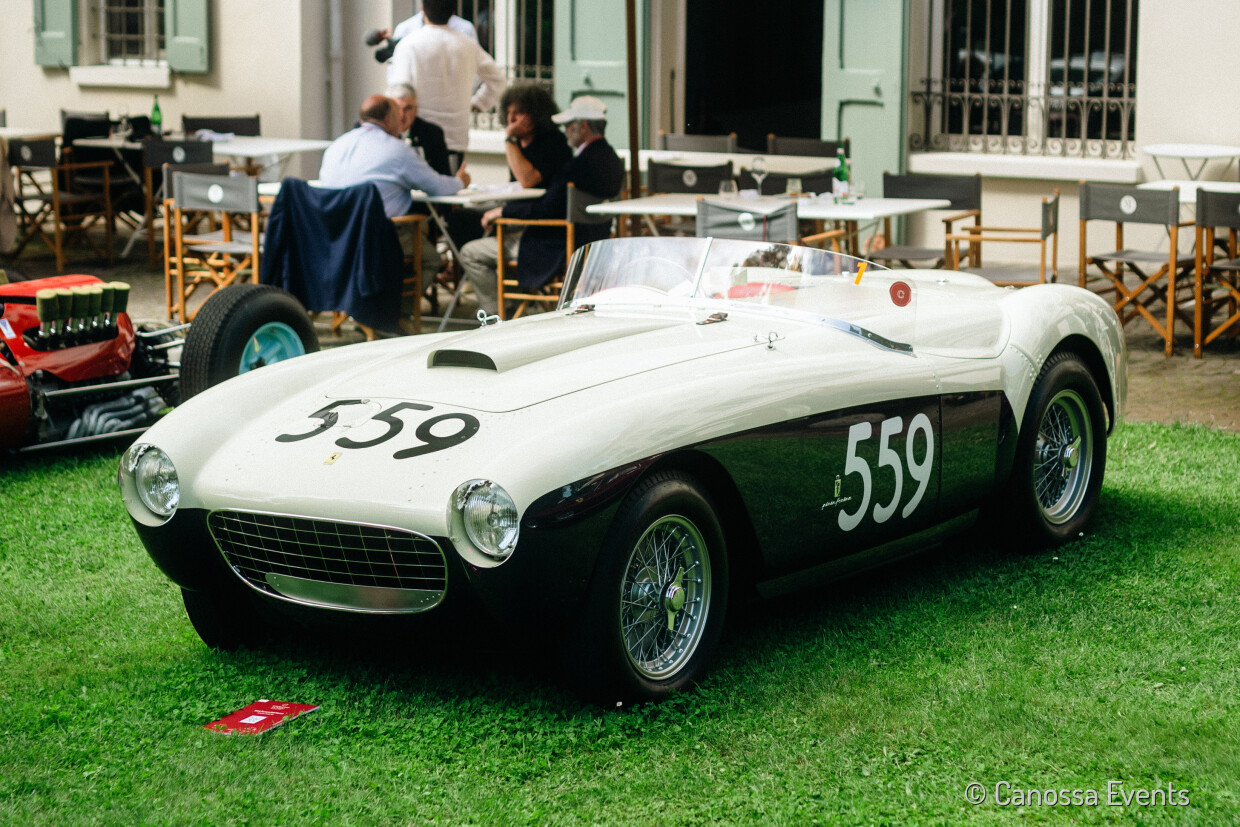
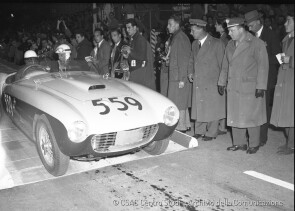
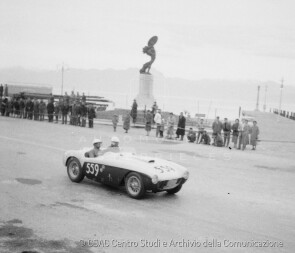
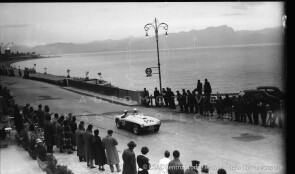
One of two Pinin Farina bodied on a total of 4. 1st owner Franco Cornacchia. 1956 Mille Miglia: 6th CL. On podium in Brazilian and Argentinian races up to 1958.
Why am I an Automotive Masterpiece?
A. Concept and show cars
B. Prototypes
C. One-off models
D. Remaining cars from extremely limited production runs
E. Historic event cars
F. Cars owned by famous people
G. Team cars
H. Works cars
I. Press cars
J. Movie cars
K. Famous chassis’ cars
L. Limited edition cars
G. Team cars
Scuderia Guastalla (IT)
The Ferrari 250 series represents one of the most important and successful families in the Prancing Horse marque’s early history. Developed from 1952 and produced, in its many road and competition variants, until the mid-1960s, the 250 range played a decisive role in establishing Ferrari’s reputation both as a manufacturer of high-performance grand touring cars and as a dominant force in international motor racing. The name “250” referred to the approximate displacement of each cylinder of the V12 engine, with a total capacity of 3 liters. Almost all 250s shared the same engine, the “Tipo 125”, belonging to the Gioachino Colombo-designed V12 family. Compact, powerful and lighter than competitors, it was highly adaptable and was developed in several specifications for road and racing use, with power outputs varying according to model, tune and intended purpose. The 250 family included berlinettas, coupés, cabriolets, spiders and purpose-built competition cars. Different chassis configurations were adopted over the years, including long-wheelbase (2600 mm) and short-wheelbase (2400mm) layouts, generally associated with the well-known LWB and SWB designations. This technical flexibility allowed Ferrari to create cars suited to very different roles, from refined road-going grand tourers to some of the most successful GT and sports racing cars of their era. Through models such as the 250 GT, the 250 GT Berlinetta, the 250 Testa Rossa, the 250 GT SWB, the 250 GTO and the later 250 GT/L Lusso, the series became a cornerstone of Ferrari identity. The 250 models were replaced by the 275 and 330 models.
In the mid-1950s, Ferrari's production was divided into two main streams: one for the 3-liter 12-cylinder engines that powered the sports and grand touring cars, and the other for the inline 4-cylinder engines, fitted in the 750 Monza barchettas and Formula 1 single-seaters. These two streams met when, in 1954, the 250 Monza was created, a competition car produced in four examples. The model was born from the combination of the 750 Monza's chassis with the 60º V12 engine of the 250 MM, designed by Gioachino Colombo. The car was characterized by having a transaxle gearbox (mounted at the rear), providing a more balanced weight distribution, and was fitted with De Dion rear suspensions, which improved road holding. The first two examples, with barchetta bodies designed by Dino Ferrari, were made by Pinin Farina, and were inspired by the 500 Mondial barchetta. The other pair was made by Scaglietti, and their design resembled that of the 750 Monza. The model made its competition debut under the Ferrari banner on June 6, 1954, at the 12 Hours of Hyères, where it won driven by Luigi Piotti and Maurice Trintignant. This example was the only one not to be sold to private clients by the “Prancing Horse” company, and remained, initially, as a "works" car; it did not achieve any other significant victories. The other three were sold and won several Italian races, including the Giro dell'Umbria. One of them finished fifth in the 1954 Carrera Panamericana. Despite the promising start, the combination of the Monza chassis and the 12-cylinder engine did not undergo further development. The 250 Monza's sports career continued until 1956 with several participations in the Mille Miglia, but the results were not as hoped.
The Ferrari 250 Monza with chassis no. 0466 M is one of the three sold to private owners and one of the two examples bodied by Pinin Farina. The first owner was Franco Cornacchia, a racing driver but, above all, the first and most important Ferrari dealer in Italy at the time. The racing use of 0466 M by Cornacchia is probable but still to be verified. The car was then passed on to the Venezuelan racing driver Juan Rezende Dos Santos who entered it in the 1956 Mille Miglia where, racing for Scuderia Guastalla, he finished 55th overall/6th in class. In the same year, it became the property of Brazilian racing driver Henrique Casini who took it to South America, where the car achieved excellent results: it was often in the top three positions in the races held in Brazil and Argentina between September 1956 and November 1958. The car then entered a period of oblivion. During this period, the engine was removed from the car, and it appears to have been temporarily installed in the 225 Sport Vignale Spyder, sn 0180ET. Among 0466 M owners we also count Olivier Gendebien up to 1977. That same year 0466 M was found in Uruguay, in poor condition and without its engine, by the enthusiast Bernardo Favero who would keep it for a long time, and only in the early 2000s, he recovered and purchased the original engine through Garry Roberts. Since 2011, the car has been part of a private collection and has finally begun a complete restoration by Ferrari Classiche.