
#Porsche911
The Porsche 911 is a two-door, 2+2 sports car introduced in 1963 as the successor to the Porsche 356. Presented at the Frankfurt Motor Show as the Porsche 901, it was renamed 911 before its commercial launch following a dispute with Peugeot over three-digit model names with a central zero. Its shape was largely developed by Ferdinand “Butzi” Porsche, with Erwin Komenda and Porsche’s body engineering department also involved in the programme. The original 911 used a rear-mounted, air-cooled 1,991 cc flat-six engine producing 130 hp. The range quickly expanded with the more powerful 911 S, introduced in 1966 and distinguished by forged Fuchs alloy wheels, and with the Targa, whose characteristic roll-over bar became one of the model’s defining features. During the late 1960s and early 1970s, engine capacity increased from 2.0 to 2.2 and then 2.4 litres, while competition development led to specialised versions including the 911 S/T. In 1972 Porsche introduced the Carrera RS 2.7, combining reduced weight, a 210 hp engine and the distinctive rear “ducktail” spoiler. The RS provided the basis for the Carrera RSR competition cars introduced for the 1973 season. Over successive generations, the 911 evolved continuously in road and racing form while retaining its characteristic rear-engined flat-six layout and becoming Porsche’s defining model.
We'll tell the story of this model on the occasion of its anniversary.
If you would like to share your knowledge and archive with us, click on the UPDATE ME button on the homepage of the car's website to help us improve and complete the information.
The census of all the cars related to this topic is in progress.
CARS (4)
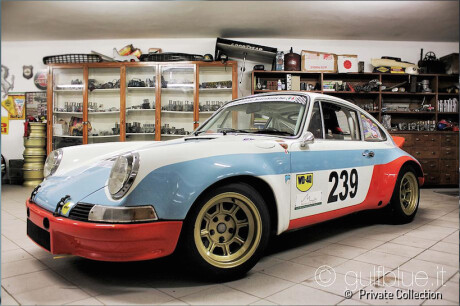
1969 Porsche 911 S Sportwagen
- Coachbuilder: Karmann
- Chassis n°: 119301155
- Engine n°: 6522811
Private collection
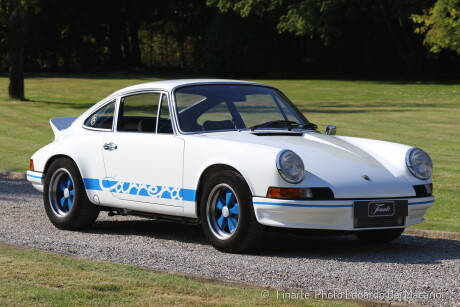
1973 Porsche 911 Carrera RS 2.7 Lightweight
- Coachbuilder: Porsche
- Chassis n°: 9113601443
- Engine n°: 83-6631400
Private collection
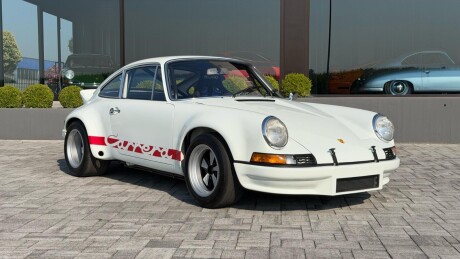
1973 Porsche Carrera 911 RSR
- Coachbuilder: Porsche
- Chassis n°: *911 3 600921*
- Engine n°: *6930132*
Private collection
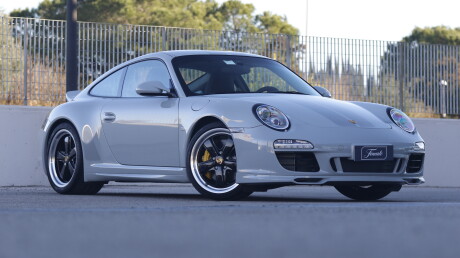
2010 Porsche 911 Sport Classic
- Coachbuilder: Porsche
- Chassis n°: WPOZZZ99ZAS794178
- Engine n°: type MA101S
Private collection