
Researches
& updates
& updates
Ongoing
1959 Ferrari 250 GT Coupé
Chassis no.
1403GT
Engine no.
TBD
Coachbuilder
Pinin Farina
Beacon
ON/OFF
ON/OFF
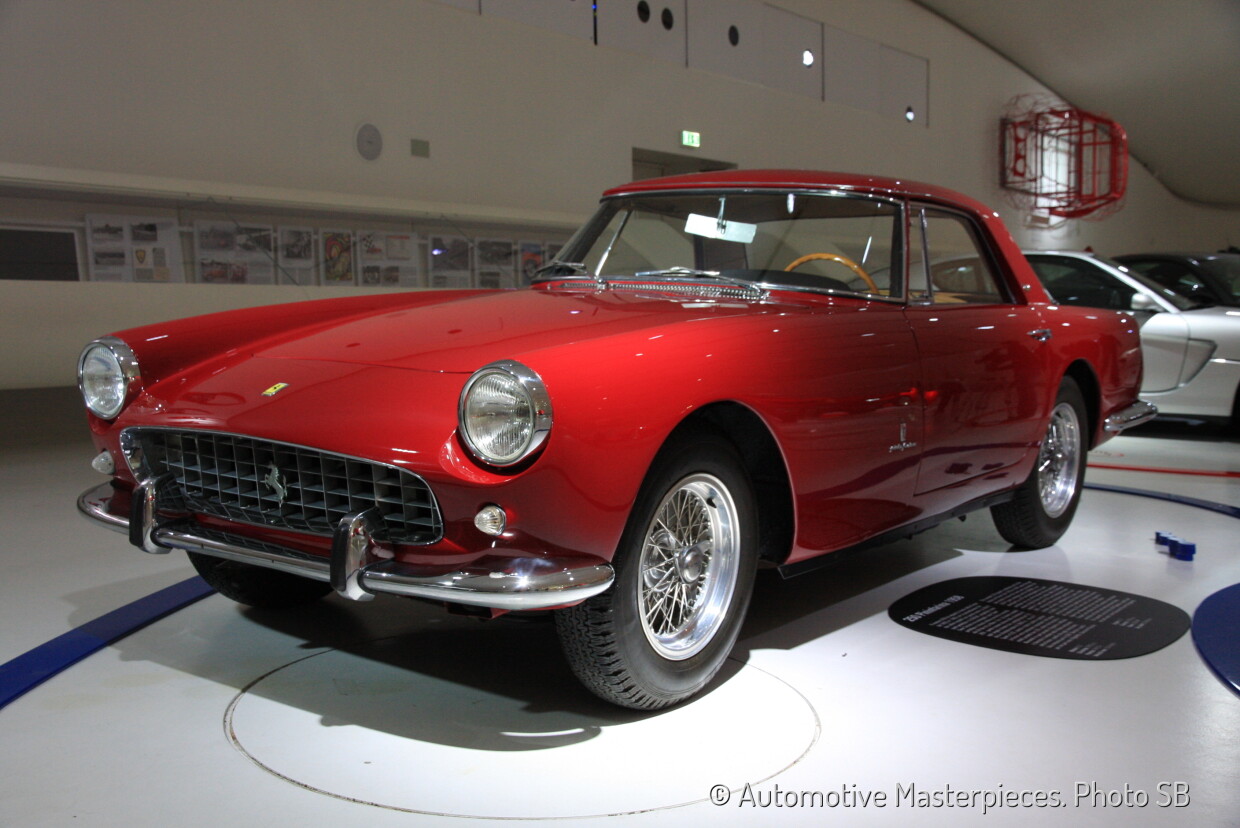
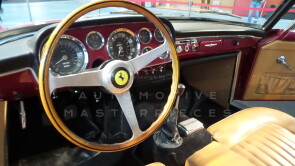
A significant model for the history of Ferrari, which is now part of the Museo Ferrari. It's estimated that only half of the 353 original examples are survived.
Why am I an Automotive Masterpiece?
A. Concept and show cars
B. Prototypes
C. One-off models
D. Remaining cars from extremely limited production runs
E. Historic event cars
F. Cars owned by famous people
G. Team cars
H. Works cars
I. Press cars
J. Movie cars
K. Famous chassis’ cars
L. Limited edition cars
The Ferrari 250 series represents one of the most important and successful families in the Prancing Horse marque’s early history. Developed from 1952 and produced, in its many road and competition variants, until the mid-1960s, the 250 range played a decisive role in establishing Ferrari’s reputation both as a manufacturer of high-performance grand touring cars and as a dominant force in international motor racing. The name “250” referred to the approximate displacement of each cylinder of the V12 engine, with a total capacity of 3 liters. Almost all 250s shared the same engine, the “Tipo 125”, belonging to the Gioachino Colombo-designed V12 family. Compact, powerful and lighter than competitors, it was highly adaptable and was developed in several specifications for road and racing use, with power outputs varying according to model, tune and intended purpose. The 250 family included berlinettas, coupés, cabriolets, spiders and purpose-built competition cars. Different chassis configurations were adopted over the years, including long-wheelbase (2600 mm) and short-wheelbase (2400mm) layouts, generally associated with the well-known LWB and SWB designations. This technical flexibility allowed Ferrari to create cars suited to very different roles, from refined road-going grand tourers to some of the most successful GT and sports racing cars of their era. Through models such as the 250 GT, the 250 GT Berlinetta, the 250 Testa Rossa, the 250 GT SWB, the 250 GTO and the later 250 GT/L Lusso, the series became a cornerstone of Ferrari identity. The 250 models were replaced by the 275 and 330 models.
The Ferrari 250 GT Coupé was one of the most important early road-going models in the development of Ferrari’s grand touring production. Introduced in the mid-1950s as part of the 250 GT family, it marked a significant step in Ferrari’s transition from highly individual, artisanal construction toward a more structured form of series production, while still retaining the exclusivity and coachbuilt character of the marque’s early road cars. The model evolved from the 250 Europa GT and adopted the 2600 mm long-wheelbase chassis, combined with a further development of Gioachino Colombo’s compact V12 engine. With a total displacement of 2953.21 cc, the engine became the defining mechanical feature of the 250 GT line, offering the performance, flexibility and refinement required of a Ferrari grand tourer. The Ferrari 250 GT Coupé was first presented at the Paris Motor Show in 1954, as a development of the 250 Europa and as one of Ferrari’s first attempts to create a more standardized road-going grand tourer. In 1956, the model entered a new phase with the introduction at the Geneva Motor Show of a Pinin Farina-designed coupé on the 2600 mm wheelbase chassis, visually related to the larger 410 Superamerica and destined to influence the subsequent Boano, Ellena and Pinin Farina-bodied 250 GT Coupés. The design combined formal elegance and sporting character, with a long bonnet, a low roofline and a fastback rear treatment, establishing a style that would influence the early development of the model. Although Pinin Farina had defined the original design, production of the 250 GT Coupé bodies was soon entrusted to Carrozzeria Boano, most likely because of capacity limitations while Pinin Farina was preparing its new facilities. Boano built approximately eighty examples of the so-called “low-roof” 250 GT Coupé, which became Ferrari’s closest approach up to that time to a regular production road car. Production was later continued by Carrozzeria Ellena, with several detail changes including a higher roofline. In 1958 Ferrari introduced the more standardized 250 GT Coupé by Pinin Farina, presented in Milan and produced until 1960 in 335 units. Cleaner and more restrained in appearance, this later version abandoned the more elaborate early Superamerica-inspired treatment in favour of a more regular and elegant grand touring line. It represented a further step toward Ferrari’s mature road-car production, combining the proven 250 GT mechanical layout with a more consistent body design and production method. During production, the 250 GT Coupé also received mechanical updates: telescopic shock absorbers replaced the earlier Houdaille units, while disc brakes were introduced toward the end of production in 1960, together with the adoption of outside-plug versions of the Colombo V12. Taken as a whole, the 250 GT Coupé was not a single, uniform model, but an evolving line that included early Pinin Farina prototypes and special-bodied cars, the Boano and Ellena production coupés, and the later Pinin Farina series-production coupé. This evolution made the model a cornerstone in the formation of the classic front-engined Ferrari GT.
This perfectly restored example of the 250 GT Coupé, chassis no. 1403GT achieved stardom in its most recent existence, joining the company collection at the Ferrari Museum. It is estimated only half of the original 353 examples of this model survive.