RESEARCHING A MODERN ICON: REVEALING THE TRUE ROLE OF A FERRARI TEST CAR
January 28, 2026
STARTING POINT
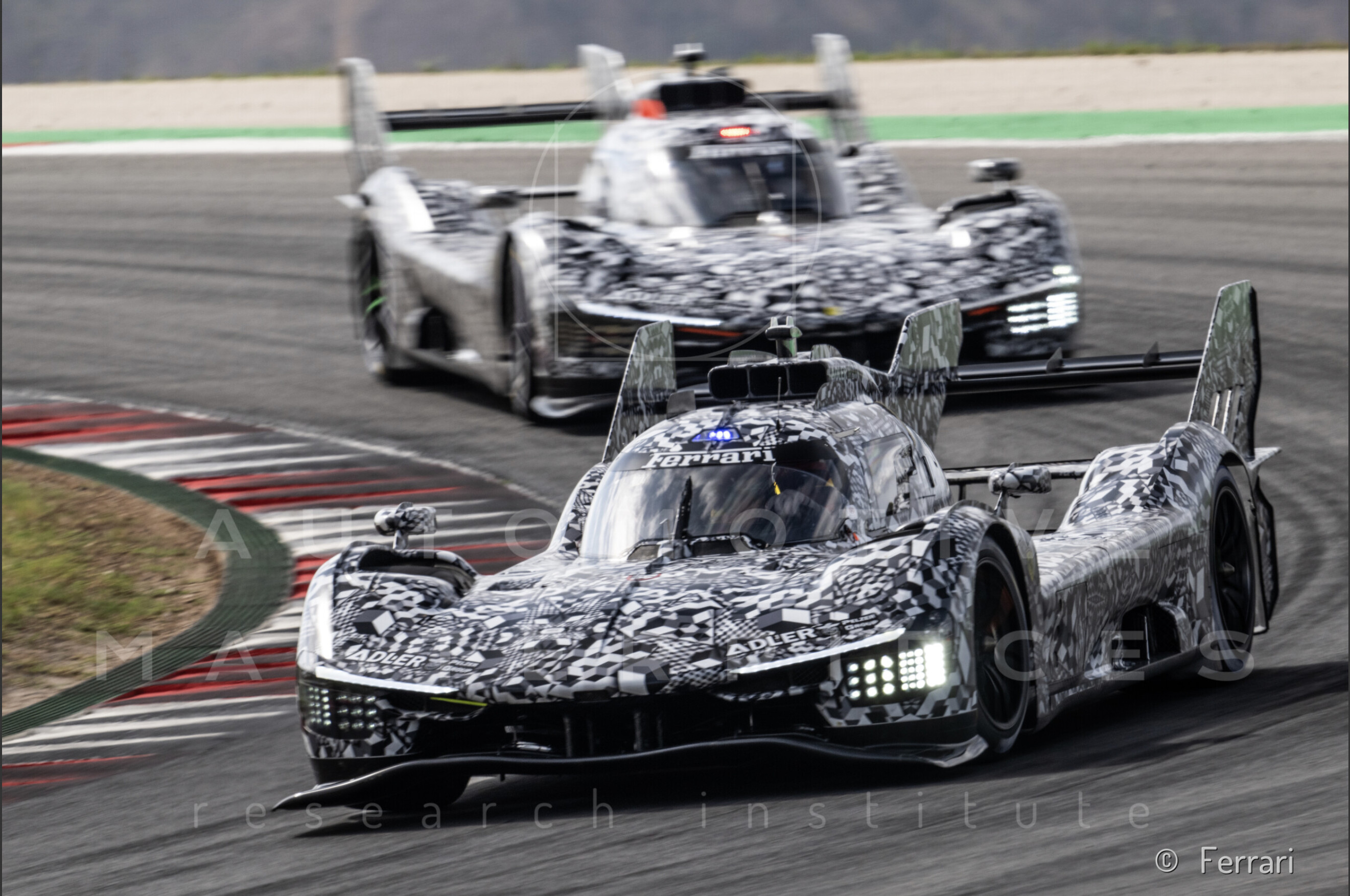
When we first approached chassis no. F255 LMH 12 04 P, the car was generally described as one of the early development units of the Hypercar program — essentially a “muletto”, a test and reserve chassis produced alongside the other prototypes used during the gestation of Ferrari’s return to endurance racing. Its importance was already evident: it belonged to the very restricted group of cars built to shape the LMH project that brought Maranello back into the top class after fifty years. However, the available information initially framed it in a relatively generic way, as a technical asset within the wider testing effort, without a fully defined individual identity or a clearly documented historical role beyond its function as a development example. At that stage, it was already perceived as an exceptional modern collectible, tied to Ferrari’s landmark comeback and later acquired by Azimut AHE as the cornerstone of the world’s first evergreen investment fund dedicated to historically significant automobiles.
RESEARCH
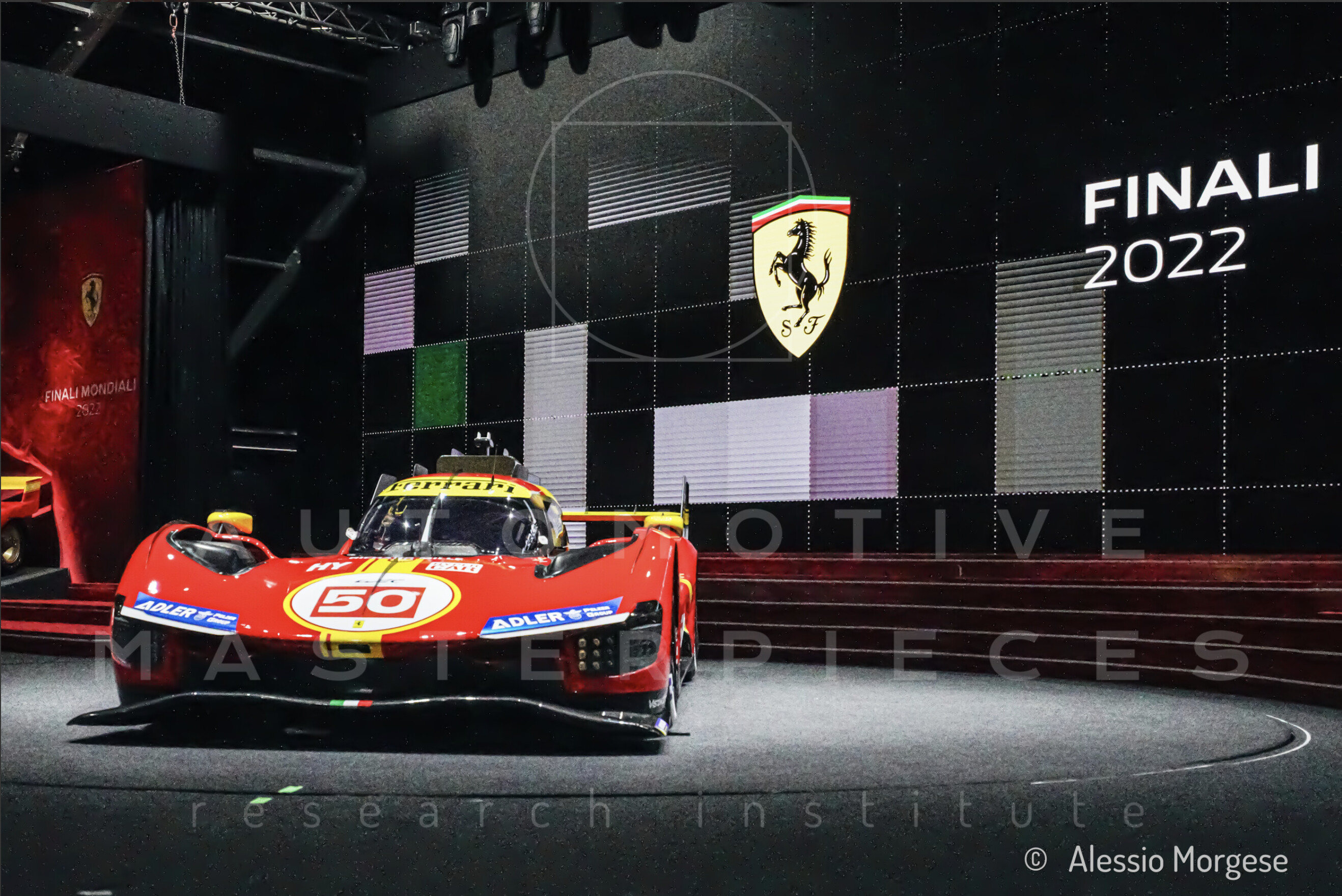
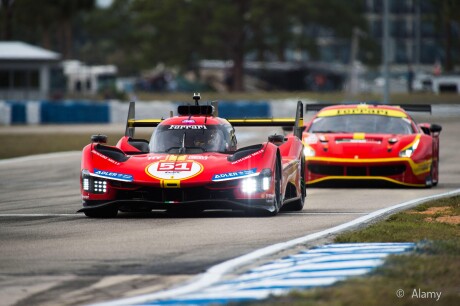
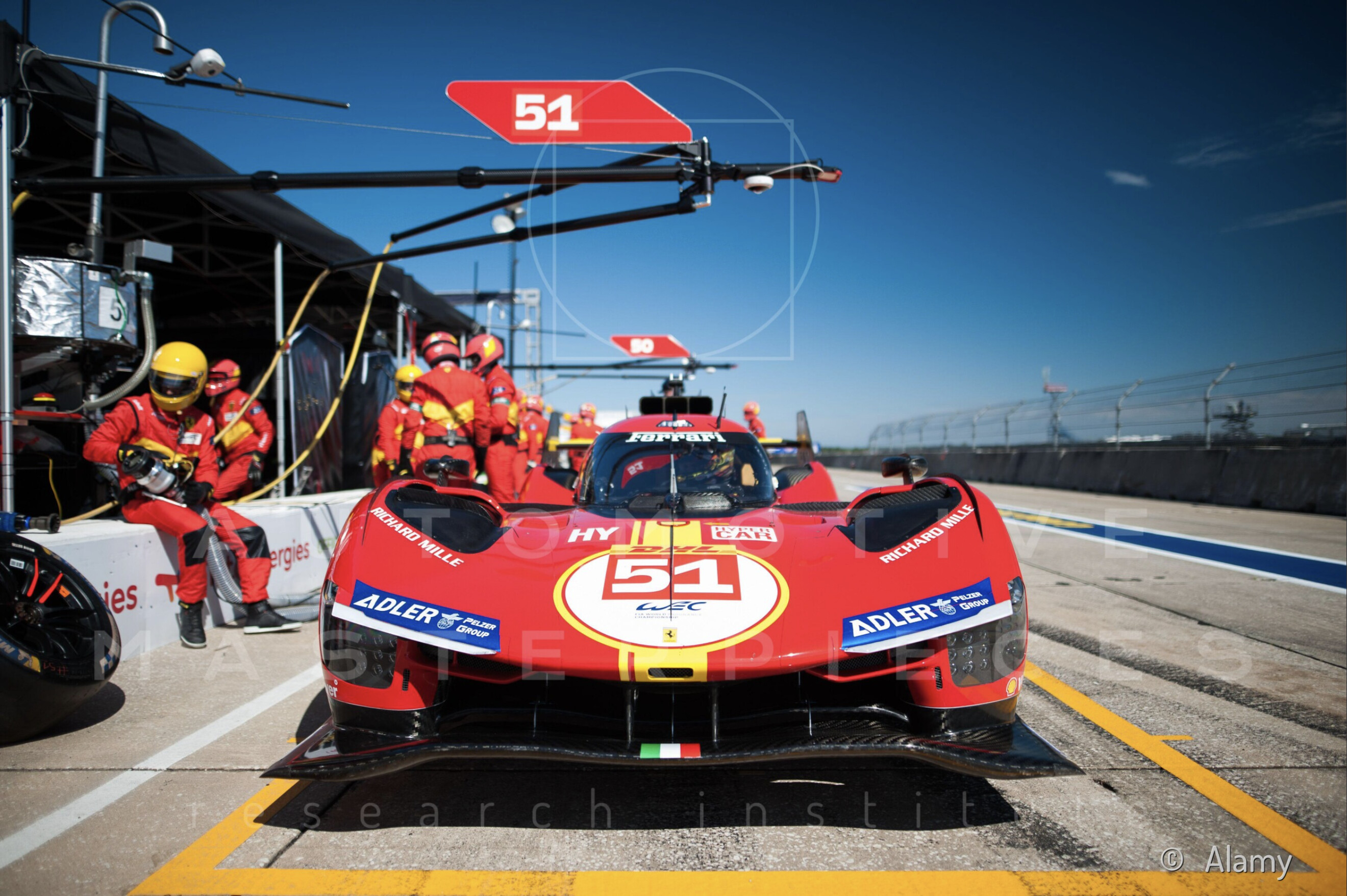
The research work carried out has allowed a much more precise historical definition of this specific chassis, revealing that its role was far more central than initially assumed. Rather than being merely a spare prototype, chassis no. 12 04 P proved to be the second car ever tested after the Fiorano shakedown, making it one of the very first definitive examples effectively completed and run on track within the official development program. Furthermore, it was identified as the car chosen for the public unveiling of the Ferrari 499P: the very chassis presented to the international press at the Finali Mondiali Ferrari in Imola in October 2022, already wearing its definitive racing livery and symbolically carrying the colors of the historic number 50. Even more significantly, our investigation clarified that chassis no. 12 04 P became the key protagonist of Ferrari’s concrete return to the endurance top class. Following the accident suffered by chassis no. F255 LMH 12 06 P during the Sebring 2023 prologue, Ferrari replaced it with this very car, urgently prepared and re-numbered as race car no. 51. As a result, chassis 12 04 P is the example that physically marked Ferrari’s first appearance back in the top category of the FIA World Endurance Championship after half a century — not simply a development mule, but the car that carried the Scuderia into its historic comeback race at Sebring. These findings add an additional layer of significance and value to Azimut’s decision to invest in this specific 499P. This case also demonstrates how, even with very modern racing cars, rigorous historical research and careful documentation can produce meaningful clarifications, strengthen provenance, and generate tangible added value — transforming a contemporary prototype into a fully defined milestone in Ferrari’s endurance legacy.