IDENTIFYING A MILLE MIGLIA ENTRY THROUGH CHASSIS AND REGISTRATION CROSS-CHECKS
May 12, 2026
STARTING POINT
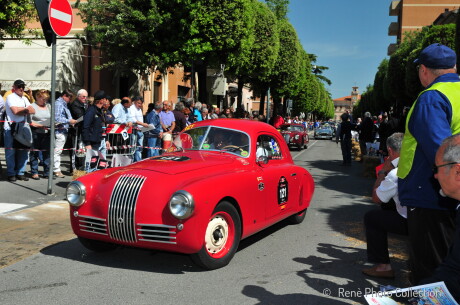
The car was already known as one of the earliest examples of Fiat’s first post-war sports car: the sixth car of the model, belonging to the initial pre-series of 12 units specially prepared for competition use. The car had also been known for its later ownership history, restoration and participation in historic events. However, despite being a significant and early example of the model, it apparently had no documented period racing history.
RESEARCH
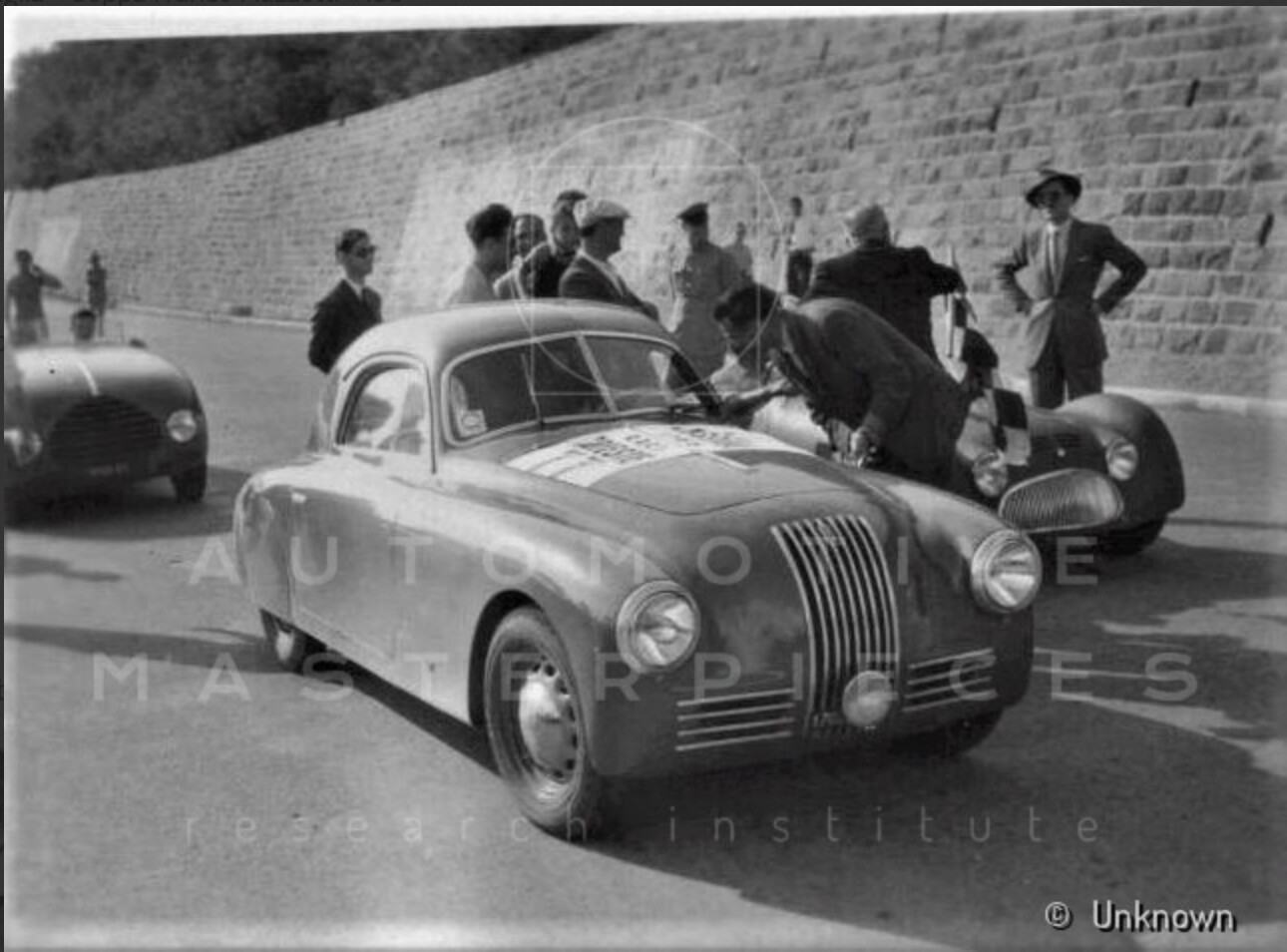
The attribution of the 1947 Mille Miglia entry to chassis no. 1100S*500006* was not based on a single conclusive photograph or surviving Fiat race document: no direct evidence has so far been found. Following long-term research, the turning point came with the discovery of the license plate number, which was traced starting from the chassis number, and the acquisition and analysis of the chronological ownership record, which made it possible to update the car’s documented history with a sequence of early owners. These included Alberto Comirato, who was not only a private owner but also a well-known racing driver and constructor of Fiat-based competition cars. The identification was instead achieved through a comparative research process focused on the early Fiat 1100 S cars, their chassis numbers, dates of invoicing, first owners, registration records and race numbers, with special attention to the 1100 cc class of the 1947 Mille Miglia. Within the group of Fiat 1100 S examples eligible by date for the 1947 Mille Miglia, 11 cars were considered on the basis of their invoicing dates before the race. One car could be directly assigned through its registration plate: chassis no. 500010 to race no. 173, Ermini/Quentin, with plate FI-37178. Seven further cars could be indirectly assigned through the coincidence between the car and its first ownership, in several cases in connection with temporary plates: chassis no. 500001 to race no. 140, Della Chiesa/Brandoli; no. 500002 to race no. 146, Gilera/Minozzi; no. 500004 to race no. 114, Balestrero/Bracco; no. 500005 to race no. 118, Bassi/Morandi; no. 500006 to race no. 156, Comirato/Dumas; no. 500007 to race no. 108, Capelli/Gerli; and no. 500012 to race no. 161, Brivio/Maggi. A further indirect assignment was based on the sales market: chassis no. 500011 was linked to race no. 129 through the correspondence between the Bari sales area and the operating area of the Apulian driver Apruzzi. Two cars remain not fully clarified: chassis no. 500008, possibly connected with race no. 97, Cucci/Bertani, and chassis no. 500009, possibly connected with race no. 105, Bertani/Barbieri, although their later ownership or registration evidence does not yet provide a secure match. In this framework, chassis no. 1100S*500006* matched the entry of Alberto Comirato and Amalia “Lia” Dumas Comirato, with race no. 156. The collaboration with Archivio Targhe Italiane brought a final confirmation and comparison tool within a long-term and broader investigation. The same research, combined this time with a meticulous analysis of the available images, also clarified its subsequent 1948 use by Comirato in the Raduno Automobilistico Triestino – Chilometro lanciato. A further point emerging is that, although no formal contract has yet been found, the sequence suggests a practice consistent with period arrangements between manufacturer, dealer network and selected private drivers: cars could be prepared or made available for competition use through official channels and subsequently sold, or effectively transferred, to the driver or entrant under specific conditions. This does not prove a formal “use and redemption” agreement, but it provides a historically coherent explanation for the car’s early sequence of ownership, race use and subsequent registration. Among the later owners, two other famous names were included: Sergio Bortolozzo, seventh post-war president of the Aero Club of Padua, and “Lino” Guaschino, a professional footballer active in Serie B and Serie C, but they do not appear to have used the car in official period competitions.
The car was already known as one of the earliest examples of Fiat’s first post-war sports car: the sixth car of the model, belonging to the initial pre-series of 12 units specially prepared for competition use. The car had also been known for its later ownership history, restoration and participation in historic events. However, despite being a significant and early example of the model, it apparently had no documented period racing history.
RESEARCH
The attribution of the 1947 Mille Miglia entry to chassis no. 1100S*500006* was not based on a single conclusive photograph or surviving Fiat race document: no direct evidence has so far been found. Following long-term research, the turning point came with the discovery of the license plate number, which was traced starting from the chassis number, and the acquisition and analysis of the chronological ownership record, which made it possible to update the car’s documented history with a sequence of early owners. These included Alberto Comirato, who was not only a private owner but also a well-known racing driver and constructor of Fiat-based competition cars. The identification was instead achieved through a comparative research process focused on the early Fiat 1100 S cars, their chassis numbers, dates of invoicing, first owners, registration records and race numbers, with special attention to the 1100 cc class of the 1947 Mille Miglia. Within the group of Fiat 1100 S examples eligible by date for the 1947 Mille Miglia, 11 cars were considered on the basis of their invoicing dates before the race. One car could be directly assigned through its registration plate: chassis no. 500010 to race no. 173, Ermini/Quentin, with plate FI-37178. Seven further cars could be indirectly assigned through the coincidence between the car and its first ownership, in several cases in connection with temporary plates: chassis no. 500001 to race no. 140, Della Chiesa/Brandoli; no. 500002 to race no. 146, Gilera/Minozzi; no. 500004 to race no. 114, Balestrero/Bracco; no. 500005 to race no. 118, Bassi/Morandi; no. 500006 to race no. 156, Comirato/Dumas; no. 500007 to race no. 108, Capelli/Gerli; and no. 500012 to race no. 161, Brivio/Maggi. A further indirect assignment was based on the sales market: chassis no. 500011 was linked to race no. 129 through the correspondence between the Bari sales area and the operating area of the Apulian driver Apruzzi. Two cars remain not fully clarified: chassis no. 500008, possibly connected with race no. 97, Cucci/Bertani, and chassis no. 500009, possibly connected with race no. 105, Bertani/Barbieri, although their later ownership or registration evidence does not yet provide a secure match. In this framework, chassis no. 1100S*500006* matched the entry of Alberto Comirato and Amalia “Lia” Dumas Comirato, with race no. 156. The collaboration with Archivio Targhe Italiane brought a final confirmation and comparison tool within a long-term and broader investigation. The same research, combined this time with a meticulous analysis of the available images, also clarified its subsequent 1948 use by Comirato in the Raduno Automobilistico Triestino – Chilometro lanciato. A further point emerging is that, although no formal contract has yet been found, the sequence suggests a practice consistent with period arrangements between manufacturer, dealer network and selected private drivers: cars could be prepared or made available for competition use through official channels and subsequently sold, or effectively transferred, to the driver or entrant under specific conditions. This does not prove a formal “use and redemption” agreement, but it provides a historically coherent explanation for the car’s early sequence of ownership, race use and subsequent registration. Among the later owners, two other famous names were included: Sergio Bortolozzo, seventh post-war president of the Aero Club of Padua, and “Lino” Guaschino, a professional footballer active in Serie B and Serie C, but they do not appear to have used the car in official period competitions.